Home
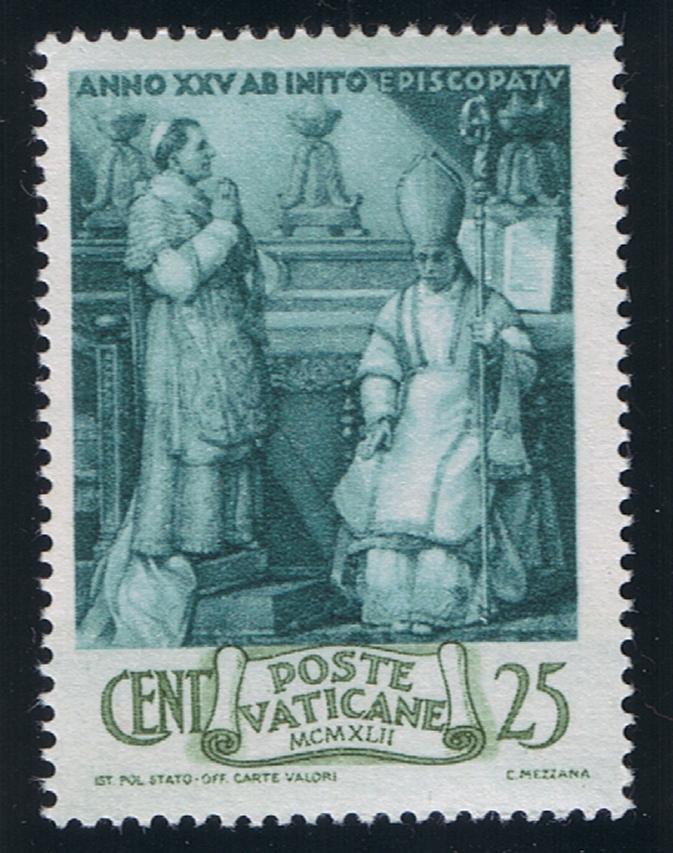
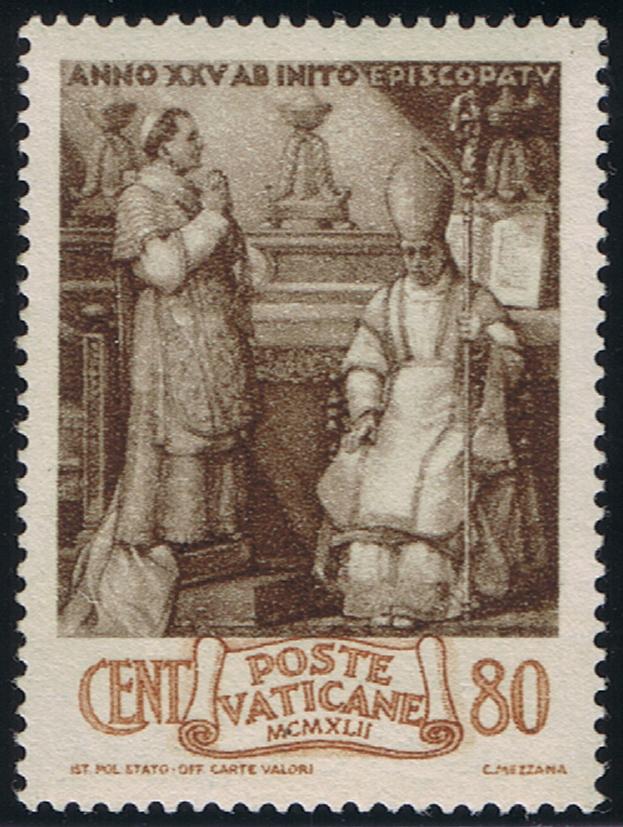
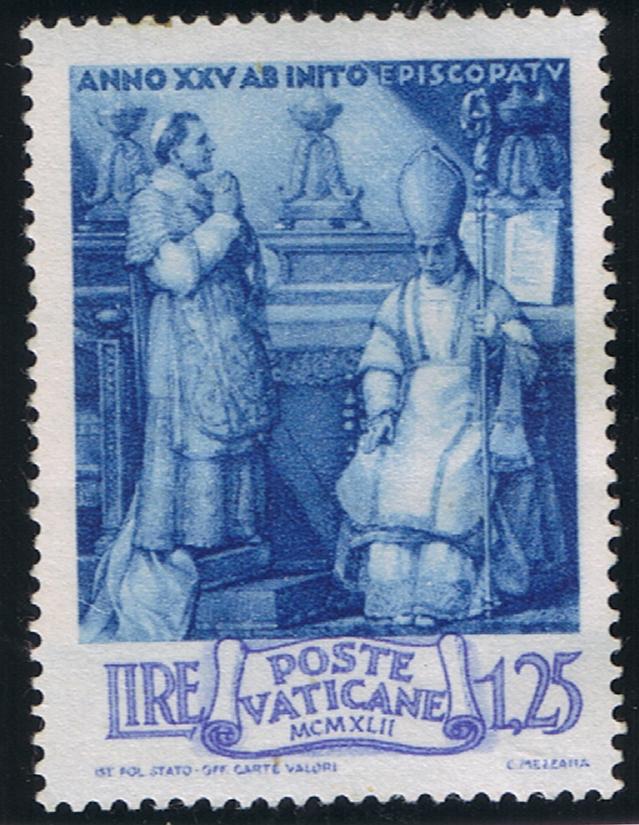
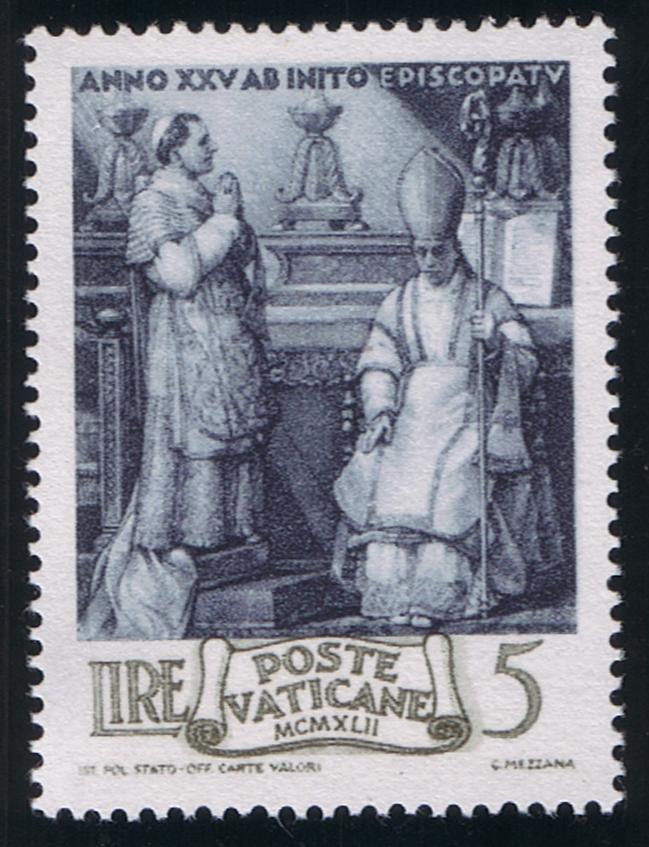  Top: Consecration of Archbishop Pacelli by Pope Benedict XV (Scott 80-83, 1942) Bottom: Centennial of Diplomatic Relations Between the Holy See and Poland (Scott 1715, 2019) (Pictured: Jozef Pilsudski and Pope Benedict XV) On November 21, 1854, Giacomo della Chiesa, who would go on to be elected as Pope Benedict XV, was born in Genoa, Italy. Despite serving as pope for a bit over seven years, particularly during the horrors of World War I, he has sometimes been labeled the "Unknown Pope". In fact, very few memorials to this pope have been erected in his honor, despite his service to the Holy See and his contributions to humanity during the time of war. The future pope received a degree as Doctor of Civil Law from Genoa University and then studied in Rome at Capranica College and the Gregorian University. He was ordained in 1878, and entered the diplomatic corps, serving as secretary to Mariano Cardinal Rampolla. When Rampolla became Secretary of State under Pope Leo XIII, della Chiesa followed him and served as Under-Secretary of State from 1901 to 1907. He was then named archbishop of Bologna and eventually was created a cardinal by Pope Pius X in May of 1914. Less than four months later, upon the death of Pius X, he was elected pope on September 5, 1914, and took the name Benedict XV. Benedict served as pope during World War I, and his experience in the diplomatic corps served him well. During his papacy, relations between the Holy See and nations around the world expanded, and he drew up a plan for peace following the Great War, and some of its elements were included in Woodrow Wilson’s Fourteen Point Plan. However, he was greatly disappointed that, despite efforts on his part to bring end to the war, the Holy See was excluded from peace conferences following World War I. Benedict promulgated the new version of Canon Law in 1917. He gave support to the formation of the Italian Popular Party, something of a ‘Catholic Party', to be involved in Italian politics, thereby reducing the edicts of non-participation in political affairs issued by Pope Pius IX following the fall of the Papal States. Benedict also took issue with the extremes of both modernism and relativism, theological approaches which were at severe odds during the pontificates of his predecessor, Pope Pius X. Benedict XV died on January 22, 1922. He would be the last pope to serve his entire papacy during the years following the fall of the Papal States in 1870 until the formation of the Vatican City State in 1929. Pope Benedict XVI took the name “Benedict” in part out of respect for his predecessor (as well as for the founder of Benedictine monasticism). Of Benedict XV, Benedict XVI stated shortly after his 2005 election: "Filled with sentiments of awe and thanksgiving, I wish to speak of why I chose the name Benedict. Firstly, I remember Pope Benedict XV, that courageous prophet of peace, who guided the Church through turbulent times of war. In his footsteps I place my ministry in the service of reconciliation and harmony between peoples."Unlike all the other popes from the 20th and 21st centuries, there have been no stamps specifically issued by Vatican City to honor Pope Benedict XV, although he appears on the stamps of two issues. He is shown on each of the four stamps issued to commemorate the twenty-fifth anniversary of the consecration of Msgr. Eugenio Pacelli, the future Pope Pius XII, as Archbishop of Sardes (Scott 80-83, from 1942, shown at the top of this page). He also appears on the stamp commemorating the 100th anniversary of the establishment of diplomatic relations between the Holy See and Poland in 1919 (Scott 1715, 2019). It is curious that the Vatican Post Office passed on the opportunity to honor Benedict XV on the centennial of his passing in 2022. Below is a painting of Pope Benedict XV, which hangs in The Museo del Prado, the main Spanish national art museum, in Madrid. 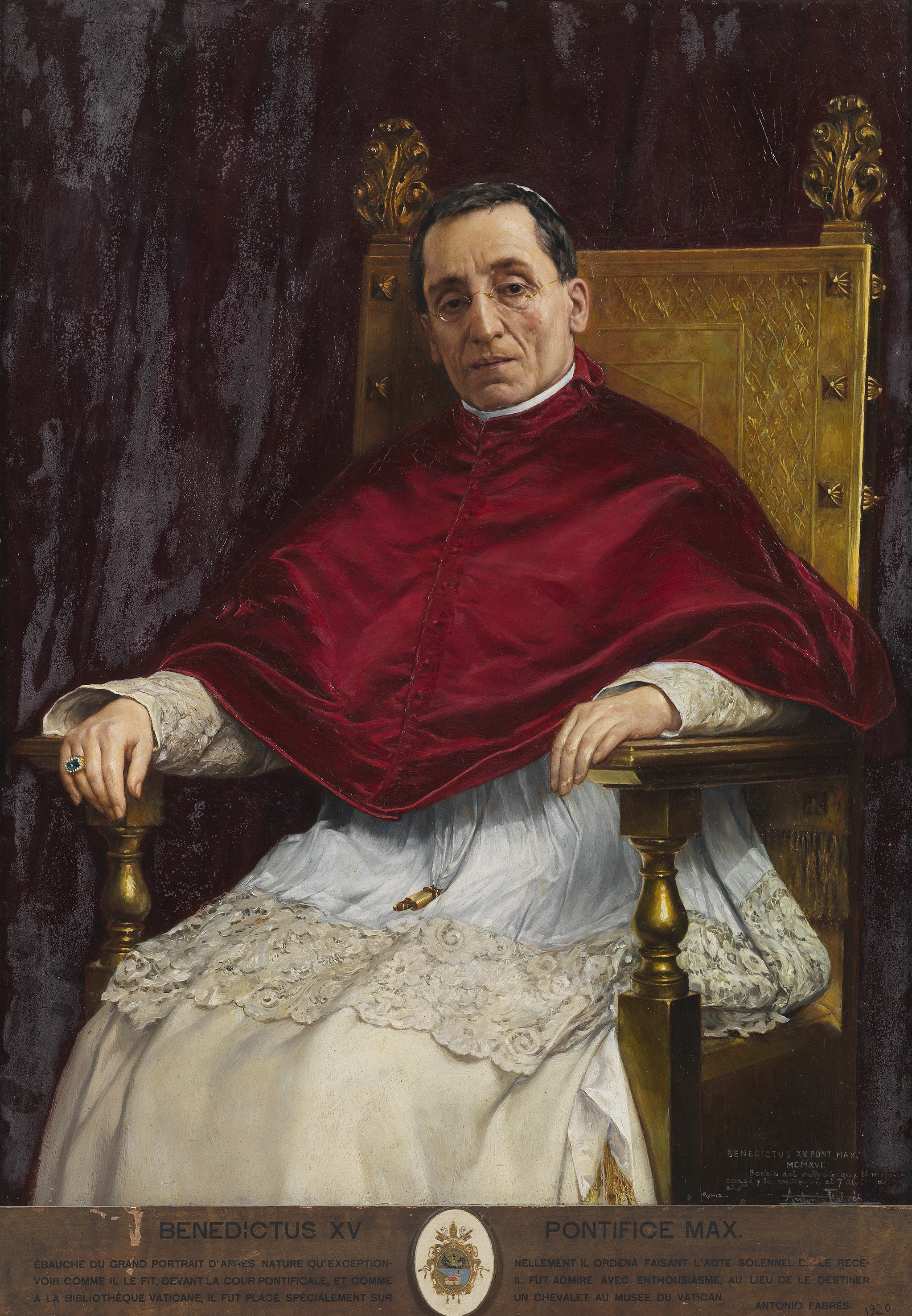 Portraint of Pope Benedict XV Painting by Antonio Fabrés (1854–1938) From Wikimedia Commons, in the Public Domain REFERENCES: |