Home

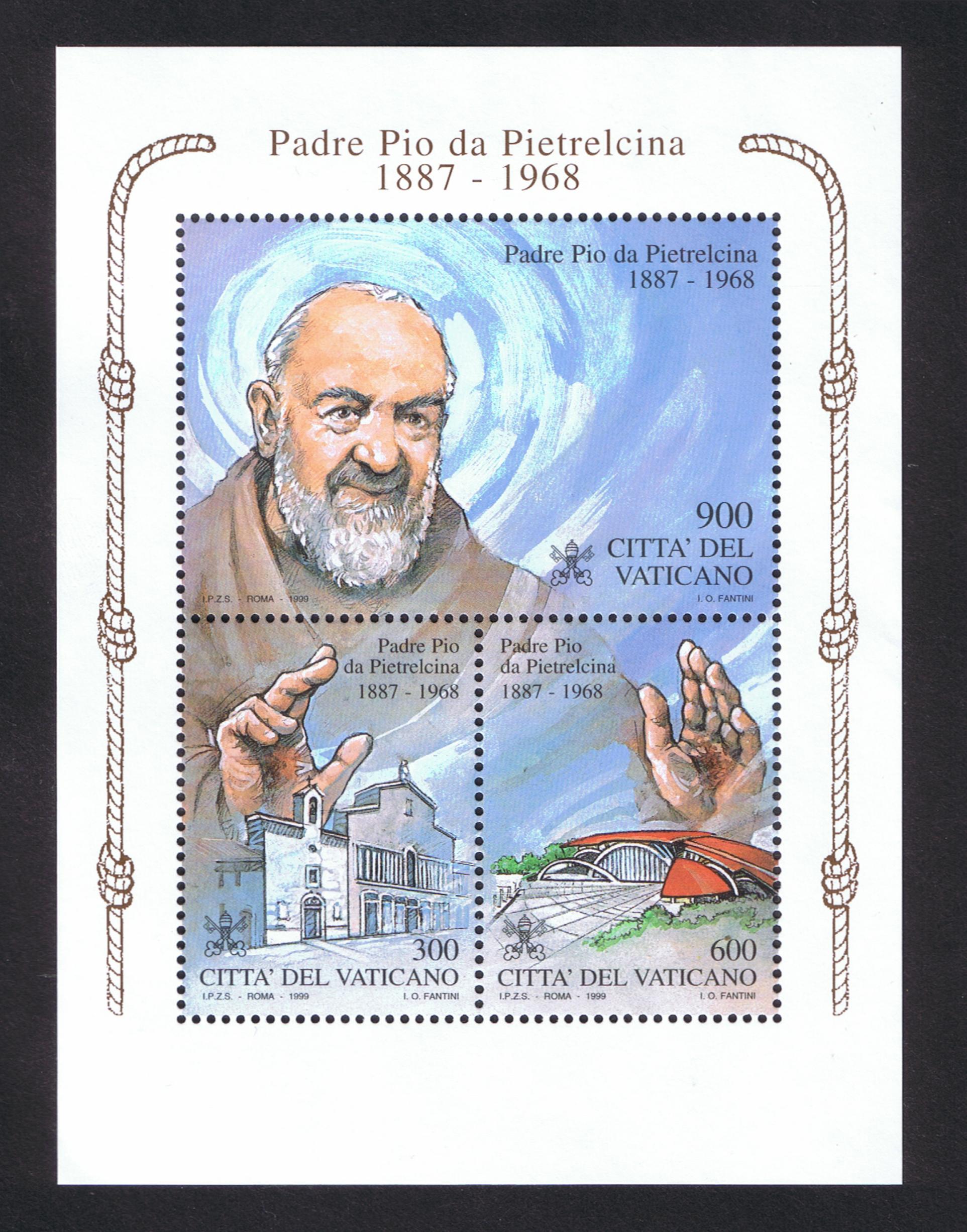 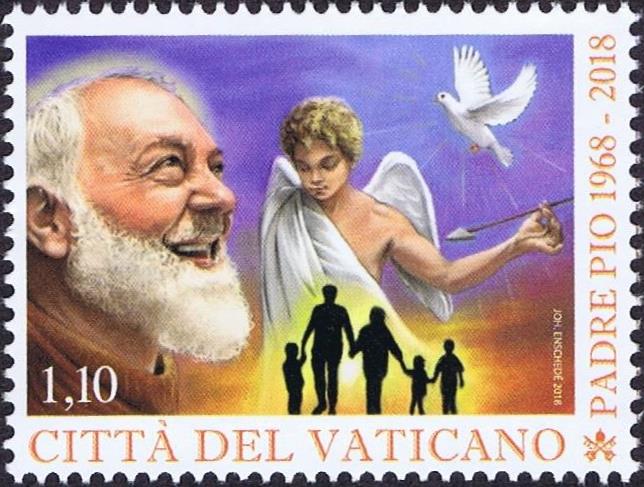 Beatification of Padre Pio de Pietrelcina, Scott 1105 and 1106 (1999) Saint Pio of Pietrelcina, 50th Anniversary of Death, Scott 1687 (2018) September 23 is the feast day of Saint Pius of Pietrelcina, popularly known as Padre Pio. A Capuchin friar and stigmatist, he was born in 1887 and died in 1968, thus making him another saint within the living memory of most who read these essays. On two occasions, Padre Pio has been remembered on Vatican City stamps. In 1999, a stamp and souvenir sheet were issued to honor his beatification, and in 2018 a stamp was issued to commemorate the 50th anniversary of his death. This stamp was issued in a four-stamp mini-sheet format, which is shown at the bottom of this article. Francesco Forgione was born near Naples and became a Capuchin friar in 1903, taking the religious name Pio (Pius). He was ordained in 1910 and, except for brief time of service as an orderly during World War I, Padre Pio spent all of his clerical life at San Giovanni Rotondo, a friary near Foggia in the southern Italian region of Apulia. Shortly after his ordination, in 1911, he received signs of an ‘invisible stigmata’ and began to experience the pains of scourging and the wearing of Christ's crown of thorns. In 1918, the signs of the stigmata became visible. He did not publicize the stigmata and, in fact, took measures to hide the signs, particularly those on his hands. There was much skepticism regarding the wounds, and he was repeatedly examined by physicians. Despite the doubts, his fame spread and crowds were attracted to San Giovanni Rotondo. Padre Pio famously spent hours in the confessional listening to those who came to him for comfort, healing and guidance.  Panoramic view of the Church of Saint Pio of Pietrelcina, The Sanctuary of Saint Mary of Graces and The Hospital "Casa Sollievo della Sofferenza" From Wikimedia Commons, in the Public Domain During his time at San Giovanni Rotondo, a hospital was constructed on the grounds of the friary. A larger one was completed in 1947, named "Casa Sollievo della Sofferenza" ('The House for the Relief of Suffering'). In 1956 it became a hospice for the elderly and retreat center as well as a place for study. Over time, and following Padre Pio's death, the friary greatly expanded to accommodate the millions of pilgrims who travel to the site each year. Padre Pio died on September 23, 1968. After his death, the signs of the stigmata vanished. He was beatified in 1999 and canonized in 2002, both by St. John Paul II, who recalled Padre Pio’s "extra-ordinary charity" and long hours in confession directing souls. His canonization Mass, celebrated on June 16, 2002, was held in Saint Peter's Square, was attended by an estimated 300,000 people and was one of the largest such ceremonies in Church history, serving as a testimony to the popularity of this beloved saint.  Saint Pio of Pietrelcina, 50th Anniversary of Death Minisheet, Scott 1687M (2018) REFERENCES: |