Home

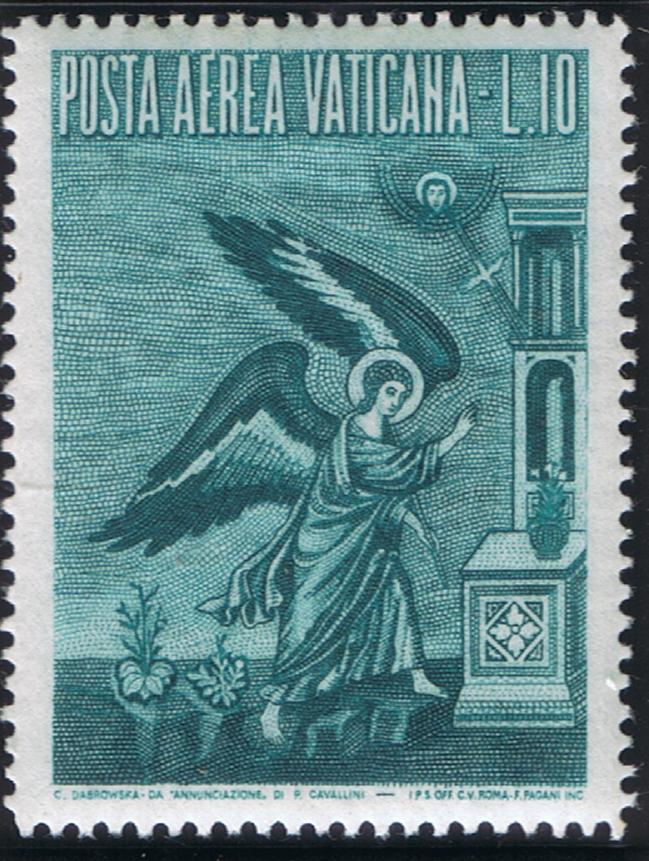
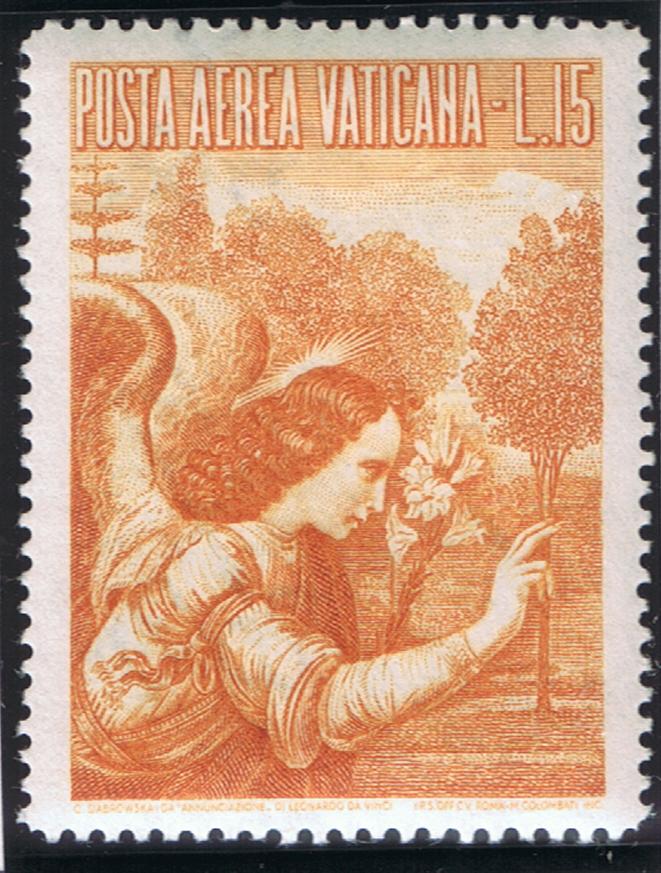 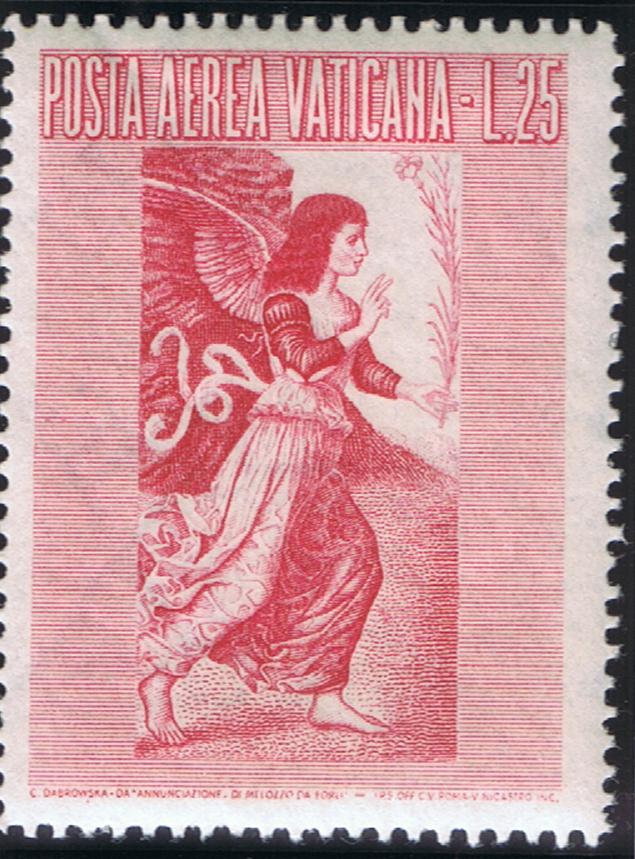
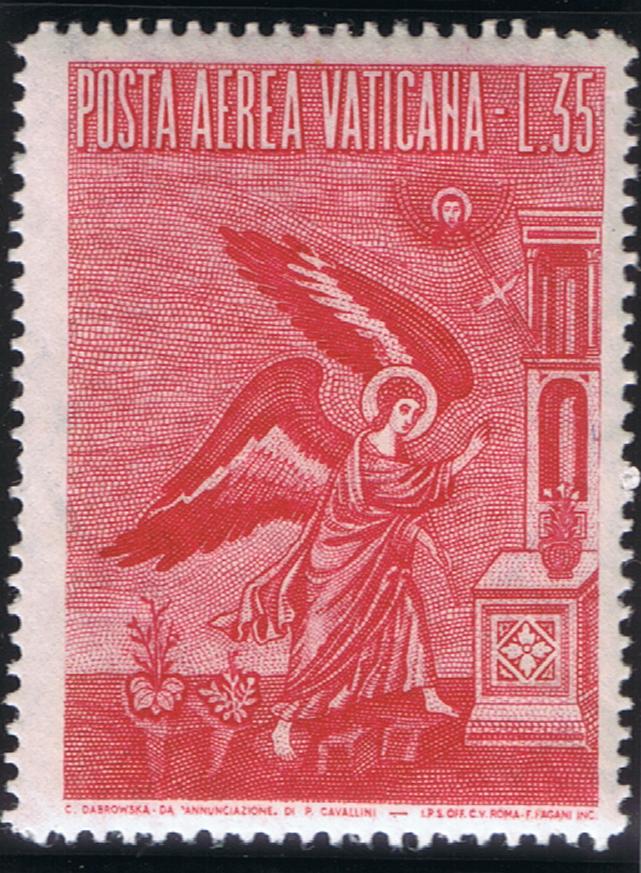
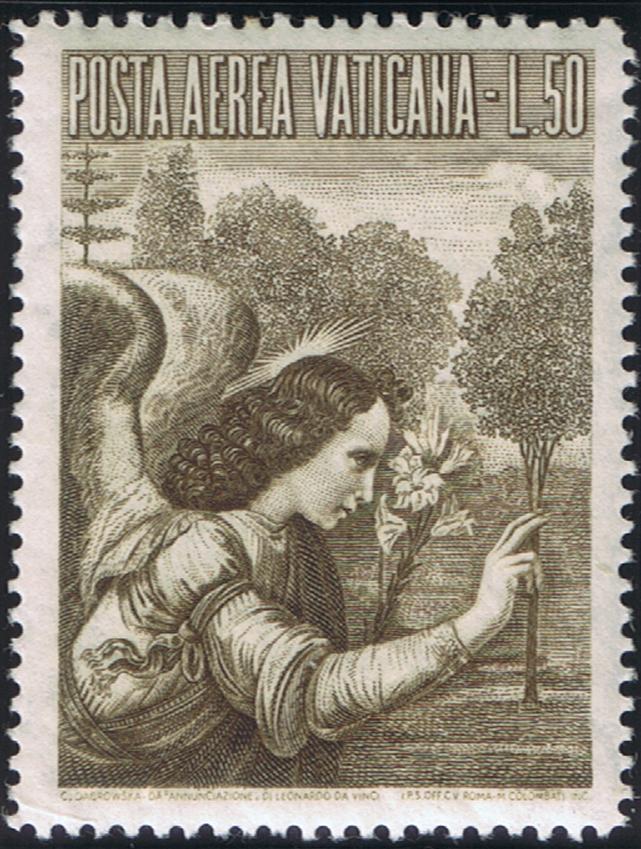 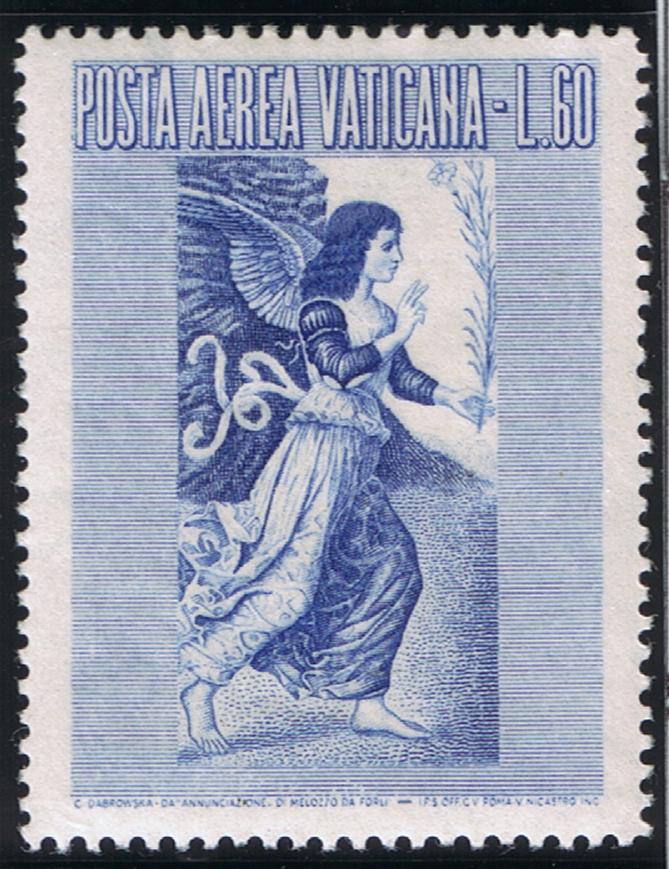
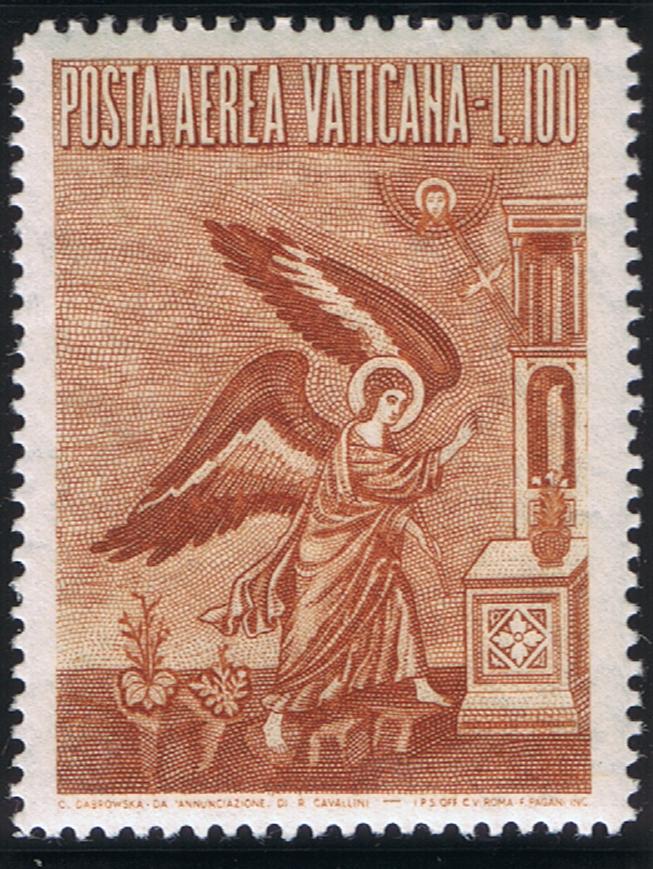
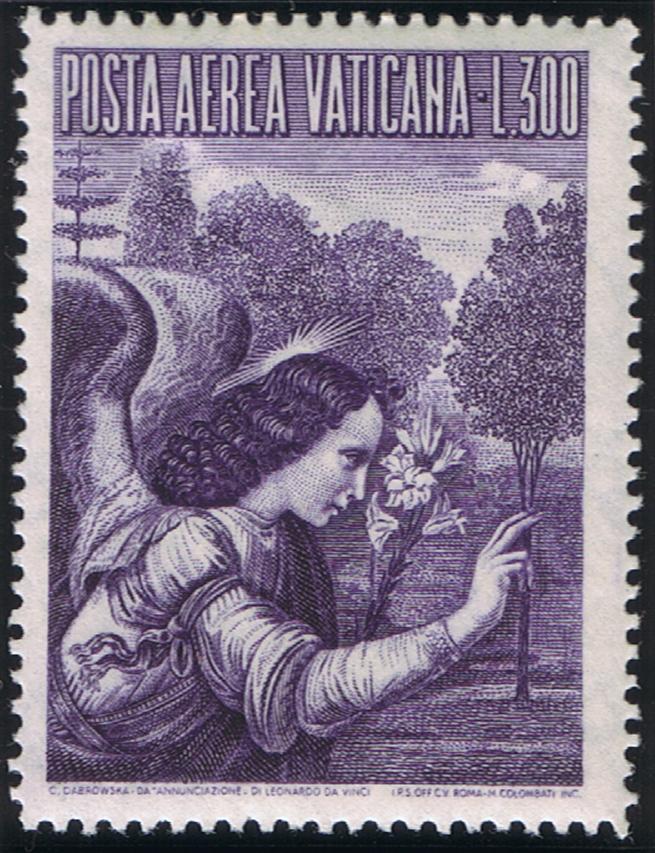 Images of the Archangel Gabriel and the 'Annunciation' Air Mail Issue of 1956 (Scott C24-32) The Feast of the Annunciation occurs on the Liturgican Calendar on March 25. Many Christian faiths observe the event on this date, which is an approximation of the northern vernal equinox and is nine full months before Christmas, the traditional birth date of Jesus. The Annunciation recalls the appearance of Archangel Gabriel to the Virgin Mary to "announce" that she would conceive and bear a son to be named Jesus, the Son of God, who will save His people from their sins. The nine-stamp airmail set issued in 1956, shown above, features the works of Melozzo da Forli (Scott C24, C27 and C30), Pietro Cavallini (Scott C25, C28 and C31), and Leonardo da Vinci (Scott C26, C29 and C32). The work by da Vinci, shown here, is thought to be the earliest work completed by the Renaissance master, dating to when he was in his early 20's: 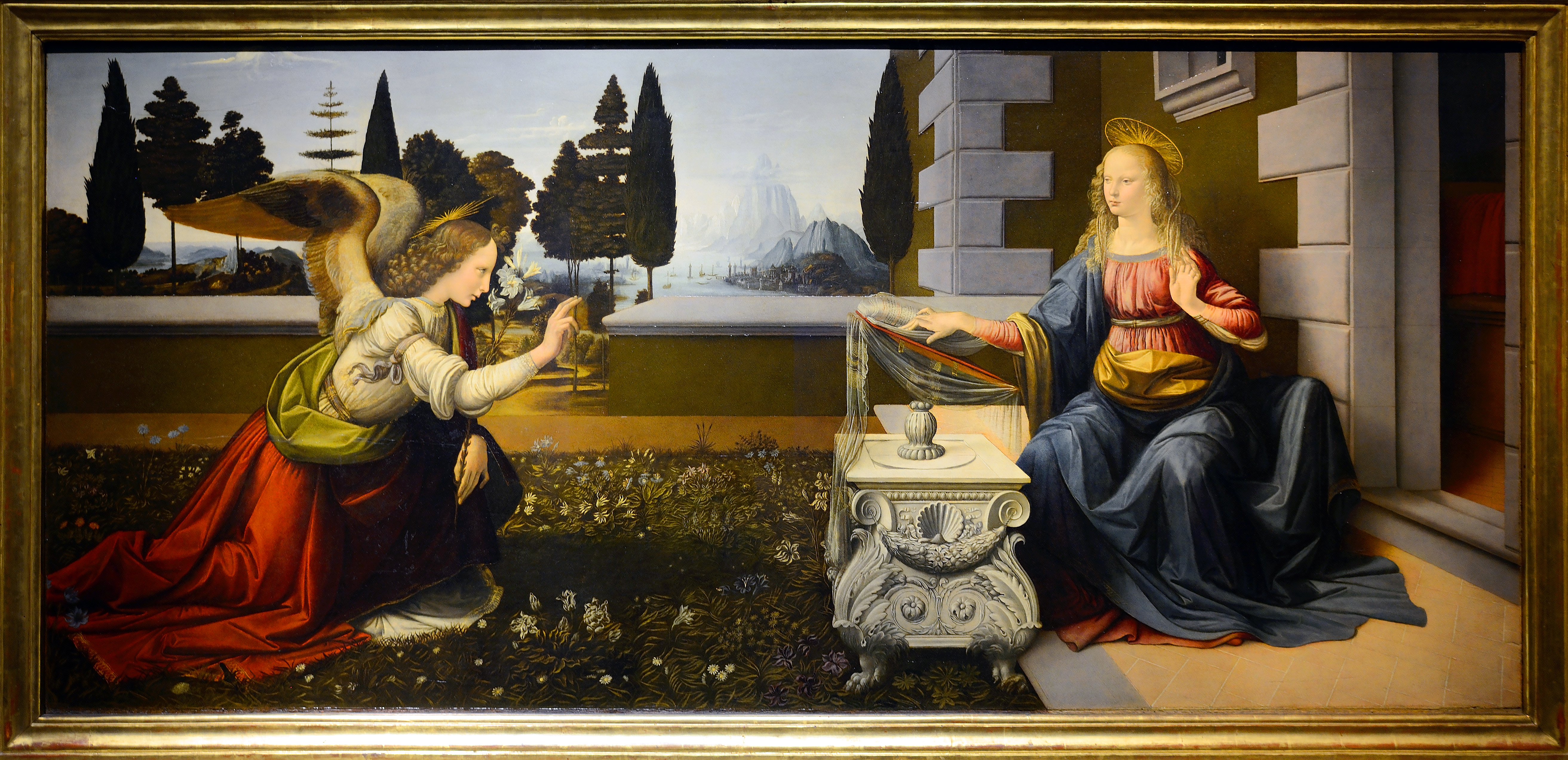 "Annunciation", by Leonardi da Vinci (circa 1472) Photo by Livioandronico2013 From Wikimedia Commons, used under the terms of the Creative Commons Attribution-Share Alike 4.0 International license The Biblical account of the Annunciation can be found in Luke 1:26-38: In the sixth month of Elizabeth’s pregnancy, God sent the angel Gabriel to Nazareth, a town in Galilee, to a virgin pledged to be married to a man named Joseph, a descendant of David. The virgin’s name was Mary. The angel went to her and said, “Greetings, you who are highly favored! The Lord is with you.” Mary was greatly troubled at his words and wondered what kind of greeting this might be. But the angel said to her, “Do not be afraid, Mary; you have found favor with God. You will conceive and give birth to a son, and you are to call him Jesus. He will be great and will be called the Son of the Most High. The Lord God will give him the throne of his father David, and he will reign over Jacob’s descendants forever; his kingdom will never end.” “How will this be,” Mary asked the angel, “since I am a virgin?” The angel answered, “The Holy Spirit will come on you, and the power of the Most High will overshadow you. So the holy one to be born will be called the Son of God. Even Elizabeth your relative is going to have a child in her old age, and she who was said to be unable to conceive is in her sixth month. For no word from God will ever fail.” Mary answered, “I am the Lord’s servant. May your word to me be fulfilled.” Then the angel left her.In addition to the Vatican City issue shown at the top of the article, the Archangel Gabriel appears on other Vatican City stamps, primarily on air mail stamps. Two additional examples tied to the Annunciation are given below. Two stamps from the 1962 airmail issue show details from a relief by Filippo Valle (Scott C45-C46), and two stamps from the 1968 airmail issue (Scott C53-C54) focus on the archangel from a fresco by Fra Angelico located at the Convent of San Marco in Florence. 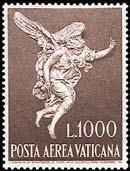
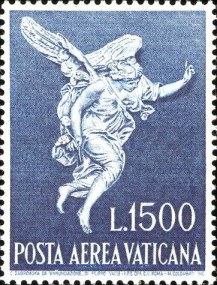 Archangel Gabriel From a High Relief of the Annunciation by Filippo Valle Air Mail Issue of 1962 (Scott C45 and C46) 
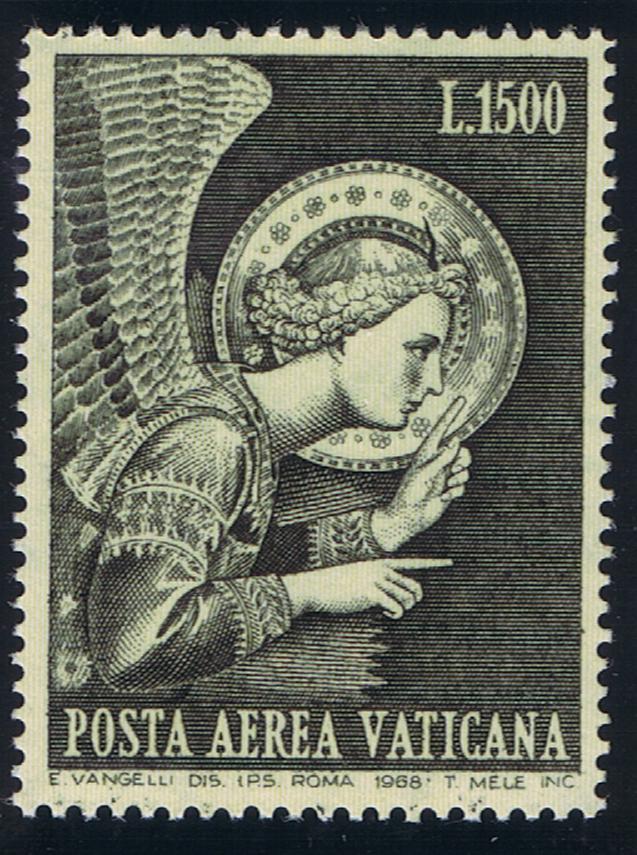 Archangel Gabriel From the 'Annunciation' by Fra Angelico Air Mail Issue of 1968 (Scott C53 and C54) REFERENCES: |