Home
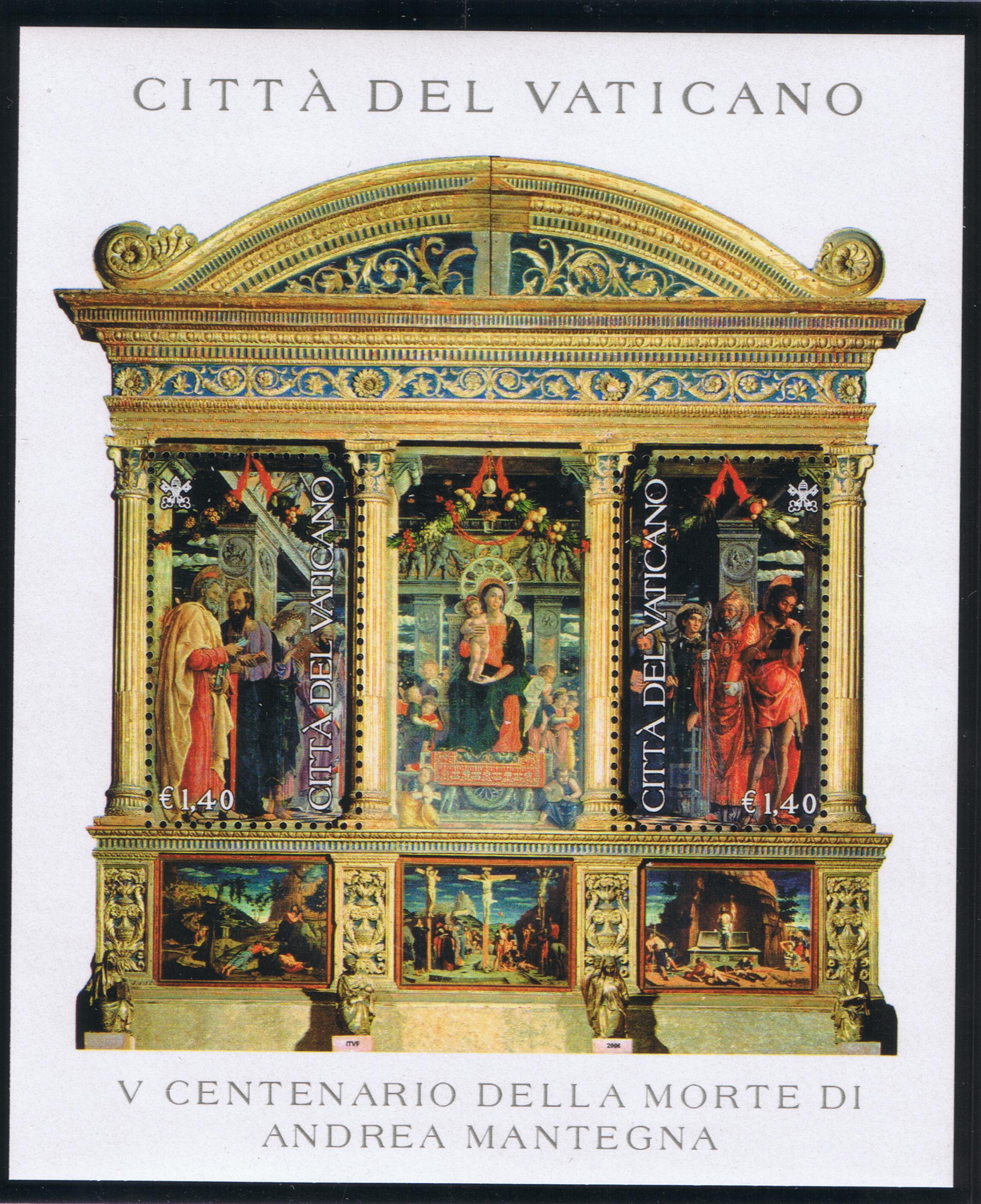 Altarpiece for the Church of San Zeno in Verona Andrea Mantegna: 500th Anniversary of Death Scott 1328 (2006) The feast of Saint Zeno of Verona is celebrated on April 12, the anniversary of his death in 371 AD. There is not much known with certainty about this saint. A 7th century biography of Zeno states that he was a native of Africa (likely Mauretania), and his date of birth is believed to be around 300 AD. One claim states that Zeno was a follower of the great Doctor of the Church, Saint Athanasius (the patriarch of Alexandria), and that he came to Verona in 340 AD with him. Another biography states that Zeno was a hermit living by the Adige River in Verona when he was chosen Bishop of Verona in 362 AD. Some of Saint Zeno’s writings have been preserved, including over 90 of his homilies. These documents provide information on Christian worship, teaching, organization, and life of the mid-4th century. Zeno worked to eliminate the Arian heresy and personally promoted the giving of alms and the building of churches. Historian Donald Attwater describes Zeno as "a trained orator and a zealous preacher". The Dialogues of St. Gregory list him as a martyr, which may not be accurate. Zeno is often represented with a fish, recalling his hermit days as a fisherman, and the rock on which he sat in Verona with a fishing line. St. Zeno is the patron of fishermen, anglers, and newborn babies, as well as the city of Verona. Vatican City philatelists recall the name of Saint Zeno when looking at the issue released in 2006 marking the 500th anniversary of the death of Renaissance master Andrea Mantegna, who designed the spectacular altar piece, including its wood frame, for the Basilica of Saint Zeno in Verona. The souvenir sheet from that issue is shown at the top of this article. The altarpiece focuses on the Madonna and Child, but it also includes the depictions of many saints, including Saints Peter and Paul, John the Baptist, Gregory the Great, John the Evangelist, Benedict and Lawrence of Rome, in addition to Saint Zeno. He was included since the altarpiece was designed for the basilica which bears his name. Finding the image of Saint Zeno in the altarpiece takes some work: he is shown on the far-right side of the left-hand panel of the masterpiece. On the souvenir sheet, his likeness is hidden by printing. Here is a look at Saint Zeno in a detail from the altarpiece:  Altarpiece of the Basilica of Saint Zeno, Left Panel (Saint Zeno is pictured at the far right) Photo by José Luiz Bernardes Ribeiro From Wikimedia Commons, used under the terms of the Creative Commons Attribution-Share Alike 4.0 International license The altarpiece is now part of the Vatican Museums collections. The stamp issue of the altarpiece included three other stamps showing details of the work: 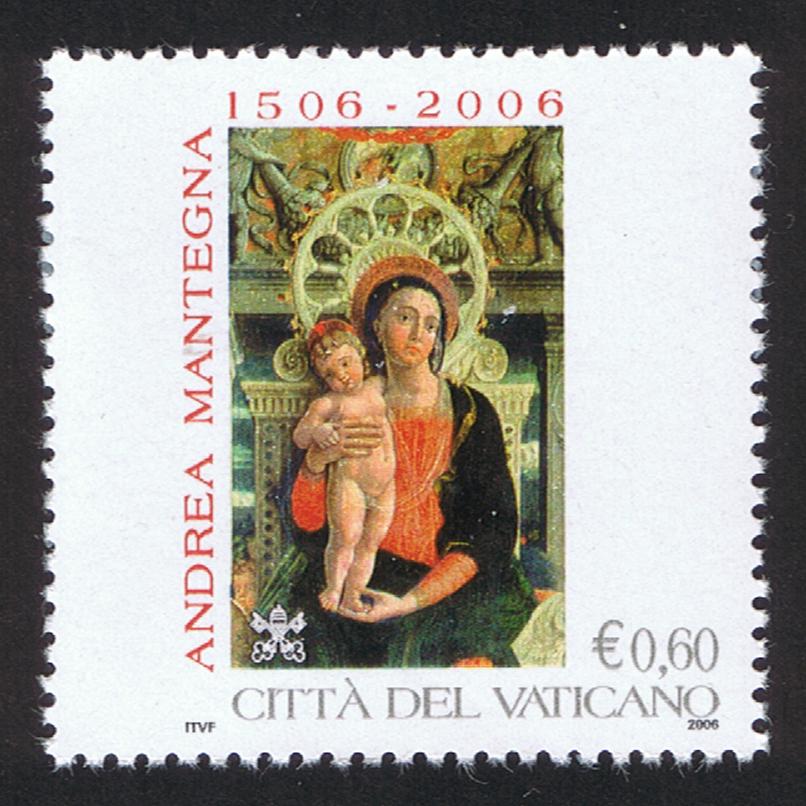

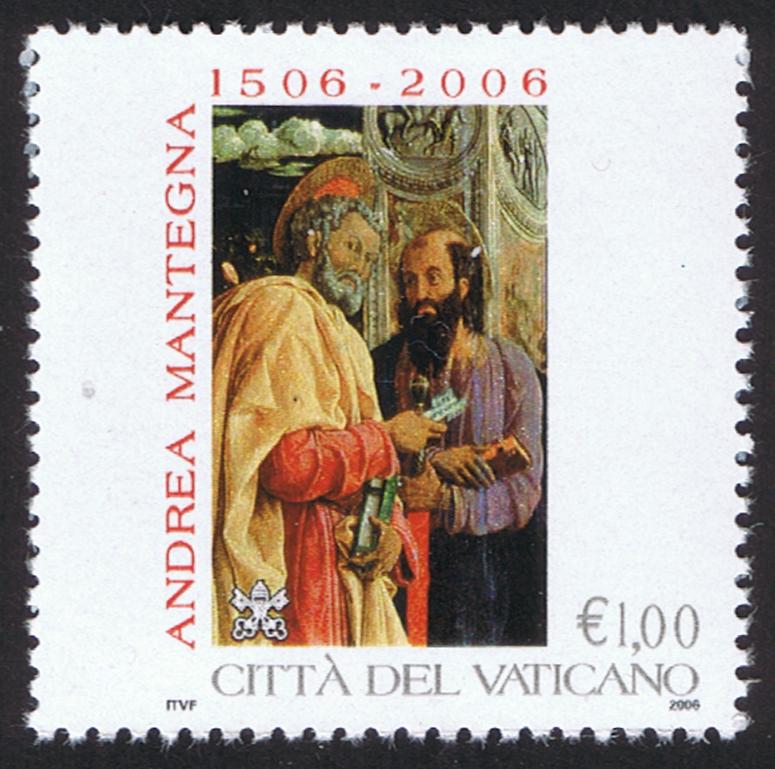 Altarpiece for the Church of San Zeno in Verona Andrea Mantegna: 500th Anniversary of Death Scott 1325-1327 (2006) REFERENCES: |