Home
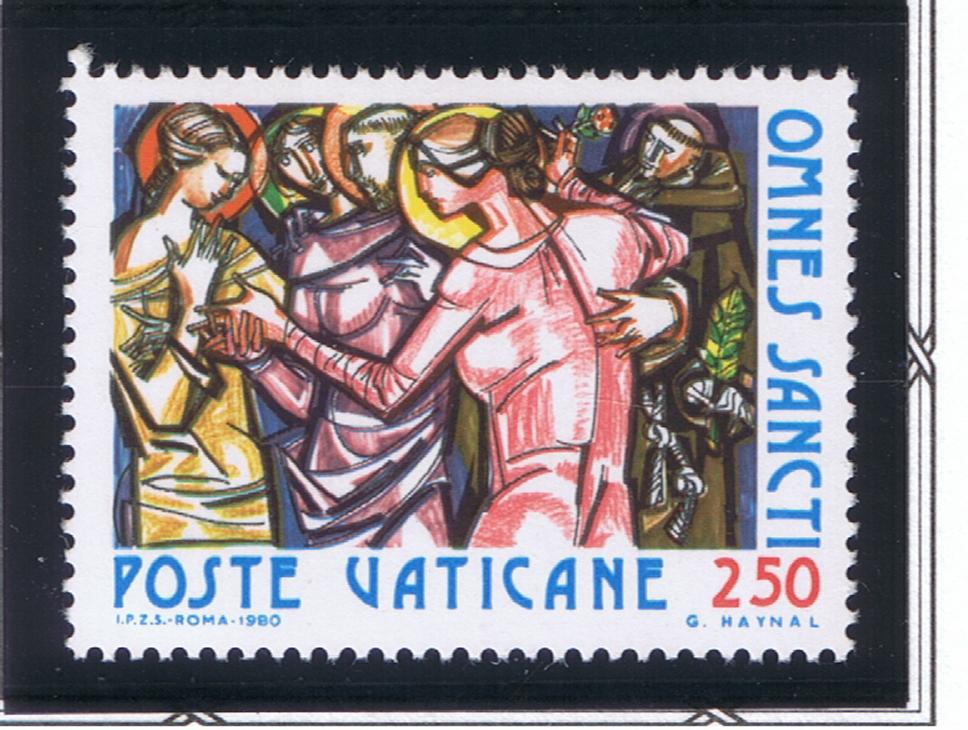
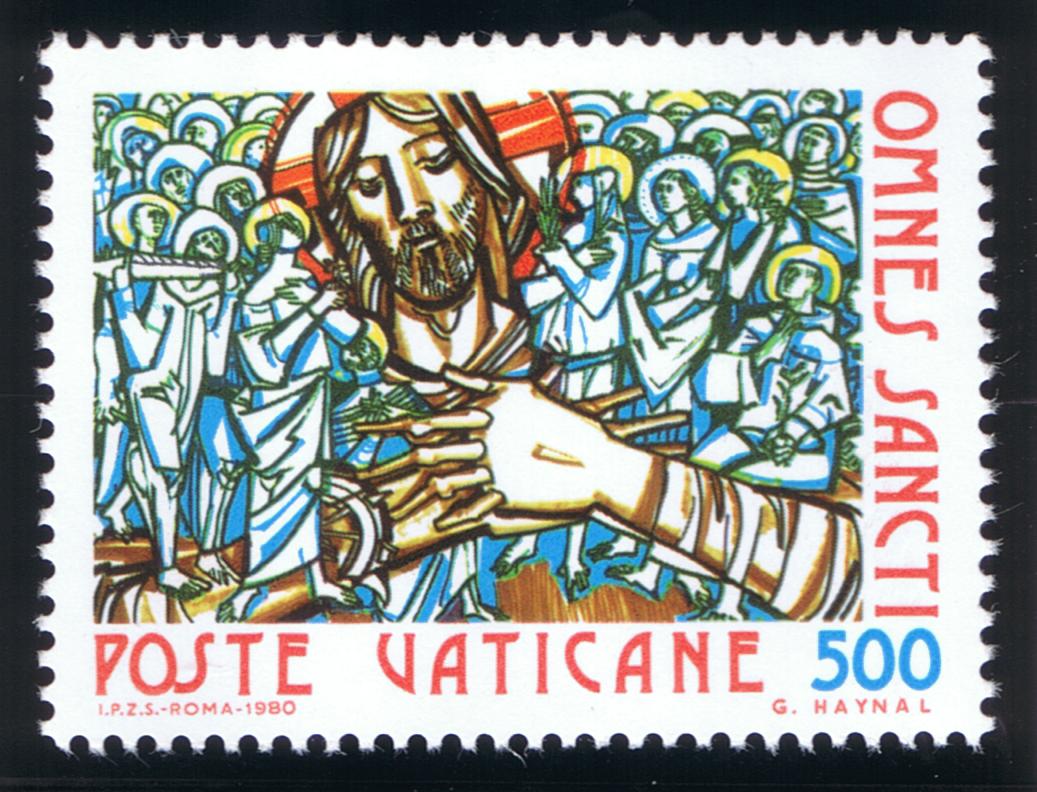 Feast of All Saints Scott 679-680 (1980) The first two days of November are set aside on the liturgical calendar to remember the dead. November 1 is celebrated as the Feast of All Saints, and November 2 as All Souls Day. Vatican City commemorated All Saints Day in 1980 with the two stamps shown above, with images created by the famed Hungarian artist János Hajnal (Giovanni Haynal in Italian). The stamps are inscribed with the words “Omnes Sancti” (“All Saints” in Latin) and depict the Communion of Saints on the 250L stamp, and Christ with the Saints on the 500L stamp. The origins of All Saints Day go back to the fourth century, with reference to a hymn composed by Saint Ephram. Around the years 731 to 741 AD, Pope Gregory III dedicated an oratory in Saint Peter’s Basilica to All Saints. The original date for the feast is sometimes listed as May 13, and how the feast eventually landed on the date of November 1 is unclear. Accounts trace the possible origins to England, Ireland and Gaul. However, in 835, Pope Gregory IV established the solemnity for all saints as a holy day of obligation for the universal Church on November 1. The Eastern Orthodox Church celebrates All Saints on the Sunday after Pentecost. By the 12th century, the November 1 date was firmly established in many locales. As stated in the Catechism of the Catholic Church, the saints, "Being more closely united to Christ, those who dwell in heaven fix the whole Church more firmly in holiness…They do not cease to intercede with the Father for us, as they proffer the merits which they acquired on earth through the one mediator between God and men, Christ Jesus. …So by their fraternal concern is our weakness greatly helped." (CCC 956)  Saint Bernard of Clairvaux Scott 171 (1953) In his homily for All Saints Day, St. Bernard of Clairvaux (1090-1153) stated: "Calling the saints to mind inspires, or rather arouses in us, above all else, a longing to enjoy their company, so desirable in itself. We long to share in the citizenship of heaven, to dwell with the spirits of the blessed, to join the assembly of patriarchs, the ranks of the prophets, the council of the apostles, the great host of martyrs, the noble company of confessors and the choir or virgins. In short, we long to be united in happiness with all the saints. …When we commemorate the saints we are inflamed with another yearning: that Christ our life may also appear to us as he appeared to them and that we may one day share in his glory. …That we may rightly hope and strive for such blessedness, we must above all seek the prayers of the saints.The commemoration of All Souls on November 2 serves as a day of remembrance and commemoration of all who have died, including those in Purgatory. As stated in the Catechism: "In full consciousness of this communion with the whole Mystical Body of Jesus Christ, the Church in its pilgrim members, from the very earliest days, has honored with great respect the memory of the dead; and ‘because it is a holy and wholesome thought to pray for the dead that they may be loosed from their sins’ she offers her suffrages for them. Our prayer for them is capable not only of helping them, but also of making their intercession for us effective." (CCC 958) REFERENCES: |