Home
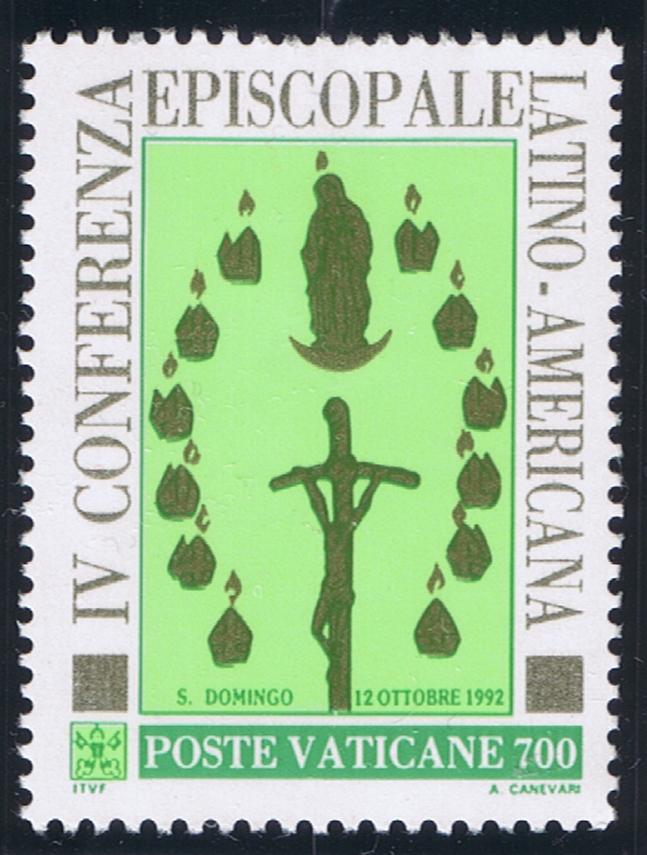 4th General Conference of the Latin America Episcopacy Crucifix and Our Lady of Guadalupe Scott 911 (1992) December 12 marks the Feast of Our Lady of Guadalupe. This title is given to the Blessed Virgin Mary when associated with the Marian apparitions that took place in 1531 in Mexico. On 9 December 1531, Juan Diego, an Aztec peasant, saw the vision of a woman on Tepayac Hill, near Mexico City. In the first of a series of five apparitions, and speaking in the Aztec language, the woman identified herself as the Mother of God and asked that a church be built on the hill. Initially, Archbishop Juan de Zumarraga (a Spanish Basque Franciscan) did not believe the request and asked Juan Diego for a sign from the lady. During a following apparition, she produced a bundle of Castilian roses to be carried in his cloak (tilma) to take to the bishop of the city as a sign. The month was December and roses were native to Spain, not Mexico. When Juan Diego visited the bishop and revealed the roses, there was an image of the lady miraculously imprinted on the tilma. This event took place on December 12, 1531.  Image of Our Lady of Guadalupe on the tilma of Saint Juan Diego From Wikimedia Commons In the public domain Subsequently, Juan Diego’s uncle miraculously recovered from an illness as foretold by the lady. She also informed Diego that she wanted to be known with the name Guadalupe, the name of a very important Marian shrine in Spain. Other miracles have been associated with Juan Diego’s cloak. There is no scientific explanation for the image, which has not deteriorated over the almost 500 years. Aztec symbols in the image assisted in the conversion of native peoples thereafter. In the 19th and 20th centuries, Our Lady of Guadalupe has served as an important Mexican national symbol. Our Lady of Guadalupe is Patron of Mexico, and of many other locales around the world. The feast day is celebrated in the United States, where a number of dioceses have Our Lady of Guadalupe as their patron. Pope Leo XIII sanctioned the feast day in 1895, and, during his visit to Mexico in 1990, Pope John Paul II confirmed the liturgical cult honoring Juan Diego, beatifying him. Twelve years later, in 2002, he proclaimed him a saint. The pope said of the humble saint: "Juan Diego, moved by piety, left everything and dedicated his life to looking after [his] tiny hermitage and to welcoming pilgrims. He trod the way to sanctity through love and prayer, drawing strength from the eucharistic banquet of our Redeemer, from devotion to his most holy Mother, from communion with the holy Church and obedience to her pastors."The date of the first apparition (December 9) is the feast day of Saint Juan Diego. The cloak of Saint Juan Diego is located at the Shrine of Our Lady of Guadalupe in Mexico City, the most visited Catholic shrine in the world. Each year, during the four days spanning the dates of the apparitions (December 9 to 12), millions of pilgrims flock to the shrine (an estimated 6.1 million pilgrims went to the shrine in 2009).  Basilica of Our Lady of Guadalupe, Mexico City The New (left) and Old (right) Basilica Churches Photo by Sebastian Wallroth From Wikimedia Commons, used under terms of the Creative Commons Attribution 3.0 Unported license REFERENCES: |