Home
 Basilica della Santa Casa, Loreto Photo by Mroselli From Wikimedia Commons, used under the terms of the Creative Commons Attribution-Share Alike 2.5 Generic license One of the fascinating stories in Christendom is that of the Santa Casa, or the Holy House. The story takes us to the Basilica della Santa Casa (or Basilica of the Holy House) in Loreto, Italy (shown above). It is known for enshrining the house from Nazareth where the Blessed Virgin Mary is believed to have lived and where she received the word from the Angel Gabriel that she would be the mother of Jesus (which was the subject of yesterday’s Daily Email: The Annunciation). Let’s take a look inside.  Marble Screen Around the Holy House Basilica della Santa Casa, Loreto Photo by Zorro2212 From Wikimedia Commons, used under the terms of the Creative Commons Attribution-Share Alike 3.0 Unported license The Holy House is a small stone structure now found inside the Basilica, surrounded by an elaborately decorated marble screen. The house is the subject of the legendary "Angelic Flight". According to tradition, the house was originally located in Nazareth. Following the Death, Resurrection and Ascension of Jesus, and the Assumption of the Blessed Virgin Mary, the structure was converted into a church. In the late 13th century, as the Saracen Armies took over the Holy Land during the Crusades, it was feared that the house would be destroyed. Legend has it that on May 12, 1291, angels miraculously lifted the house and transported it to Tersatto (modern-day Trsat, Croatia) on the northern Adriatic coast. Three years later, on December 10, 1294, it was moved again—this time across the Adriatic Sea to Italy. Eventually it settled in its current location in Loreto. While the legend of the "Angelic Flight" remains a popular religious narrative, historical research suggests a more earthly—though still remarkable—explanation, which is still tied to “Angels”. According to documents discovered in 1900, it has been suggested that a powerful Byzantine family named “Angeli” (meaning "Angels" in Greek) rescued the house, dismantled it and transported it by ship to Italy. Archaeological studies have confirmed that the house's materials (stones and mortar) are not native to Italy but match the geological make-up of materials in the Holy Land. Also, the dimensions of the house match those of the house’s foundation, which is still present in Nazareth. Today, the Holy House is enshrined within the Pontifical Sanctuary of the Holy House, the magnificent Renaissance Basilica in Loreto, which was built around the Holy House and is a site of veneration visited by countless pilgrims every year. The story of the “Angelic Flight” led Pope Benedict XV to name Our Lady of Loreto as the patron saint of aviators and air travelers in 1920. The 90th anniversary of that proclamation was remembered on the Vatican City aerogramme from 2010. Vatican City has depicted the city of Loreto, the Holy House and its story, and Our Lady of Loreto on five occasions: 1938: Two of the stamps from the first Vatican Airmail issue depict the Holy House and the act of the angels moving the house: 

House of Our Lady of Loreto, Scott C4 and C8 (1938) 1947: Two stamps from the second Vatican Airmail issue again depict the moving of the Holy House by angels: 
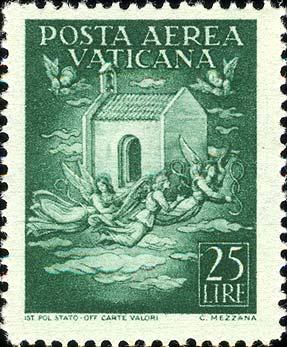
House of Our Lady of Loreto, Scott C10 and C13 (1947) 1995: Four stamps and a souvenir sheet were issued to commemorate the seventh centenary of the building of the Shrine of the Holy House of Loreto: 
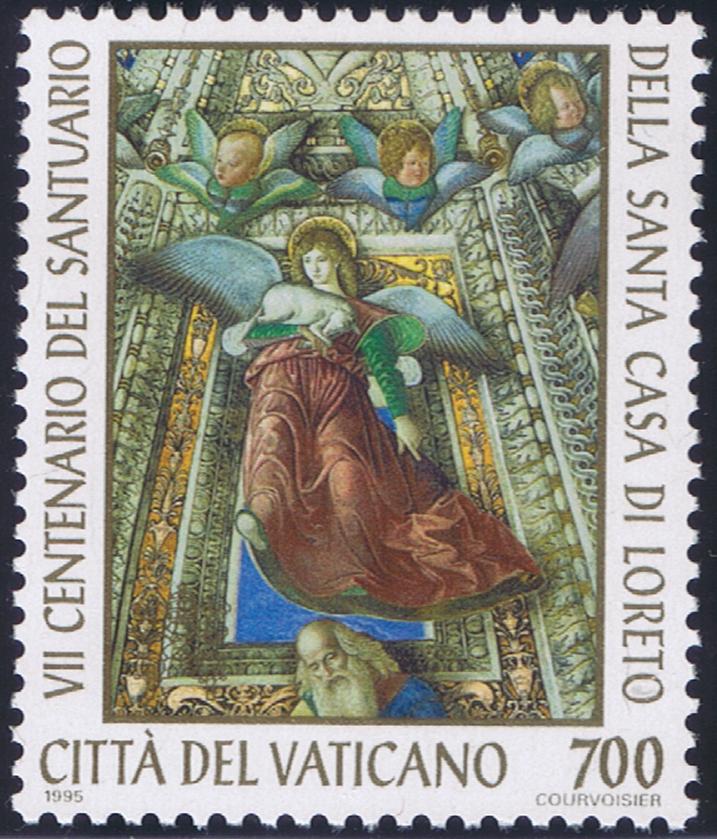
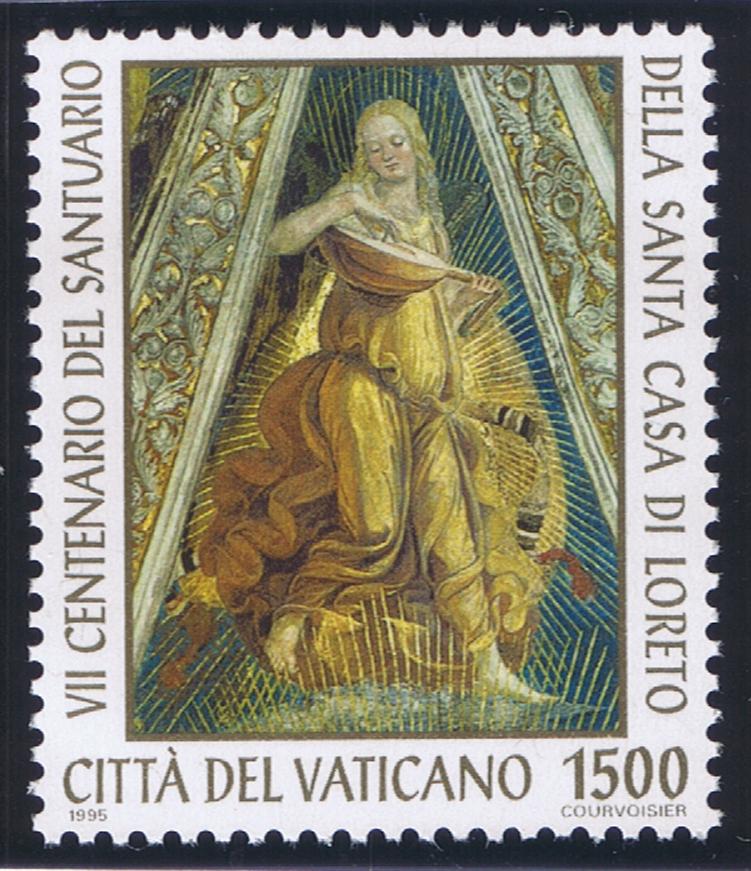
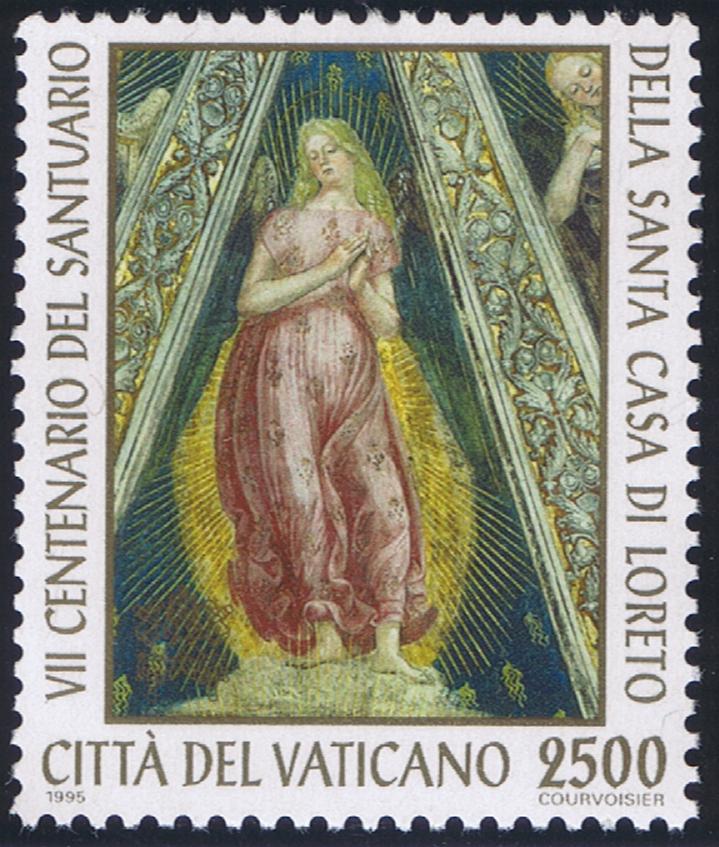 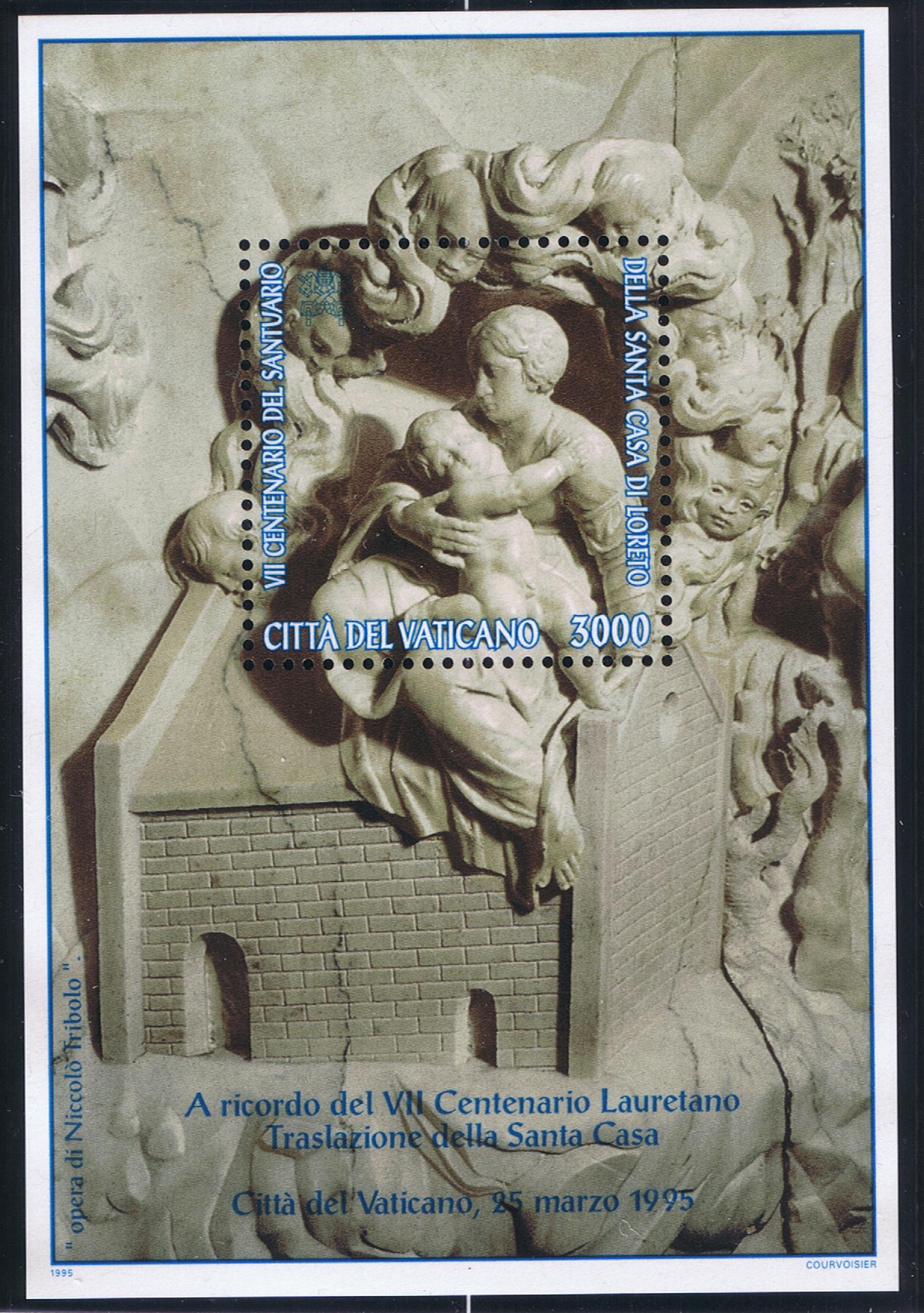
Sacristy of Saint Mark, Shrine of Loreto, Scott 973-977 (1995) 2005: One stamp was issued, as part of the annual travels of Pope John Paul II for 2004, remembering his visit to Loreto on September 5 (this turned out to be the last pilgrimage voyage of John Paul II's remarkable pontificate): 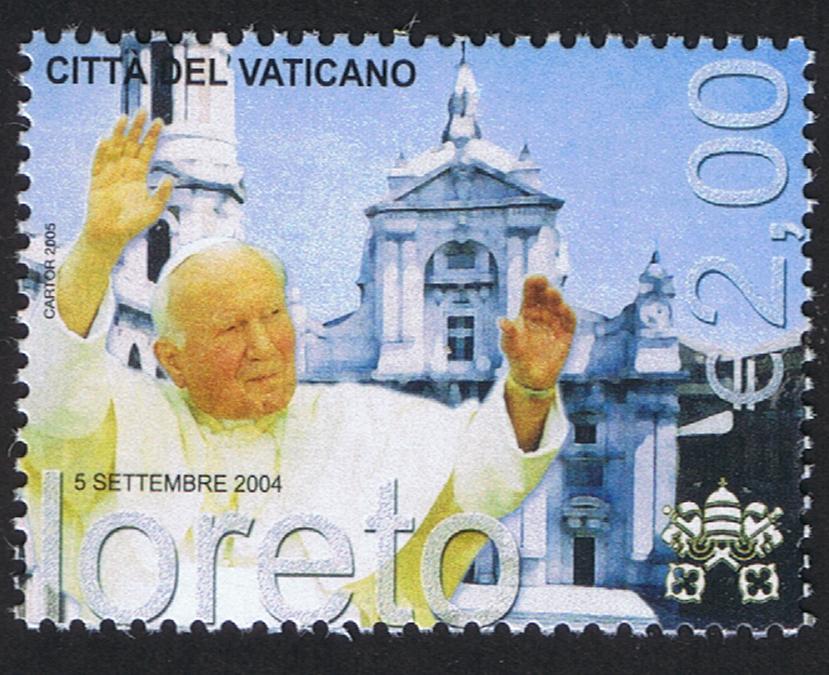 Travels of Pope John Paul II (Loreto), Scott 1311 (2005) 2010: The annual aerogramme honors the 90th anniversary of the naming of Our Lady of Loreto as the Patron of Air Travelers, so proclaimed by Pope Benedict XV in 1920: 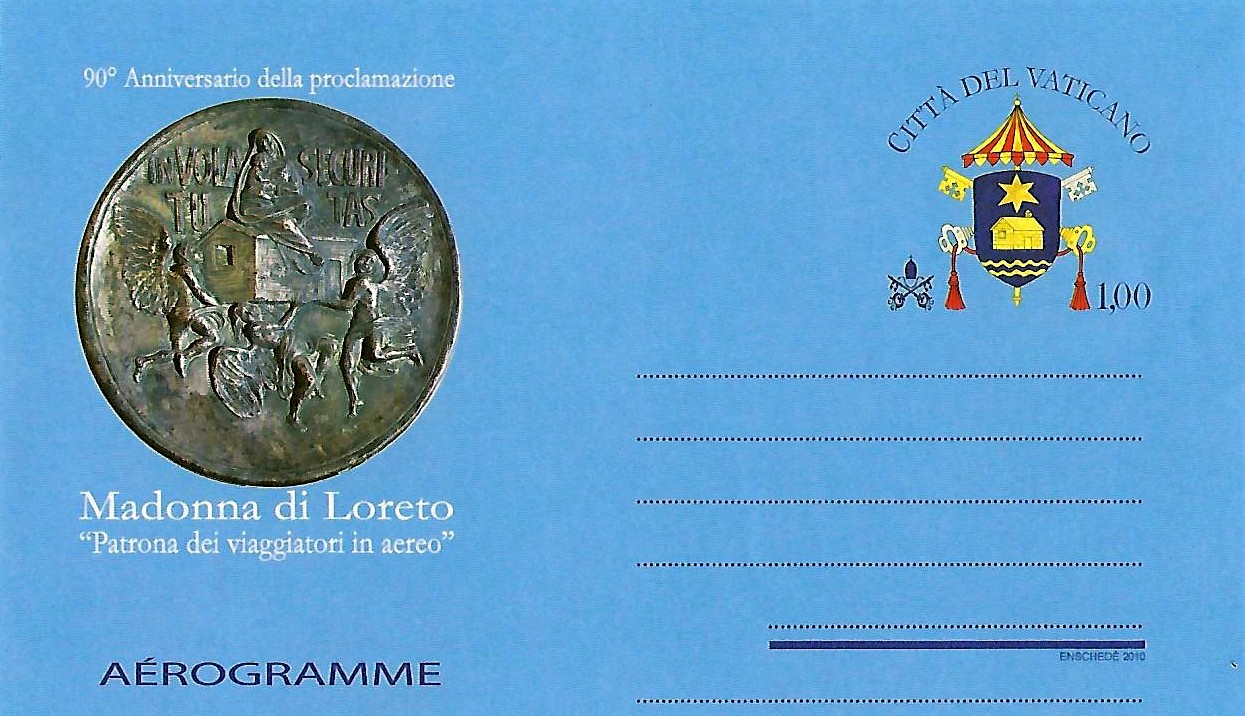 Vatican City Aerogramme: 2010 During a visit to the Basilica della Santa Casa on March 25, 2019, celebrating the Feast of the Annunciation, Pope Francis stated during his address: "The words of the Angel Gabriel to Mary: 'Greetings, o favored one', resonate in a unique way in this Shrine, a privileged place for contemplating the mystery of the Incarnation of the Son of God. Indeed, here are conserved the walls that, according to tradition, come from Nazareth, where the Holy Virgin pronounced her 'yes', becoming the mother of Jesus." REFERENCES: |