Home
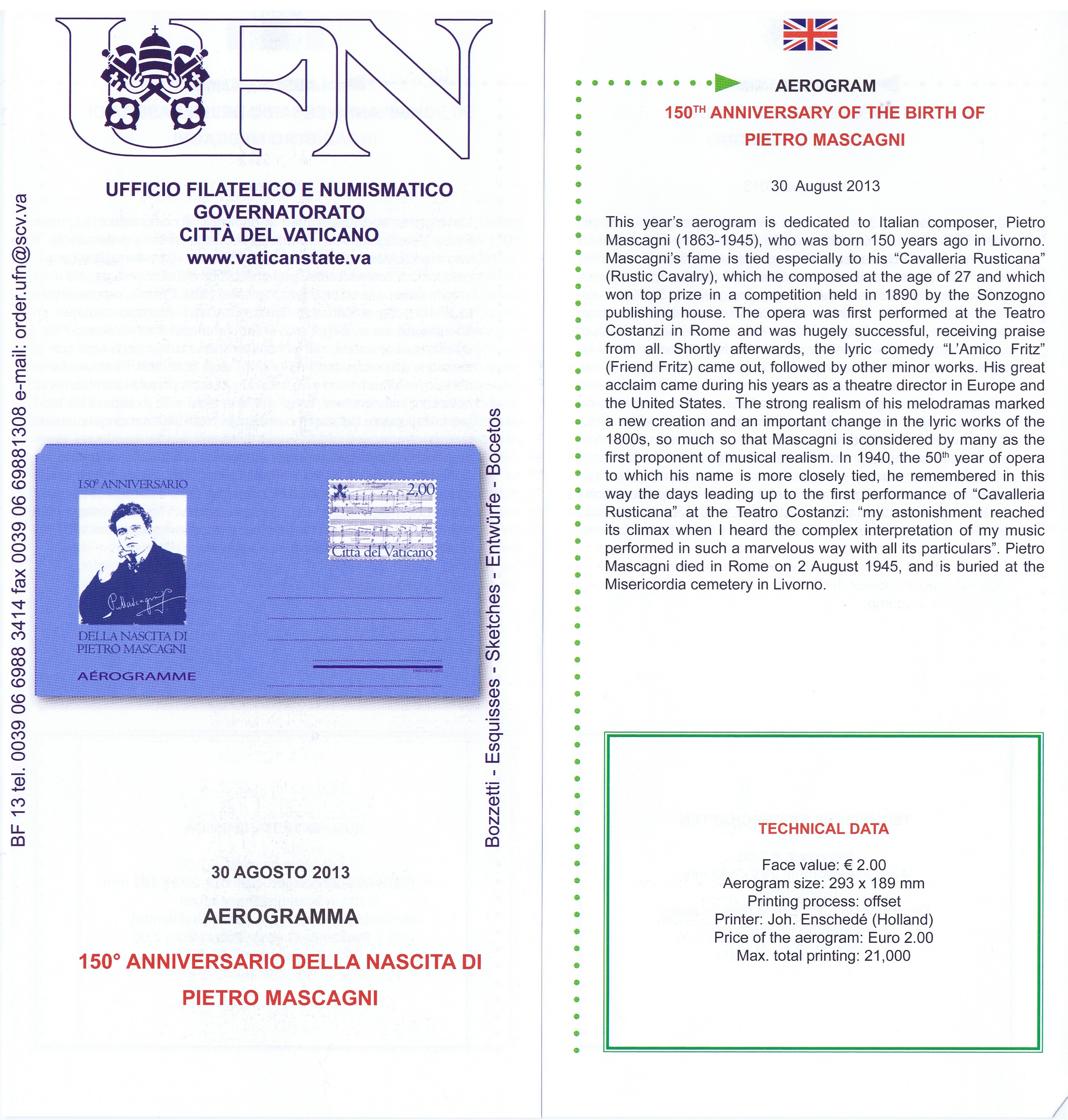
 150th Anniversary of the Birth of Pietro Mascagni 2013 Aerogramme On August 30, 2013, Vatican City issued its annual aerogramme, which commemorated the 150th anniversary of the birth of Italian composer Pietro Mascagni. Mascagni was on born December 7, 1863 in Livorno, Kingdom of Italy. He is considered to be the originator of the "verismo", or "musical realism" movement, a style of opera which is characterized by melodramatic, often violent plots, with characters drawn from everyday life. Mascagni began his studies at the conservatory at Milan, but left to join a traveling opera company. In 1890 he won a writing competition with his one-act opera Cavalleria Rusticana ("Rustic Chivalry"). It was first presented in Rome, and was an instant success, and has maintained its popularity over the years. Mascagni produced a total of fifteen operas, an operetta, and other works, including L'Amico Fritz and Iris, none of which achieved the initial success of Cavalleria Rusticana. He gained international acclaim by conducting productions of his own works and the music of others across Europe and the United States. 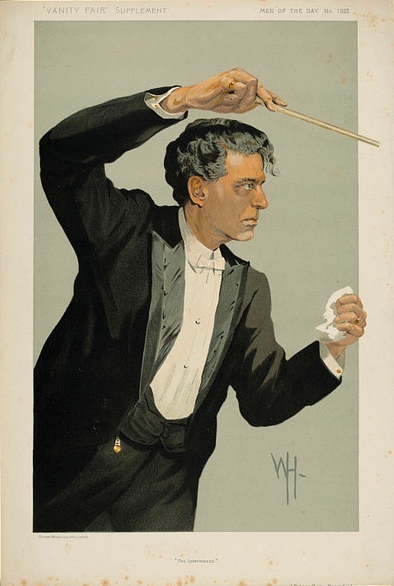 "The Intermezzo", Vanity Fair Magazine, April, 1912 Caricature of Italian composer and conductor Pietro Mascagni From Wikimedia Commons, in the Public Domain After a career spanning over fifty years, Mascagni died on August 2, 1945 in Rome. Considered by some a 'one-hit wonder' for the huge success of his very first opera, his music has lived on in classical and popular musical circles in Europe. For movie trivia buffs, Mascagni's Cavalleria Rusticana is the opera performed in the climactic ending scene of The Godfather Part III. REFERENCES: |