Home
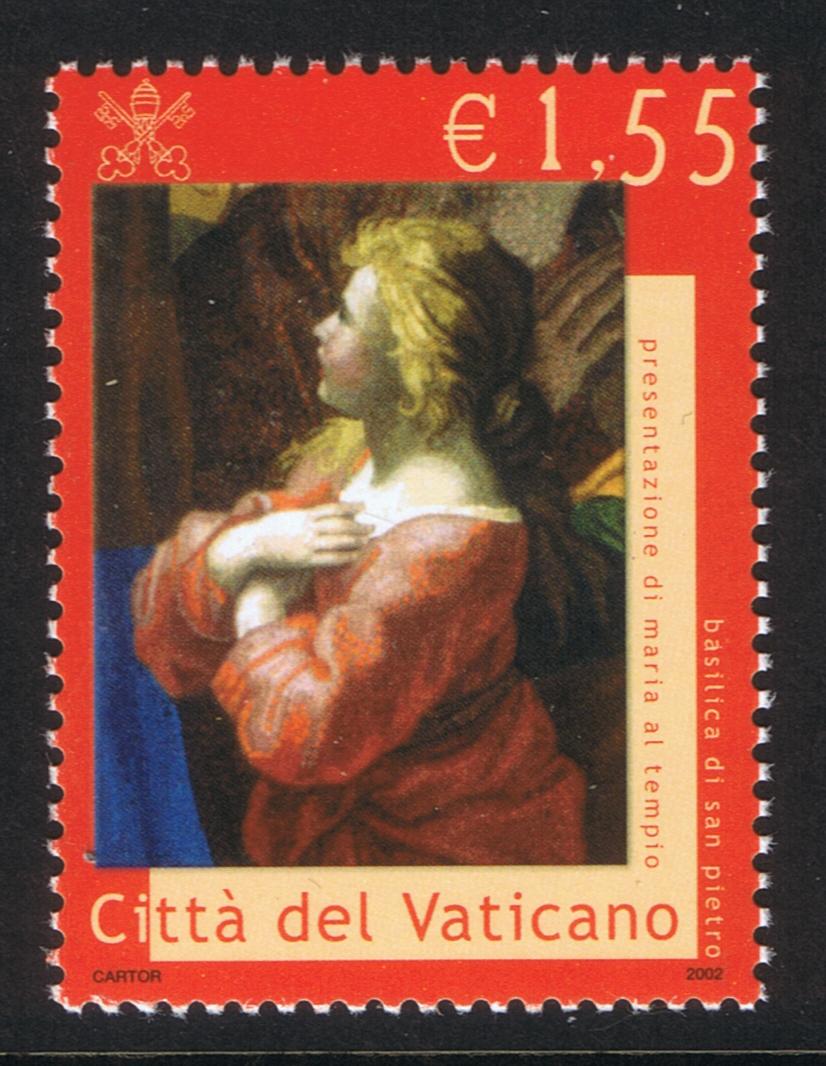 Presentation of Mary at the Temple Scott 1213 (2002) September 8 on the Catholic liturgical calendar marks the Feast of the Nativity of the Blessed Virgin Mary, the mother of Jesus Christ. This feast has been celebrated since the sixth century, with a September date being chosen since the Eastern Church year begins in September. In addition, the date falls exactly nine months following the Feast of the Immaculate Conception. The Church commemorates most saints at their dates of death. In the case of the Blessed Virgin Mary, her birth date is also commemorated due to her special role in our salvation. In addition, due to her Immaculate Conception, Mary is venerated for being 'holy' both prior to and at the time of her birth. None of the four Gospels (James, John, Luke or Matthew) discuss or record Mary's birth. The earliest written account of Mary's birth is found in the apocryphal Gospel of James from the late second century. This account also identifies Mary's parents, now venerated as Saint Anne and Saint Joachim. Although having no historical basis, James's account helps to emphasize God's special presence in Mary’s life from its very beginning. Chapter 5:2 recounts Mary's birth: "And about six months were completed, and in the seventh month she gave birth. And Anna said to her midwife, 'What is it?' And the midwife said, 'It’s a girl!' And Anna said, 'My soul is magnified this day!' And she laid down her child. And when her days were completed, Anna...gave her the name Mary."No stamps have been issued to date by Vatican City specifically commemorating the Nativity of the Blessed Virgin Mary. The stamp shown above, from the 'Our Lady in the Vatican Basilica' definitive series (Scott 1213), represents the depiction of Mary at the youngest age seen on a Vatican stamp, when, as a young girl, she is presented in the temple. The event of her birth is presented in the fresco "The Birth of the Virgin" by the early Renaissance artist Giotto, dating to around 1305:  "Birth of the Virgin", by Giotto di Bondone (circa 1305) From Wikimedia Commons, in the Public Domain In Giotto's fresco, multiple events are presented and, in fact, Mary is shown two times. First, she is in the foreground at the bottom of the work, being fed by one of the maidens, and again, in the main section of the frame, being passed from one of the maidens to her mother, Saint Anne. REFERENCES: |