Home
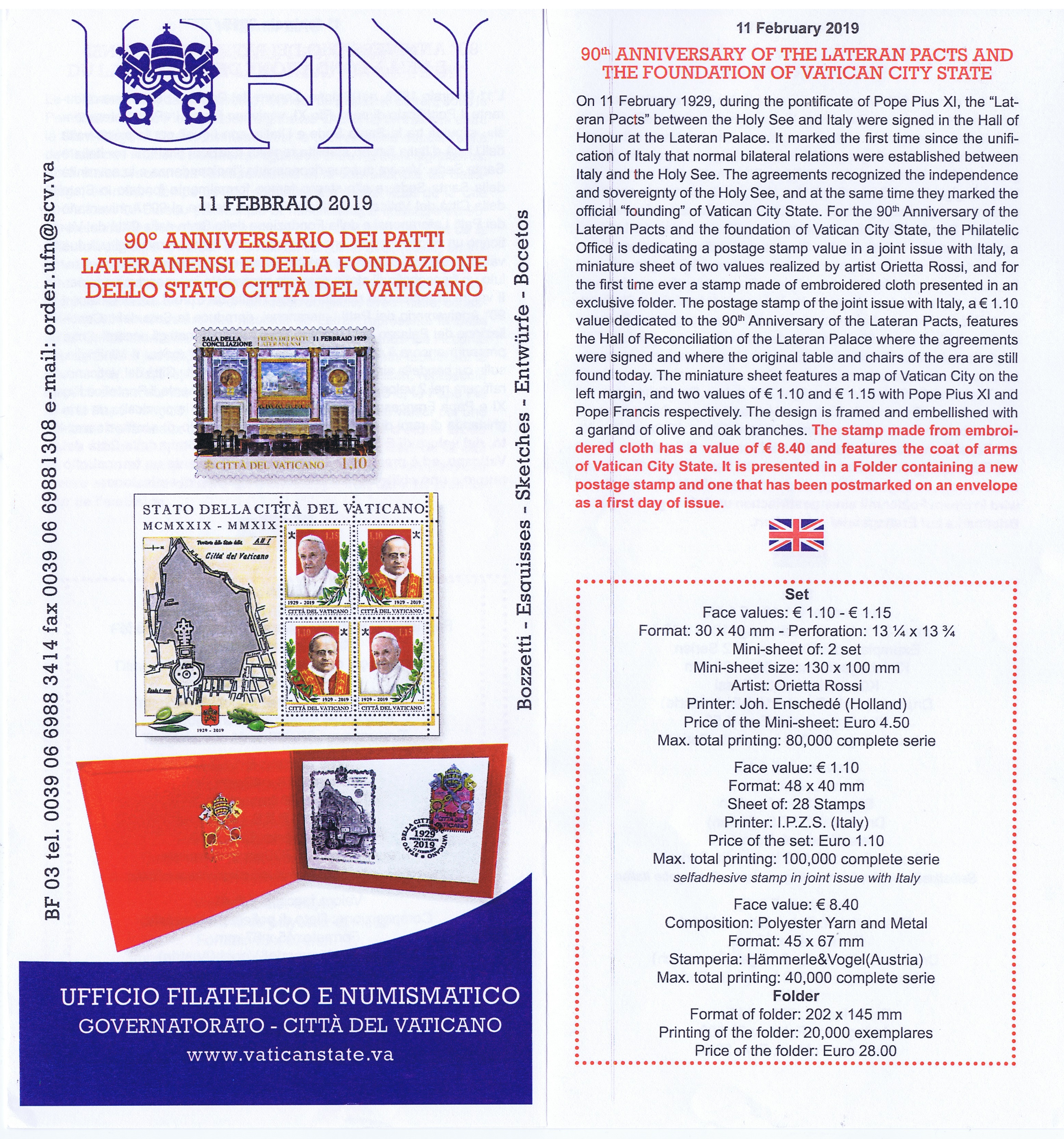
 90th Anniversary of the Lateran Pacts Embroidered Stamp (2019) Over the last couple of decades, stamp issuing authorities around the world have become quite imaginative in the use of diverse materials to create stamps. Stamps have been produced from cork, wood, metals, stone, and other materials to provide interesting looks and feels to stamps. There have even been "scratch and sniff" stamps that release distinctive smells when the surface of the stamp is scratched. The future is sure to provide more innovations in an attempt to draw attention to stamps. Cloth stamps have been around for at least twenty-five years. Switzerland is credited with issuing the world’s first truly embroidered textile stamp on February 7, 2000. The stamp featured machine-made lace and was issued to commemorate the St. Gallen embroidery industry. The TRC article in the References shows a first day cover with the stamp. However, Poland issued a souvenir sheet in 1958 that was printed on silk fabric to celebrate the 400th anniversary of the Polish Post: is that really the first "cloth stamp"? Other countries have followed suit and issued stamps of various cloth materials. On February 11, 2019, the Vatican Post Office issued three items to commemorate the 90th anniversary of the Lateran Pacts. The release included a mini-sheet (Scott 1709) containing two stamps each of Pope Pius XI and Pope Francis (with a map of the Vatican shown in the selvage) and a single self-adhesive stamp, issued jointly with Italy (Scott 1710). These items are shown at the bottom of this article, and clicking on the UFN article link in the References provides a review of the items in the 90th anniversary release. A third item from that release was the first Vatican City embroidered stamp. Composed of polyester yarn and metal, the stamp carried a high face value of 8.40 euros. The stamp was issued in a red satin folder containing both the stamp and a decorative first-day cover. The cost of the folder, including the stamp and cover, was 28 euros. Expensive and beautiful! However, there was a problem. The embroidered stamp was not made available for sale individually. It could only be purchased as part of the commemorative folder offering. As a result, the UFN ran afoul of the regulations of the Scott Catalogue, who chose not to assign the stamp a catalog number. VPS Webmaster Marvin Lanahan investigated the issue, and received the following explanation from Martin J. Frankevicz, the New Issues Editor for Amos Media (the publisher of the Scott Catalogues): The embroidered item was footnoted as it violated our catalog listing policy by offering an 8.40 euro face-value stamp only in a package that contained an unused stamp and one on a first-day cover for 28 euros. The way the package was sold forced collectors to buy a first-day cover, which, of course, is a stamp that cannot be used by the purchaser for postage. Thus, if the collector really did not want the FDC, 28 euros had to be spent for the valid stamp that the collector desired. That is an excessive amount above the face value and made the item in violation of clause 6 of our catalog listing policy. If the unused stamp were available separately, it may have been listable depending on what they might have charged for it, but it was not made available in anything but the package.If you refer to issues of the Scott Catalogue from the year 2020 (the first year where stamps from 2019 are listed) and beyond, you will find the footnote for the embroidered stamp, with an explanation and no image. 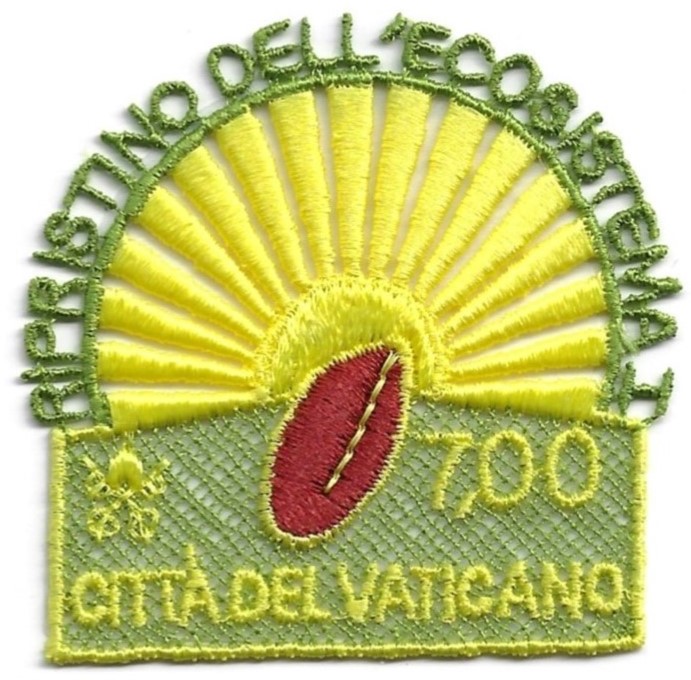 Decade of Ecosystem Restoration Scott 1804 (2022) In 2022, Vatican City issued its second embroidered stamp. Fortunately, this stamp did not suffer the same fate as the first cloth stamp. On September 1, 2022, Vatican City issued the first stamp in what will be a decade-long series of stamps to call attention to an initiative of the United Nations entitled "The Decade for Ecosystem Restoration". The first stamp in the series is an embroidered cloth stamp, shown above. As part of the production run of 45,000 stamps, a total of 3.9 million elements of polyester yarn were used. The material was obtained by recycling of 4,000 600-ml plastic bottles. Amazingly, each stamp contains approximately 75 meters of yarn, with about eight stamps being produced from each plastic bottle. And since the stamp could be purchased at its face value, it is listed in the Scott Catalogue (Vatican City, Scott 1804). Will Vatican City issue more cloth stamps, or will it venture into stamp production using materials other than paper? It remains to be seen what the future will hold. REFERENCES: 
 90th Anniversary of the Lateran Pacts Scott 1709-1710 (2019) |