Home

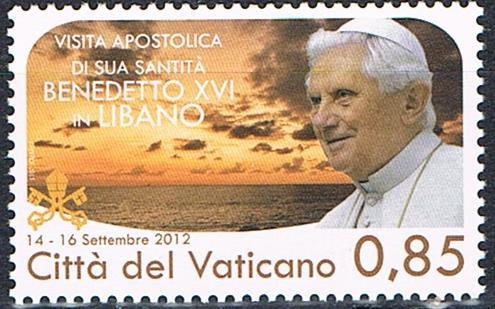 Papal Journeys to Lebanon: Pope John Paul II, 1997 (Scott 1091, 1998) Pope Benedict XVI, 2012 (Scott 1543, 2013) On Tuesday, Pope Leo XIV returned to Rome following his six-day trip to Türkiye and Lebanon, the first pilgrimage voyage of his pontificate. Earlier this week, a Daily Email looked at one of the highlights of his stop in Türkiye, his visit to the site of the Council of Nicaea. Today we review his first stop in Lebanon, a trip to pay homage to Saint Charbel Makhlouf.  Photo of Saint Charbel Maklouf From Wikimedia Commons, in the Public Domain Saint Charbel was a 19th century Lebanese Maronite monk and priest and member of the Baladite order (also known as the OLM—Lebanese Maronite Order). During his speech at the Monastery of Saint Maroun in Annaya, the site of Saint Charbel’s tomb, Pope Leo described this popular saint as a “man who wrote nothing, who lived a hidden and silent life, yet whose fame spread throughout the world”. Born in 1828, Saint Charbel died seventy years later, on Christmas Eve, 1898. He was beatified on December 5, 1965, by Pope Paul VI, who later canonized him on October 9, 1977. Pope Leo is the fourth pope to set foot in Lebanon, but the first to visit Saint Charbel’s burial site. Pope Paul VI spent a brief lay-over in Lebanon while enroute to Türkiye in 1967, and Pope John Paul II (in 1997) and Pope Benedict XVI (in 2012) made apostolic visits to the country. The pope noted that “my predecessors – especially Saint Paul VI, who beatified and canonized him – would have greatly desired to [visit the tomb].” 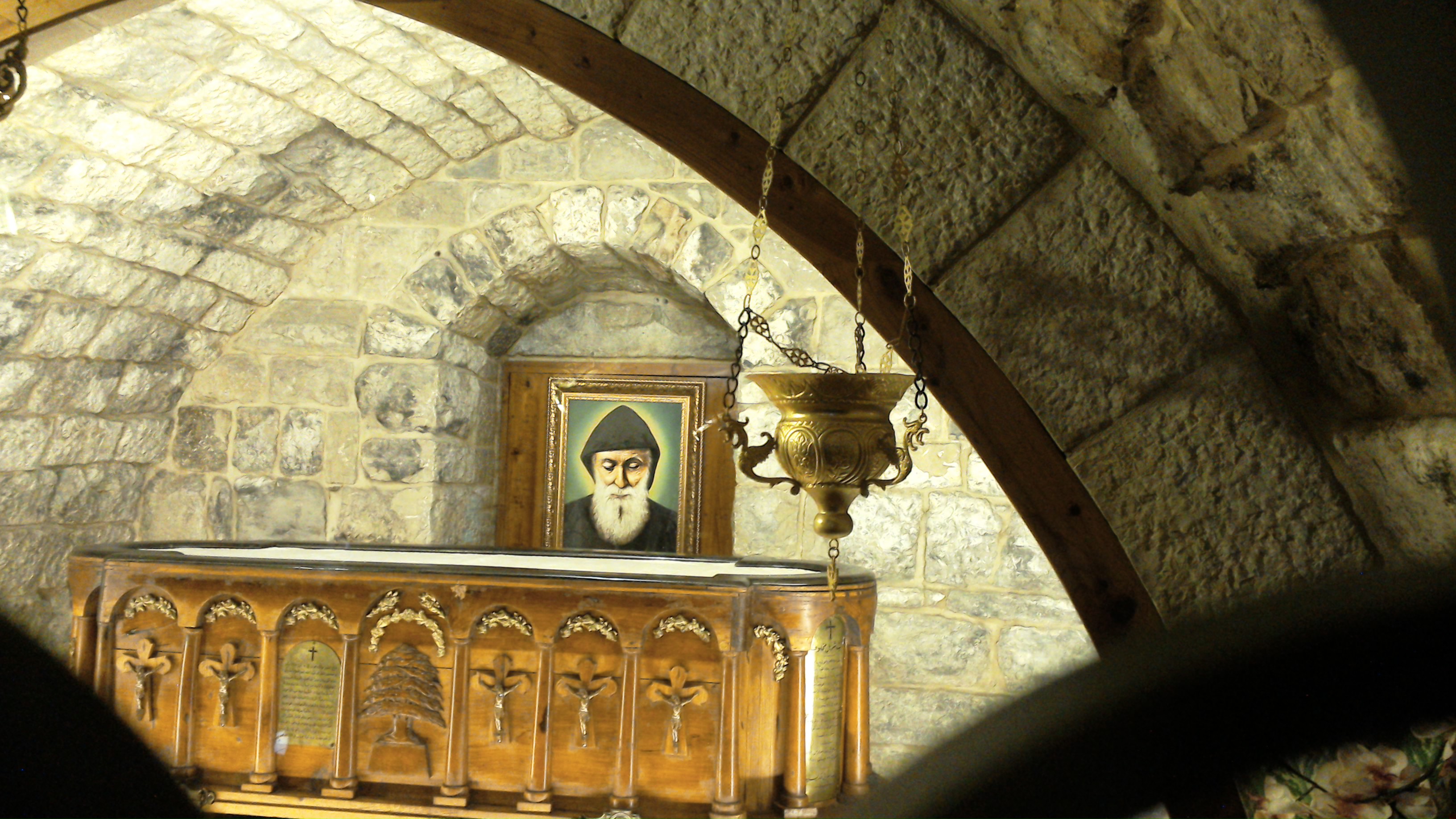 Tomb of Saint Charbel Maklouf Photo by LLEW From Wikimedia Commons, used under the terms of the Creative Commons Attribution-Share Alike 4.0 International license Speaking before the tomb of Saint Charbel, Pope Leo summed the legacy of the saint as follows: ” The Holy Spirit formed him so that he could teach those who live without God how to pray, those who live immersed in noise how to be silent, those who live ostentatiously how to be modest, and those who seek riches how to be poor. All of these behaviors are counter-cultural, yet, that is precisely why they attract us, just like fresh, pure water draws those walking in the desert…[He] reminds us, bishops and ordained ministers, of the evangelical demands of our vocation. At the same time, his steadfastness, as radical as it was humble, is a message for all Christians.”As a gift to the basilica, Pope Leo brought a lamp, to be left “as a symbol of the light that God has enkindled here through Saint Charbel…[and] I entrust Lebanon and its people to the protection of Saint Charbel, so that they may always walk in the light of Christ.” REFERENCES: |