Home

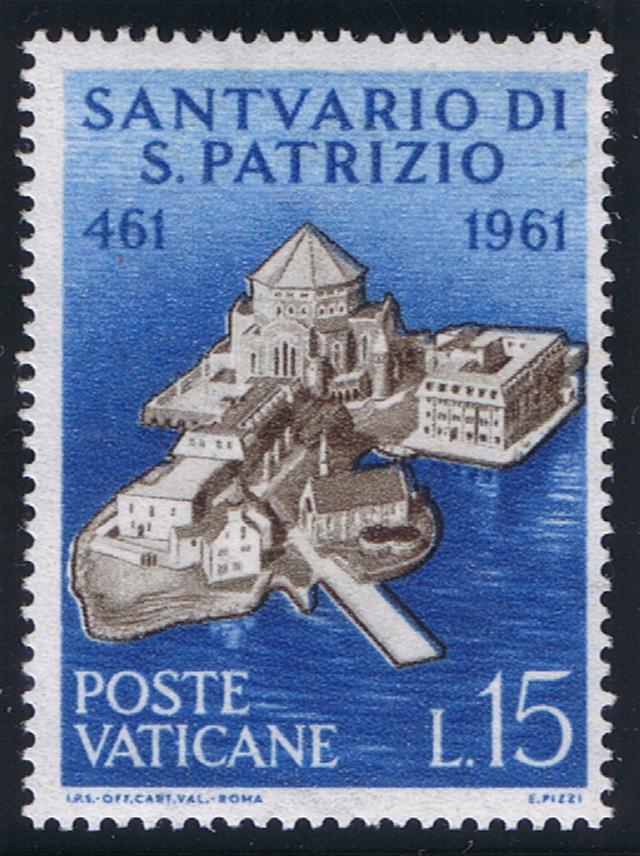
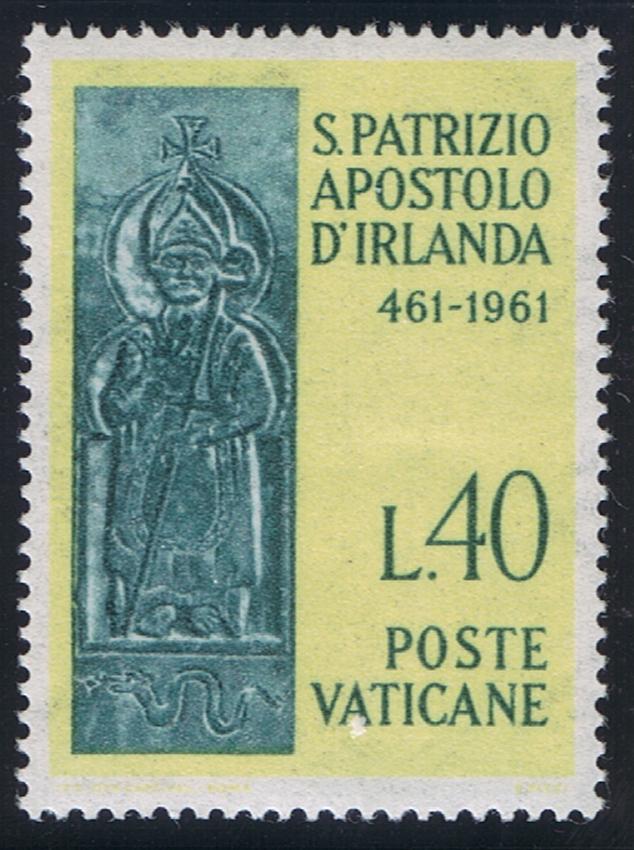
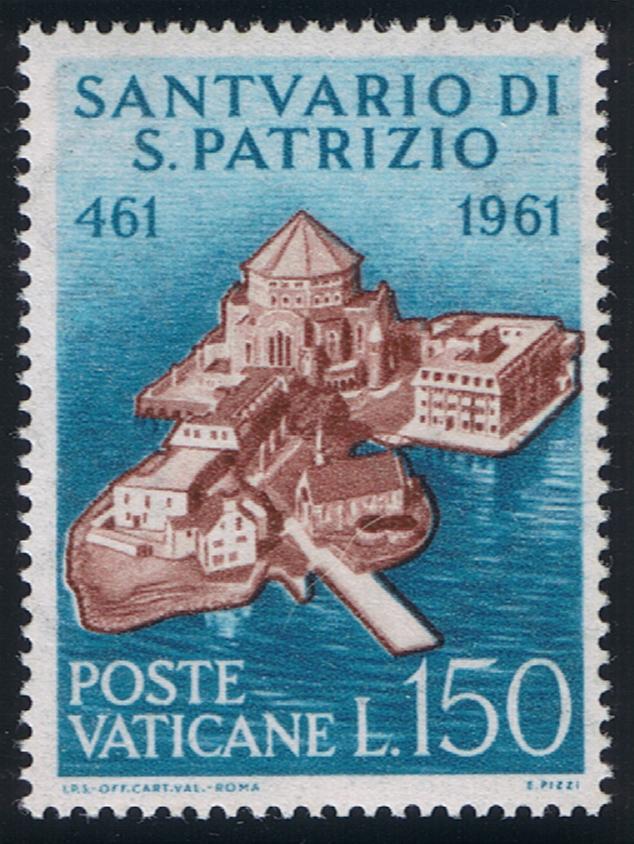 Saint Patrick: 1500th Anniversary of Death Scott 313-316 (1961) Shamrocks. Corned beef and cabbage. Green beer. These items point to one thing—Saint Patrick’s Day. This feast is celebrated on March 17 (or in some locales on the Sunday closest to March 17) and is almost a national holiday in the United States, where about 10% of the population professes an Irish heritage. In Ireland, it is celebrated as a public holiday. The date marks the date of death for Saint Patrick, who is known as the "Apostle of Ireland". He is the primary patron saint of Ireland (the others being Saint Brigid of Kildare and Saint Columbkille). He is also the patron saint of Nigeria. Details regarding the life of Saint Patrick are uncertain, due to a lack of concrete evidence and certified writings. So, who was this saint, and can we separate the man from the legend? Patrick may have been born in Dunbarton, Scotland, Cumberland, England, or in northern Wales, around the year 387 AD, although current research places his date of birth (and date of death) a little later than earlier accounts. At the age of 16, he and a group of his father’s slaves were captured by Irish raiders and sold into captivity. Six years later, he escaped and migrated to the mainland of Europe (probably to France). He may have studied at Lerins (off the French coast) and spent time at Auxerre. During his earlier captivity, he underwent a spiritual conversion, and his great desire was to proclaim the good news. He would return to Ireland to do just that.  Saint Patrick Banishing Snakes from Ireland Facade, Cathedral of Saint Patrick, El Paso, Texas Photo by Lyricmac From Wikimedia Commons, used under the terms of the Creative Commons Attribution-Share Alike 3.0 Unported license Legends abound regarding Saint Patrick (for example, the expelling of snakes from Ireland), but there can be no doubt regarding the humility and courage that exemplified his remarkable missionary work. Despite experiencing both suffering and success (which he accepted with equal indifference), he served as God’s instrument for winning most of Ireland for Christ. One of the few authentic writings attributed to Saint Patrick is his “Confessio”. A man of action rather than words, the book recounts his unwavering belief in his vocation, and in the cause that he had espoused: the spread of Christianity in Ireland. Saint Patrick is believed to have died in 461 AD. The location of his grave is shrouded in mystery (one suggested site is Downpatrick, County Down, Ireland). As mentioned earlier, his dates of birth and death are somewhat in question, and his history has been at times conflated with Palladius, the first bishop of the Christians of Ireland who certainly predated Saint Patrick. Despite the confusion and lack of concrete documentation, there is no doubt regarding the accomplishments of Saint Patrick, who brought Christianity to Ireland and converted the island from paganism in the process. Historian J. B. Bury writes: “Patrick did three things. He organized Christianity which already existed. He converted kingdoms which were still pagan, especially in the west. And he brought Ireland into connection with the church of the [Roman] empire, making Ireland formally part of universal Christendom.”Two references below from Vatican Notes provide deeper insights into the history of Saint Patrick. St. Patrick was never formally canonized by the Church as there was no formal process for canonization until the end of the 11th century. Nonetheless, the cult of Saint Patrick spread from Ireland throughout the world, in great part due to Irish emigration, particularly to North America. Vatican City issued a set of four stamps, shown at the top of the page, marking the 1,500th anniversary of his death in 1961. In addition to the stamps from Vatican City, here are two stamps issued by Ireland in 1937 honoring Saint Patrick: 
 Irish Stamps Issued September 8, 1937 Saint Patrick Blessing the Paschal Fire From Wikmedia Commons, in the Public Domain REFERENCES:  Saint Patrick's Day Card (circa 1909) "Erin Go Braugh" ("Ireland Forever") From Wikimedia Commons, in the Public Domain |