Home
On Saturday, Pope Leo completed a whirlwind trip to the Principality of Monaco. One of our readers posed the following question, based on a statement from last week’s Daily Email for the trip: “Subject: Trip to Monaco. Hi! I was struck by the reference to ‘last Catholic constitutional monarchy in Europe.’ What about Spain, Belgium and Luxembourg?” Good question—and what about Liechtenstein, another principality with deep Catholic roots? This prompted an internet search to look at European countries with existing monarchies and Catholic traditions. Here is a quick look at each:  Monaco (Scott 1279)  Spain (Scott 1283)  Belgium (Scott 1283)  Luxembourg (Scott 1278) 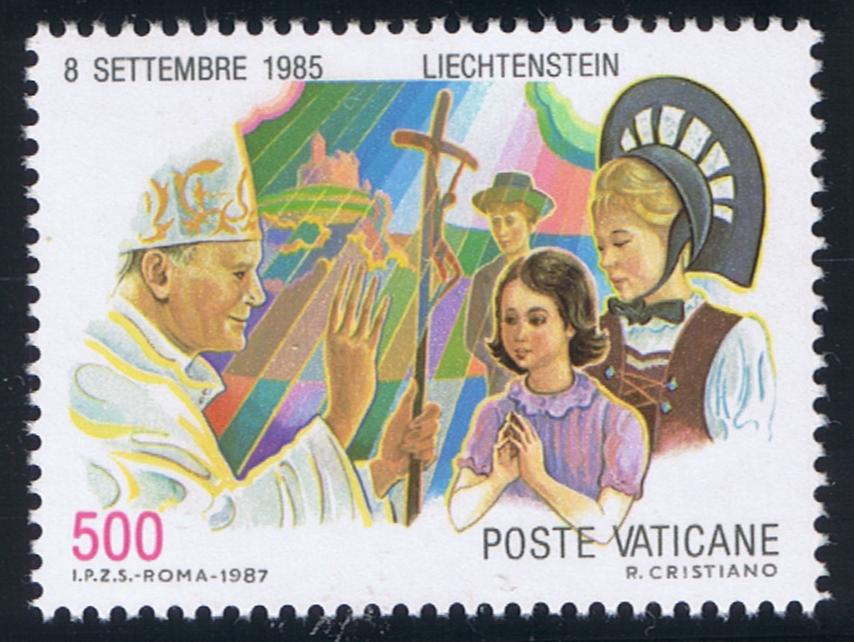 Liechtenstein (Scott 798)  Vatican City (Scott 1275) And what about Vatican City? Roman Catholicism is the official church of the country, but its temporal ruler, Pope Leo XIV, is its “absolute monarch” by virtue of his position as head of the Roman Catholic Church, and he is an elected rather than hereditary ruler. The stamps in this article primarily come from the 2004 Vatican City issue “The Euro Unites Europe”, showing the flags and coins from countries that had converted to the new currency. The stamp for Liechtenstein commemorates the visit of Pope John Paul II in 1985. |