Home
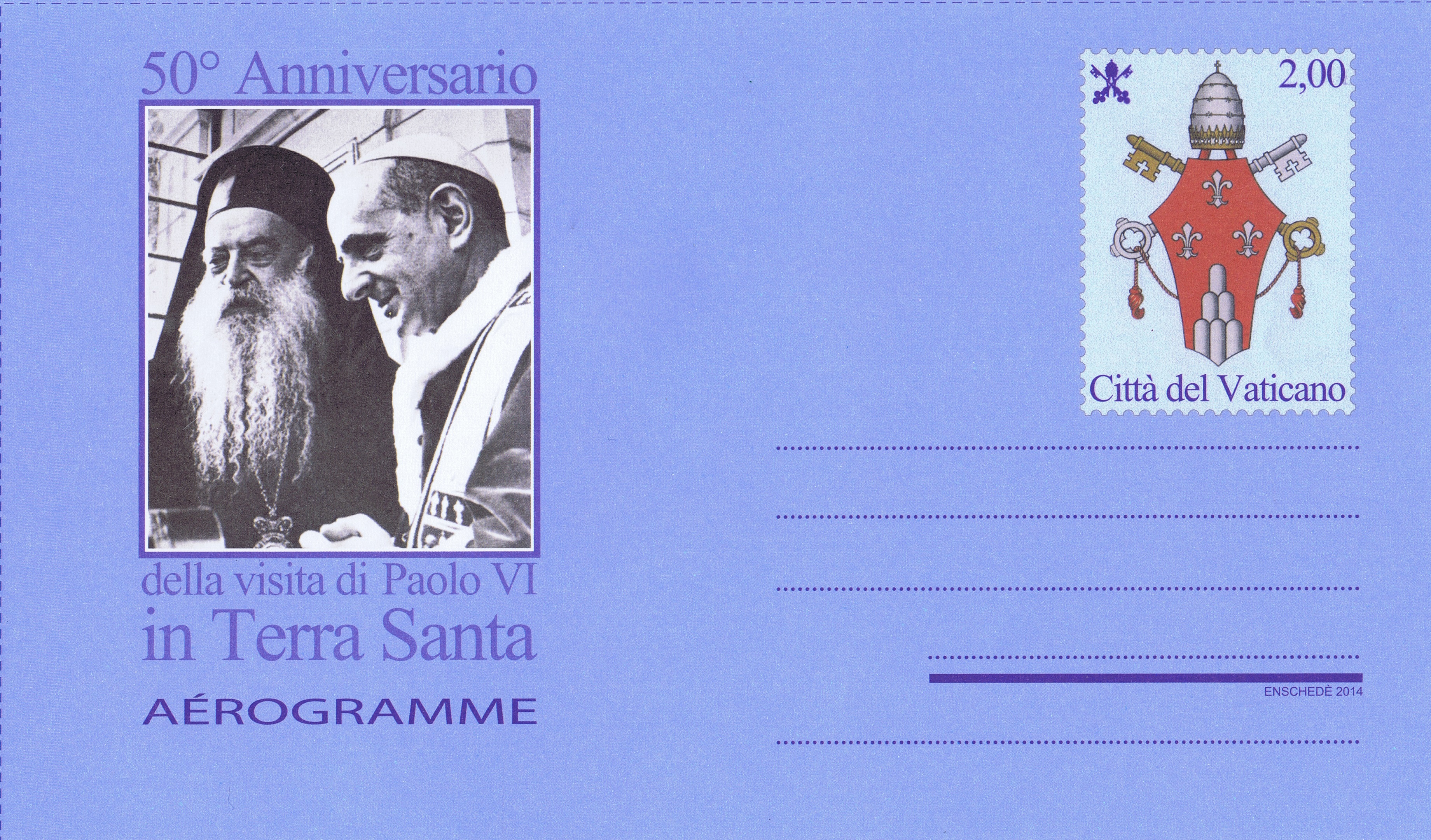 50th Anniversary: Visit of Pope Paul VI to the Holy Land Aerogramme, 2014 “Nostra aetate” (Latin for "In Our Time") is the Second Vatican Council's landmark 1965 declaration on the Roman Catholic Church's relationship with non-Catholic and non-Christian religions. Promulgated by Pope Paul VI on October 28, 1965, it serves as a foundational text for modern interreligious dialogue. Pope Benedict XVI, who participated at Vatican II as a young theological expert (peritus), described it as the Church’s “Magna Carta” on relations between religions. “Nostra aetate” is the shortest of the documents produced during Vatican II, where sixteen documents in total were generated during the Second Vatican Council. It is "the first [document] in Catholic history to focus on the relationship that Catholics have with Jews", as well as with other faiths such as Hinduism, Buddhism and Islam. It “reveres the work of God in all the major faith traditions.” Starting with the papacy of Pope Paul VI, one sees the effort to find commonality between not only various Christian denominations but also between all religious faiths. The pope’s pilgrimage to the Holy Land in 1964 (whose 50th anniversary is commemorated on the 2014 Vatican City aerogramme shown at the top of this article), the first voyage of a pope outside of Italy in over 150 years, began a dialogue with Eastern Orthodox Christians in an effort to heal the 900+ years long schism between the Eastern and Western Churches. The next year, “Nostra Aetate” laid the groundwork for future efforts to find common ground with other religious faiths. Following the lead of Pope Paul VI and continuing to the present day, all popes have engaged in numerous efforts to interact with other faiths. Pope Leo XIV has continued to espouse the key teachings of “Nostra aetate”. In September, he endorsed the Vatican’s document entitled “A Journey of Hope: Sixty Years of Interreligious Dialogue and Fraternity in the Light of the Conciliar Declaration Nostra Aetate”. The document comes one year after 60th anniversary of “Nostra aetate” and emphasizes building a fraternal society that accepts differences between religious faiths, rather than trying to form a single world religion. This gentle balancing act was articulated by Pope Benedict, who argued that “Nostra aetate” defines the Church’s respect for the diversity of human faiths while remaining firmly anchored in one's own. And last week’s 40th Assisi Peace Gathering continued the legacy of interfaith collaboration. The efforts of the popes to cultivate interreligious harmony have been presented on the stamps issued by Vatican City over the last 60 years, tied primarily to their apostolic journeys to regions where Christians live in a minority. Here are some examples of papal pilgrimage journeys which promoted the efforts of “Nostra aetate”. In particular, the 2021 Pontificate of Pope Francis set depicts visits by the pope with the leaders of four religious denominations. Pope John Paul II—Visit to the Roman Synagogue, 1986 (Scott 1236i, 2003): 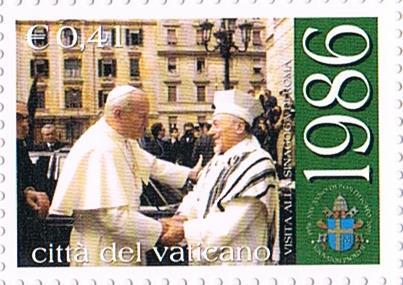
Pope John Paul II—Visit to the Umayyad Mosque in Damascus, Syria, 2001 (Scott 1233, 2002): 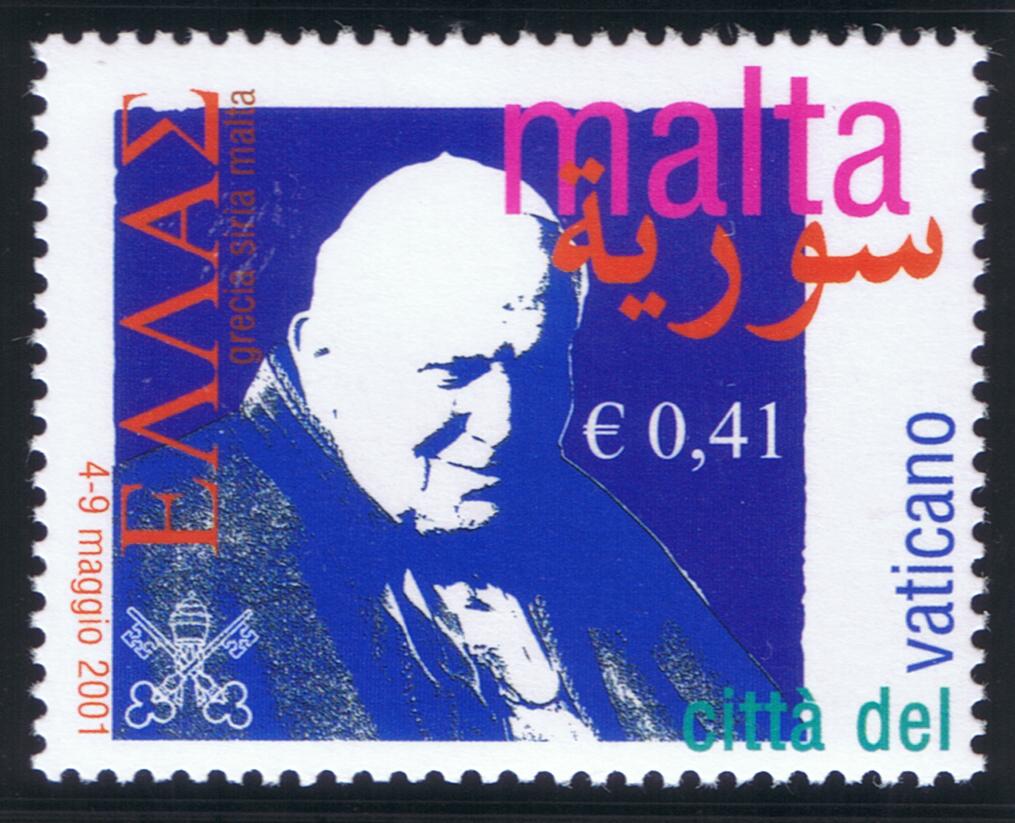
Pope Benedict XVI—Visit to Holy Land, 2009 (Scott 1456M, 2010): 
Pontificate of Pope Francis, 2021 (Scott 1760-1763): 
 

The “Vatican News” article in the references includes a brief 10-minute video remembering “Nostra Aetate” and the voyages of the popes to the sites of other religious faiths to build on the common good shared by all religions. REFERENCES: |