Home
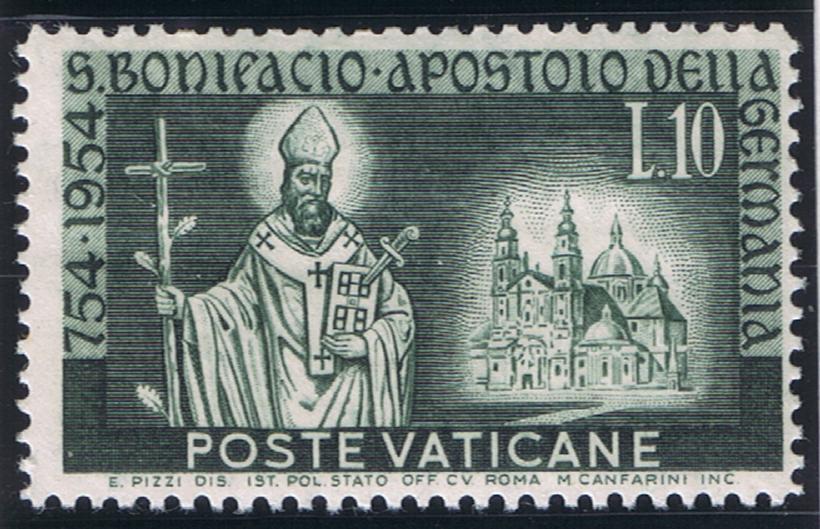


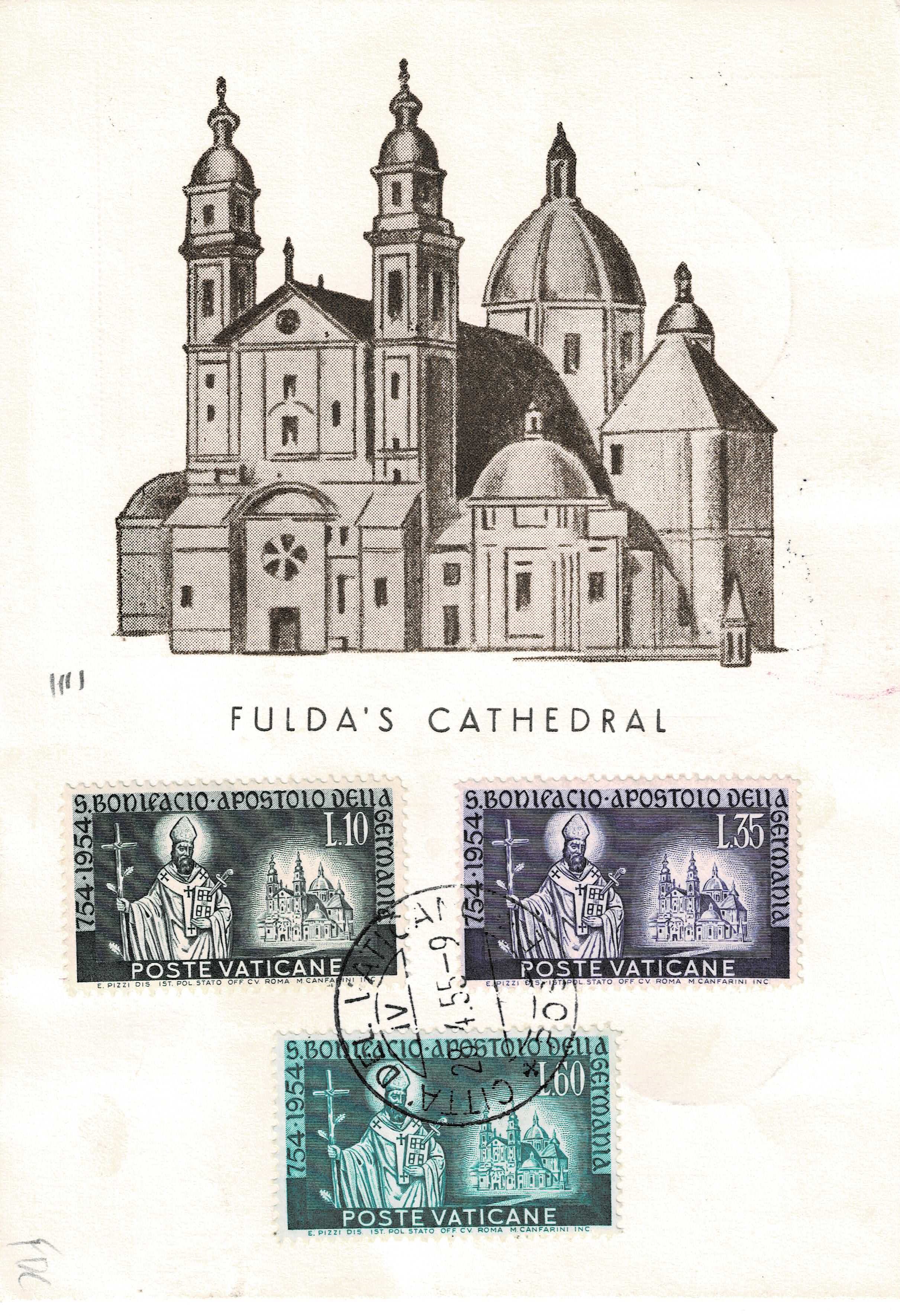
In the year 680, Winfrid, the future St. Boniface, was born at Crediton in Devonshire, England. Early in his youth a group of missionaries stayed at his father's house and told him of the work they carried on among the pagans. So moving were their stories that young Wynfrith, as he was sometimes called, expressed a desire to devote himself to the spreading of the Word of God. At the age of 13, he entered the monastery of Exminster at Exeter where he was trained in the ways and life of a missionary. After his studies, he settled at Nursling, in Hampshire, where he was ordained a priest in 710. This Benedictine monk soon began his missionary work in Holland but his attempts to convert the pagans were fruitless. He then decided to journey to Rome to obtain the blessing of the pope on his works. Upon granting the blessing, Pope St. Gregory II authorized Boniface to preach the gospel among the various German tribes. With the encouragement of the pope, he traveled first to Bavaria and Thuringia, next to Friesland where he labored for three years, and then to Hesse and Saxony. If we were to trace the travels of Boniface on the map it would resemble a ball of yarn a little kitten had played with and strewn over the area. Everywhere he went, Boniface destroyed pagan temples and raised churches on their sites. Wherever he could he used the objects of idolatry to contribute, in some way, to the glory of God. On one occasion, Boniface cut down a huge oak tree dedicated to Jupiter. He then used the wood of the oak to build a church which he dedicated to St. Peter, the Prince of the Apostles. Another event, concerning the tree worship of the pagans, was the adoption of the evergreen, long held as an idol by the tribes, to honor the Birth of Christ which we now represent every year with our Christmas tree. In 723, at the call of the pope, Boniface again journeyed to Rome. As a sign of approval for his works, Pope St. Gregory II consecrated him bishop and gave him the task of extending and organizing the rising German Church. The following year, armed with letters from the pope to Charles Martel, King of the Franks, and all the princes and bishops of Germania, requesting that they grant him whatever aid needed, Boniface returned to Hesse. With diligent care, he undertook the reforming of abuses existing among the clergy. He continued to carry on his work of destroying pagan idols, erecting churches and monasteries, and preaching the Word of God. To help him with his work he appealed to the priests, monks, and nuns of England who hastened to his aid. In recognition of his services, Pope St. Gregory III named him archbishop and primate of all Germany, with full powers to establish bishoprics wherever he deemed it necessary. Boniface then made a third visit to Rome in 738 and was appointed Papal Legate for Germany. He again returned to the land of his work. Boniface realized that his life was ebbing and wished again to convert more to Christianity. He appointed a successor to his monastery and set out among the fresh pagan tribes. On June 5, 754, Boniface was resting in his tent at Dokkum, in West Friesland ( now the Netherlands ) waiting to give the Sacrament of Confirmation to a number of newly baptized Christians. Suddenly, and unexpectedly, a horde of hostile heathens swept down upon the camp. One of the group burst in upon Boniface and raised his sword to kill him. He quickly raised the book he was reading to protect his face. This meager protection did not serve the saint long as it struck in furious thrusts. Together, with all 52 of his attendants, Boniface met his martyrdom. To mark the twelfth centenary of his martyrdom, the Vatican, on April 28, 1955, released a set of three commemoratives. The design was the work of the noted Edmondo Pizzi and depicts St. Boniface holding the book that served as his protection on that fateful day. This book is believed to be the Codex Ragyndrudis, which is today preserved at Fulda. To the right of St. Boniface is the Cathedral or Dom of the Holy Redeemer at Fulda founded by St. Boniface. Its crypt serves as a resting place for the remains of the Apostle of the Germans. Technical Details: Scott Catalogue - 192 - 194 Date Issued - 28 April 1955 Face Value - 10 l, 35 l, 60 l Perforations - 13 Printer - The Italian Government Printing Works |
| (Vatican Notes Volume VIII, Number 3, Pages 11-12) |