The Daily Question
Which Carmelite saint, though illiterate, was known for receiving divine insights and mystical visions, while the other authored spiritual classics that shaped Christian mysticism for centuries?
1. Mariam Baouardy and Teresa of Ávila
2. Teresa of Ávila and Thérèse of Lisieux
3. Edith Stein and Mariam Baouardy
4. Hildegard of Bingen and Teresa of Ávila
2. Teresa of Ávila and Thérèse of Lisieux
3. Edith Stein and Mariam Baouardy
4. Hildegard of Bingen and Teresa of Ávila
Your answer was: Edith Stein and Mariam Baouardy
Answer:
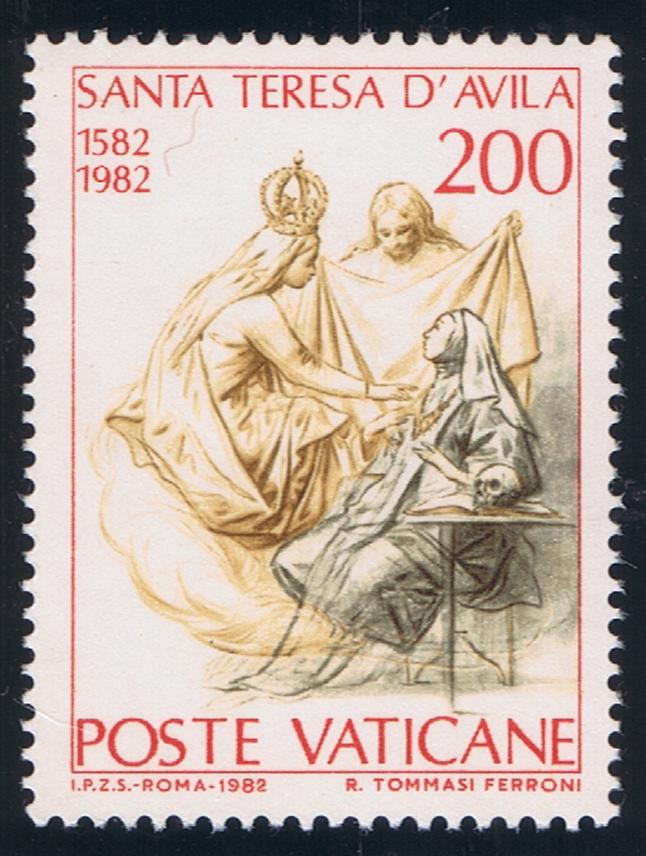
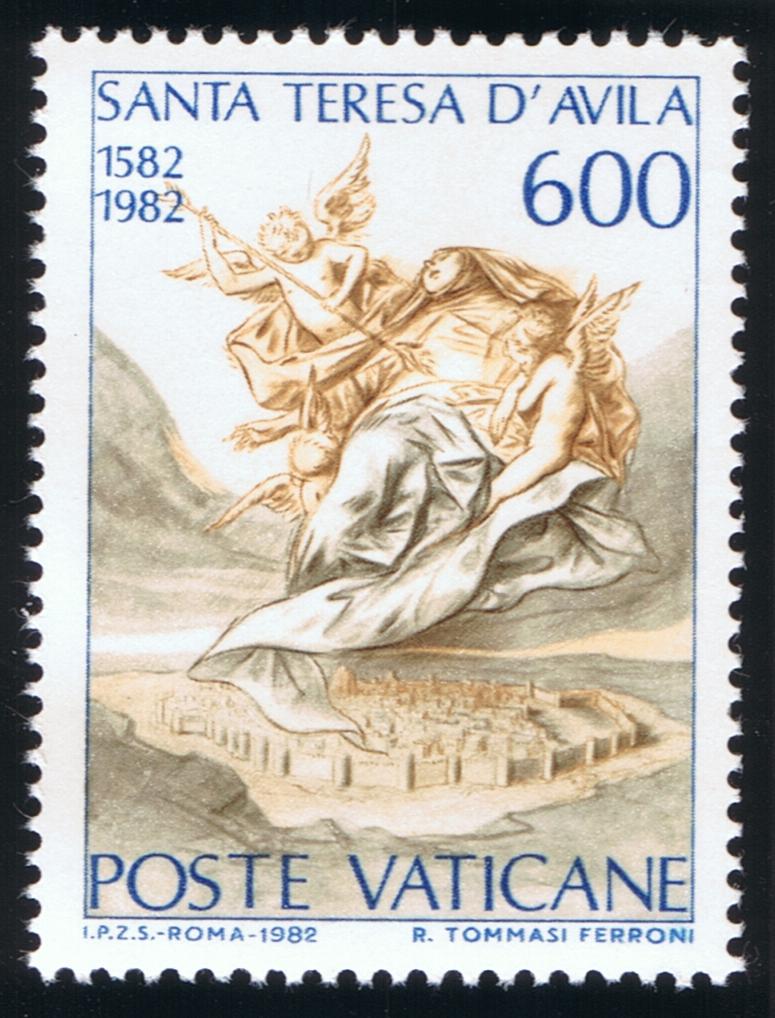
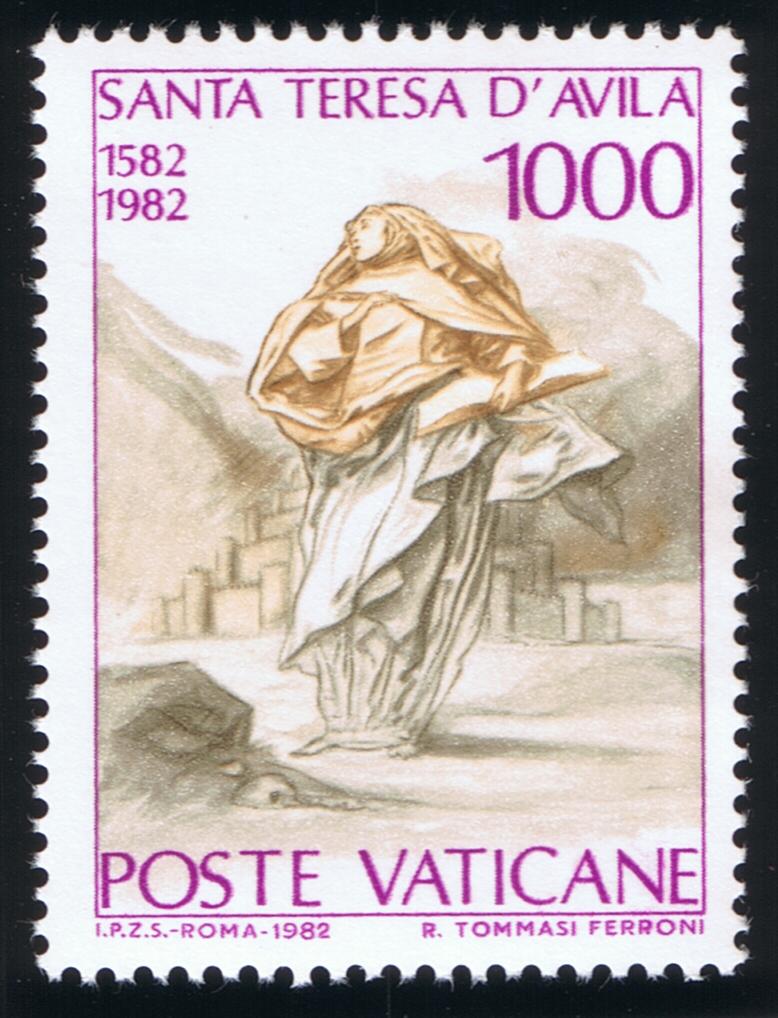
400th Anniversary of the Death of Saint Teresa of Avila
Scott 710-710 (1982)
One of the three stamps is a drawing based on the stunning sculpture by Gian Lorenzo Bernini, Saint Teresa in Ecstasy, located in the Cornaro Chapel of the church of Santa Maria della Vittoria in Rome
Saint Teresa of Ávila was not only a mystic but also a brilliant writer and reformer. Her spiritual treatises, especially The Interior Castle, offer a profound map of the soul’s journey toward union with God. She emphasized mental prayer, detachment from worldly things, and the importance of humility. Her writings were deeply theological yet accessible, and they earned her a place among the Doctors of the Church—a rare honor, especially for a woman in the 16th century. Teresa’s legacy is one of intellectual depth and institutional reform, as she founded over a dozen convents and reshaped the Carmelite Order from within.
In contrast, Saint Mariam Baouardy never learned to read or write, yet her life was a living testimony to divine intimacy. Her mystical experiences—ranging from visions of heaven to physical manifestations like the stigmata—were recorded by those around her, including her spiritual directors. Despite her lack of formal education, she spoke with profound spiritual clarity and often conveyed messages of peace, humility, and trust in God. Her simplicity and suffering became a vessel for grace, especially in the turbulent context of 19th-century Palestine and the broader Middle East.

Together, these two saints show that holiness and spiritual insight transcend education, culture, and time. Whether through the pen or through mystical silence, both women left an indelible mark on the Carmelite tradition and the universal Church.
400th Anniversary of the Death of Saint Teresa of Avila
Scott 710-710 (1982)
One of the three stamps is a drawing based on the stunning sculpture by Gian Lorenzo Bernini, Saint Teresa in Ecstasy, located in the Cornaro Chapel of the church of Santa Maria della Vittoria in Rome
Saint Teresa of Ávila was not only a mystic but also a brilliant writer and reformer. Her spiritual treatises, especially The Interior Castle, offer a profound map of the soul’s journey toward union with God. She emphasized mental prayer, detachment from worldly things, and the importance of humility. Her writings were deeply theological yet accessible, and they earned her a place among the Doctors of the Church—a rare honor, especially for a woman in the 16th century. Teresa’s legacy is one of intellectual depth and institutional reform, as she founded over a dozen convents and reshaped the Carmelite Order from within.
In contrast, Saint Mariam Baouardy never learned to read or write, yet her life was a living testimony to divine intimacy. Her mystical experiences—ranging from visions of heaven to physical manifestations like the stigmata—were recorded by those around her, including her spiritual directors. Despite her lack of formal education, she spoke with profound spiritual clarity and often conveyed messages of peace, humility, and trust in God. Her simplicity and suffering became a vessel for grace, especially in the turbulent context of 19th-century Palestine and the broader Middle East.
Together, these two saints show that holiness and spiritual insight transcend education, culture, and time. Whether through the pen or through mystical silence, both women left an indelible mark on the Carmelite tradition and the universal Church.
Question or comment about the question today?