The Daily Question
Which of the following best describes the meaning of the umbraculum and crossed keys as used on Vatican stamps during a Sede Vacante?
1. They represent the pope’s personal coat of arms and his spiritual legacy
2. They symbolize the Church’s mourning and the end of a papal reign
3. They signify the temporary governance of the Church and the enduring authority of Saint Peter
4. They are purely decorative elements with no official meaning
2. They symbolize the Church’s mourning and the end of a papal reign
3. They signify the temporary governance of the Church and the enduring authority of Saint Peter
4. They are purely decorative elements with no official meaning
Your answer was: They represent the pope’s personal coat of arms and his spiritual legacy
Answer: 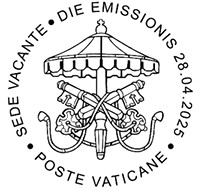
When a pope dies or resigns, the Catholic Church enters a solemn period known as the Sede Vacante—Latin for “the seat being vacant.” During this interregnum, the papal throne is unoccupied, and the governance of the Church is temporarily entrusted to the Camerlengo, who oversees the Vatican’s temporal affairs until a new pope is elected. To mark this unique moment in Church history, the Vatican issues a special series of stamps and postal memorabilia. These stamps are instantly recognizable by their use of two powerful symbols: the umbraculum and the crossed keys. The umbraculum, or ceremonial umbrella, once shaded popes during processions. In the context of the Sede Vacante, it symbolizes the temporary governance of the Church. It is often depicted in red and gold, the traditional papal colors, and replaces the papal tiara in the coat of arms used during this period. The crossed keys—one gold, one silver—represent the authority given to Saint Peter by Christ, as described in the Gospel of Matthew: “I will give you the keys to the kingdom of heaven.” The gold key symbolizes spiritual authority in heaven, while the silver key represents ecclesiastical authority on earth. Bound together by a red cord, they signify the unity of these powers and the continuity of the Church even in the absence of a pope.
When a pope dies or resigns, the Catholic Church enters a solemn period known as the Sede Vacante—Latin for “the seat being vacant.” During this interregnum, the papal throne is unoccupied, and the governance of the Church is temporarily entrusted to the Camerlengo, who oversees the Vatican’s temporal affairs until a new pope is elected. To mark this unique moment in Church history, the Vatican issues a special series of stamps and postal memorabilia. These stamps are instantly recognizable by their use of two powerful symbols: the umbraculum and the crossed keys. The umbraculum, or ceremonial umbrella, once shaded popes during processions. In the context of the Sede Vacante, it symbolizes the temporary governance of the Church. It is often depicted in red and gold, the traditional papal colors, and replaces the papal tiara in the coat of arms used during this period. The crossed keys—one gold, one silver—represent the authority given to Saint Peter by Christ, as described in the Gospel of Matthew: “I will give you the keys to the kingdom of heaven.” The gold key symbolizes spiritual authority in heaven, while the silver key represents ecclesiastical authority on earth. Bound together by a red cord, they signify the unity of these powers and the continuity of the Church even in the absence of a pope.
Question or comment about the question today?