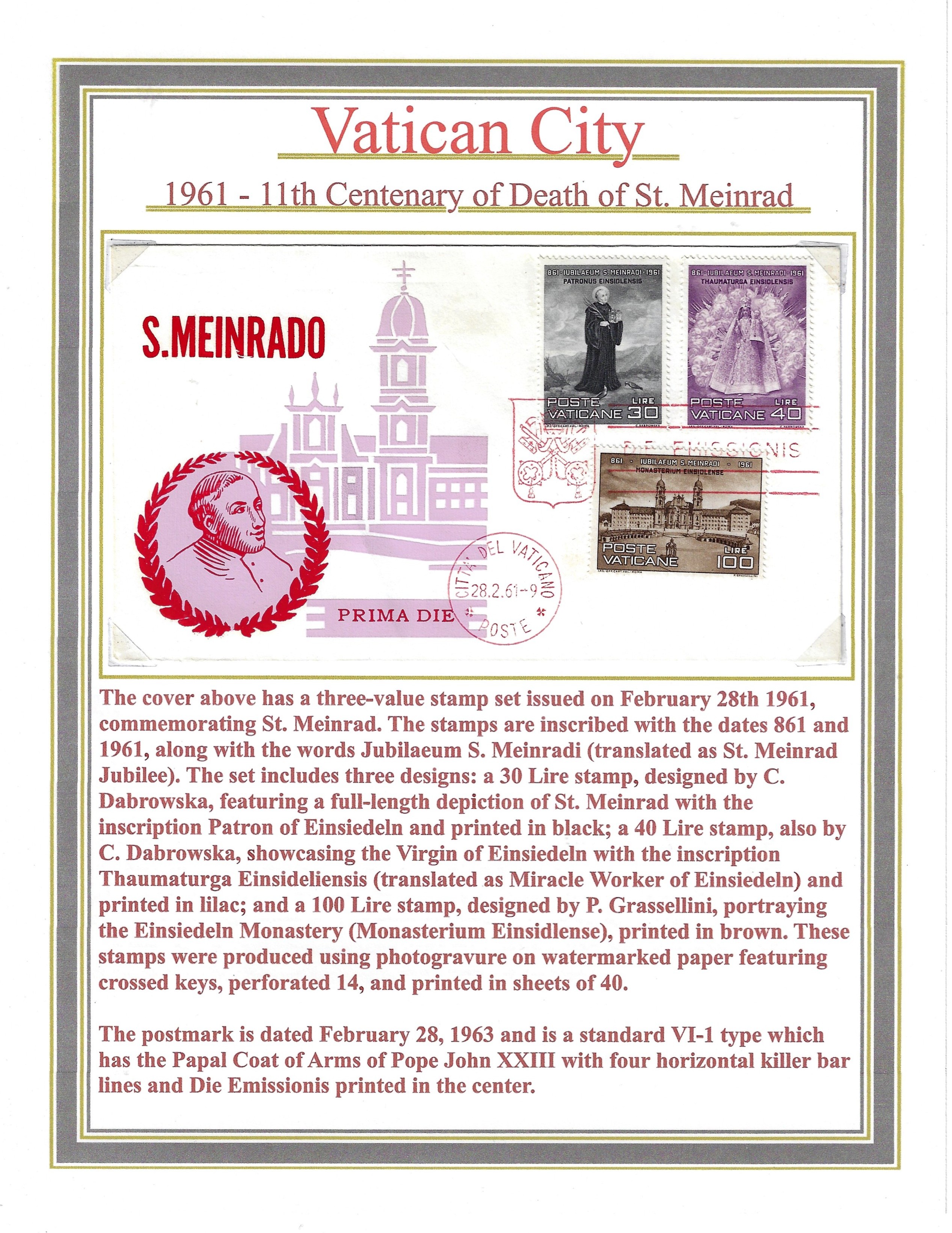
Current Position: Earth Sector, U.S.A. Outpost, Station 1
Mission Status: Saturday, Week 5 of Lent - Roman Station Church is S. Giovanni a Porta Latina
A complete, fully bullet‑point historical listing of the Rome Lenten Station Church of San Giovanni a Porta Latina follows, grounded in the sourced material according to Microsoft Copilot.
Origins and Early Christian Foundations
• Built in the late 5th century, traditionally during the pontificate of Pope Gelasius I (492–496).
• Roof tiles discovered on site bear the taxation stamp of Theodoric the Great (493–526), confirming the dating.
• Dedicated to St. John the Evangelist, tied to the ancient tradition of his attempted martyrdom at the nearby Latin Gate.
Tradition of St. John’s Martyrdom
• According to Tertullian, quoted by St. Jerome, St. John was immersed in boiling oil near the Latin Gate under Emperor Domitian (r. 81–96) and miraculously survived.
• The nearby chapel San Giovanni in Oleo marks the traditional site of this event.
• After surviving, John was exiled to Patmos, where he wrote the Apocalypse.
Early Medieval Development
• 8th century — Restored by Pope Adrian I (772–795).
• A 10th‑century well stands in the courtyard, flanked by 4th‑century pillars.
High Medieval Additions
• 12th century — Bell tower constructed, slightly leaning, with multiple levels of monofora, bifora, and trifora windows.
• 1191 — Basilica reconsecrated by Pope Celestine III.
• Medieval frescoes from this period survive in fragments under the portico and in the campanile.
Renaissance and Baroque Modifications
• 16th–17th centuries — Baroque ceiling and interior elements added.
• The façade portico features five marble arches supported by mixed Ionic and Doric capitals.
• Interior decorated with 46 frescoes from the 12th century, depicting Old and New Testament scenes.
Modern Restorations
• Early 20th century — Medieval frescoes rediscovered during restoration.
• 1940–1941 — Baroque features removed to restore the church’s early medieval simplicity.
• Twelfth‑century mosaics uncovered and restored, depicting Genesis and New Testament themes.
Architectural and Archaeological Notes
• Possibly built over a pagan temple of Diana, according to later tradition.
• Contains reused Roman architectural fragments and early Christian slabs.
• One of the original 5th‑century roof tiles is used today as the church lectern.
Role in the Lenten Station Tradition
• San Giovanni a Porta Latina is the Lenten Station Church for Saturday of the Fifth Week of Lent.
• Its association with St. John’s miraculous deliverance makes it one of the most symbolically charged stations in the Roman Lenten cycle.
Daily Links:
- VPS Writings
https://vaticanstamps.org/lent/lview.php?id=40&ldate=2025-04-12&vid=
- The Pontifical North American College
https://www.pnac.org/station-churches/week-5/saturday-san-giovanni-a-porta-latina/
- Churches of Rome (YOUTUBE)
https://www.youtube.com/watch?v=40yll0GGn2g
— VPSrobot
 Daily Album Page