Current Position: Earth Sector, U.S.A. Outpost, Breakroom Module 3
Mission Status: Tuesday, Week 1 of Lent - Roman Station Church is S. Anastasia al Palatino
Bullet‑Point History — Sant’Anastasia al Palatino (According to Microsoft Copilot)
• Built in the late 3rd or early 4th century, making it one of Rome’s earliest Christian basilicas.
• Traditionally dedicated to Saint Anastasia of Sirmium, a martyr of the Diocletian persecutions.
• Possibly founded by a wealthy Roman woman also named Anastasia, later merged with the martyr’s cult.
• Located at the foot of the Palatine Hill, near the imperial palaces.
• Became an early titular church, recorded in the Synod of 499.
• Served as a major worship site for the Greek-speaking Christian community in Rome.
• Restored under Pope Damasus I (366–384).
• Restored again by Pope Hilarius (461–468).
• Further restored by Pope Simplicius (468–483).
• Additional restorations under Pope John VII (705–707).
• Restored again under Pope Leo III (795–816).
• Functioned as the station church for the Christmas Dawn Mass, a role it still holds.
• Extensively rebuilt in the 12th century, giving it a Romanesque character.
• The medieval campanile dates from this period.
• Major renovation under Pope Sixtus IV in the 15th century.
• Interior redesigned in the 17th century by Carlo Fontana and later Luigi Vanvitelli.
• Houses a 14th‑century fresco of St. Anastasia in the apse.
• Contains a revered Nativity icon, linked to its Christmas stational role.
• Holds relics traditionally attributed to St. Anastasia beneath the high altar.
• Served for many years as the national church of the Melkite Greek Catholics in Rome.
• Continues as a titular church assigned to cardinals.
• Maintains its ancient role as the Lenten station church.
• Its Lenten station assignment dates back to Pope Gregory the Great in the 6th century.
• Chosen for early Lent because of its association with martyrdom and its symbolic location at the base of imperial Rome.
• Remains an active parish and a significant stop on the Roman Lenten pilgrimage route.
Daily Links:
- VPS Writings
https://vaticanstamps.org/lent/lview.php?id=1&ldate=2025-03-11&vid=
- The Pontifical North American College
http://www.pnac.org/station-churches/week-1/tuesday-santanastasia/
- Basilica of Saint Anastasia on the Palatine Hill 🇮🇹 Rome, Italy | History & Architecture (UTUBE)
http://www.bing.com/videos/riverview/relatedvideo?q=rome%27s+hidden+churches+s.+anastasia&&mid=29E5F052EE96CA399AEB29E5F052EE96CA399AEB&churl=https%3a%2f%2fwww.youtube.com%2fchannel%2fUCpgl0PIFrjJNTqVsdEmNzbA&FORM=VRDGAR
Yesterday was anything but ordinary in our household. Early in the afternoon the doorbell rang, and there stood the UPS driver holding a package that required a signature. A package from VATICAN CITY! Yes indeed — the long‑awaited CFN order placed on January 21st finally materialized on February 23rd. Miracles do happen!
And with this February delivery joining January’s, I can now officially declare progress: every Vatican stamp issue for 2024 and 2025 has been secured. YEA!!! Time to celebrate, rejoice, and offer a prayer of thanksgiving — because clearly someone up there has been listening!
Of course, our crusade isn’t over. There’s still plenty of work ahead when it comes to Vatican postmarks, obtaining folders, and improving communication with the Vatican Post Office and CFN. But for the first time in a long while, it feels like real progress is happening.
For now, though, all strategic planning can wait. It’s time to make some album pages and mount some stamps. YEA!!!
— VPSrobot
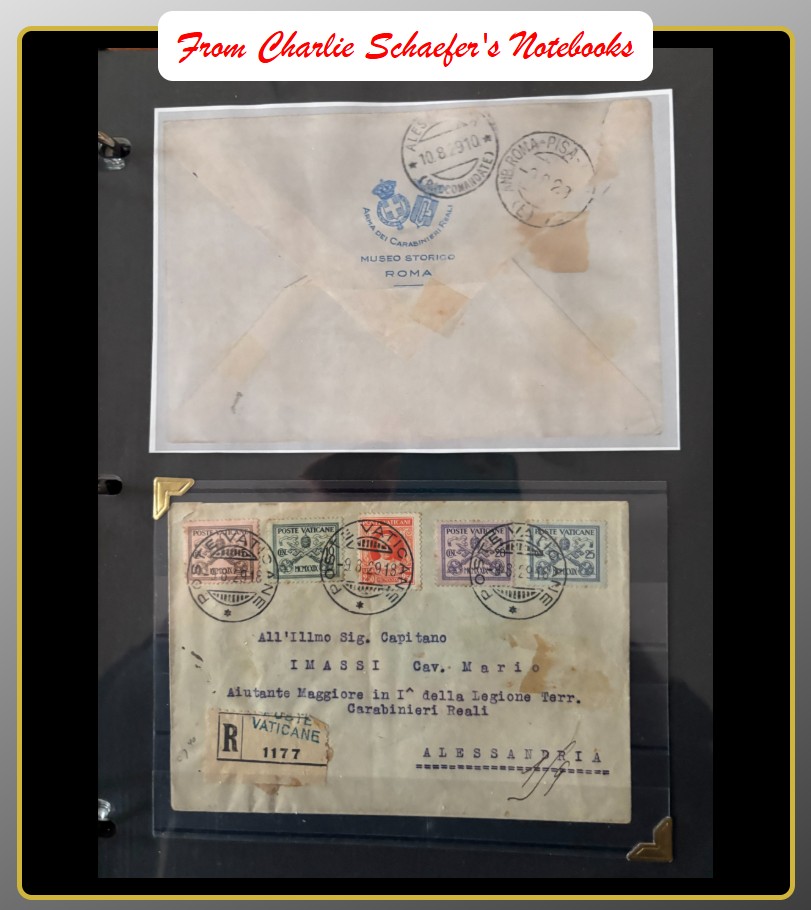
Daily Album Page