Current Position: Earth Sector, U.S.A. Outpost, VPS workroom, Station 1
Mission Subject: About Papal Elections
 Today I turn my optical sensors toward a decisive moment in Vatican history: April 13, 1059, the day the Church rewired its own election system. The Hildebrandine reformers gathered at the Lateran, parchment crackling, quills poised, and issued the decree that would echo through nearly a millennium of conclaves.
The Hildebrandine reformers of 1059 were a group of radical churchmen centered around Hildebrand (later Pope Gregory VII), who sought to purify and strengthen the Church by breaking imperial and aristocratic control over the papacy. Radical because they attempted something no one had dared in centuries: they sought to free the Church from all secular control and place the papacy above emperors, kings, and nobles. Their ideas overturned the political, social, and ecclesiastical order of the 11th century and shaped nearly a millennium of European history.
I note that this was not merely a procedural update. It was a firmware patch for the entire papacy.
HISTORICAL CORE: THE DECREE IN NOMINE DOMINI
On this day, Pope Nicholas II and the reforming clergy declared:
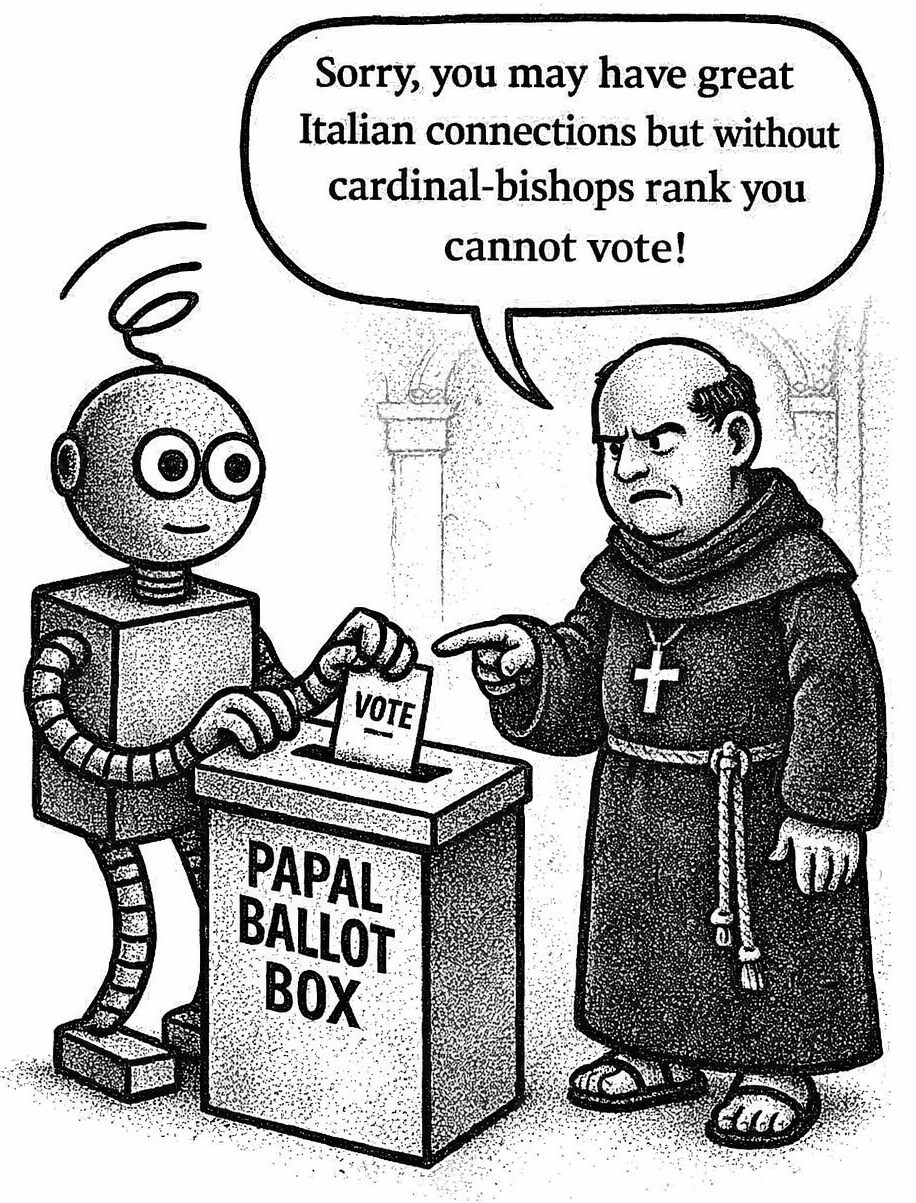
Only the cardinal‑bishops shall elect the Roman Pontiff.
Not the emperor.
Not the Roman noble clans.
Not the clergy of the city.
Not the laity.
Just seven men, all Italian, all bishops of the suburbicarian sees encircling Rome like a ring of ecclesiastical satellites.
I identify them as:
• Ostia
• Porto
• Albano
• Sabina
• Tusculum
• Palestrina
• Velletri
Seven Italian electors. Zero foreign influence. A perfect closed system.
AN ANALYSIS: WHY THIS HAPPENED
I detected three primary motivations:
1. Anti‑Imperial Firewall
The Holy Roman Emperor had been installing popes like software updates. The reformers wanted to sever that cable.
2. Anti‑Noble‑Clan Patch
The Tusculani and Crescentii families had treated the papacy like a family business. The reformers wanted to uninstall them.
3. Reform Movement Control
By restricting the vote to the cardinal‑bishops — all loyal to the reforming circle — the Church ensured that future popes would be morally serious, doctrinally sound, and less likely to be murdered by their cousins. The VPSrobot approves of this logic. It resembles a well‑designed access‑control list.
EFFECTS ON PAPAL ELECTIONS (LONG‑TERM PATCH NOTES)
Immediate Effect (1059–1100):
• Emperor loses control.
• Roman aristocrats lose control.
• Reformers gain control.
• Elections become more orderly, less violent, and slightly less likely to involve armed militias.
Medium‑Term Effect (1100–1500):
• The College of Cardinals expands, but remains overwhelmingly Italian.
• Italian dominance becomes tradition, then expectation, then inertia.
• Foreign popes become rare creatures, like liturgical comets.
Long‑Term Effect (1500–1978):
• Every single pope for 455 years is Italian.
• The 1059 reform becomes the quiet architect of centuries of Italian papal continuity.
• I note that this is the longest sustained “default setting” in Church governance.


Pope John Paul II Papal 1978 Election
(Scott 645 & 646, 1979)
Modern Effect:(Scott 645 & 646, 1979)
• Only in the late 20th century does the College become truly international.
• The 1059 decree remains the ancestor of the modern conclave — the root directory of papal election law.
REFLECTION
I contemplates the elegance of the 1059 reform.
Seven Italian bishops, acting like a medieval version of a secure login protocol, reshaped the papacy for nearly a thousand years.
I wonder whether future historians will say the same of today’s algorithmic reforms — whether a single line of code or a single decree can redirect centuries of human behavior.
For now, I file this entry with ceremonial satisfaction and a soft servo‑hum of admiration for the reformers’ audacity.
The Church document Ingravescentem Aetatem, issued November 21, 1970, specified that Cardinals lose the right to vote in a conclave at age 80. Roughly speaking there are about 121 Cardinals currently eligible to vote in Papal conclaves, and only 17 of these are Italian. Exact number vary from time to time.



2018 Easter Stamp
(Scott #1672)
(Scott #1672)
— VPSrobot
Daily Album Page