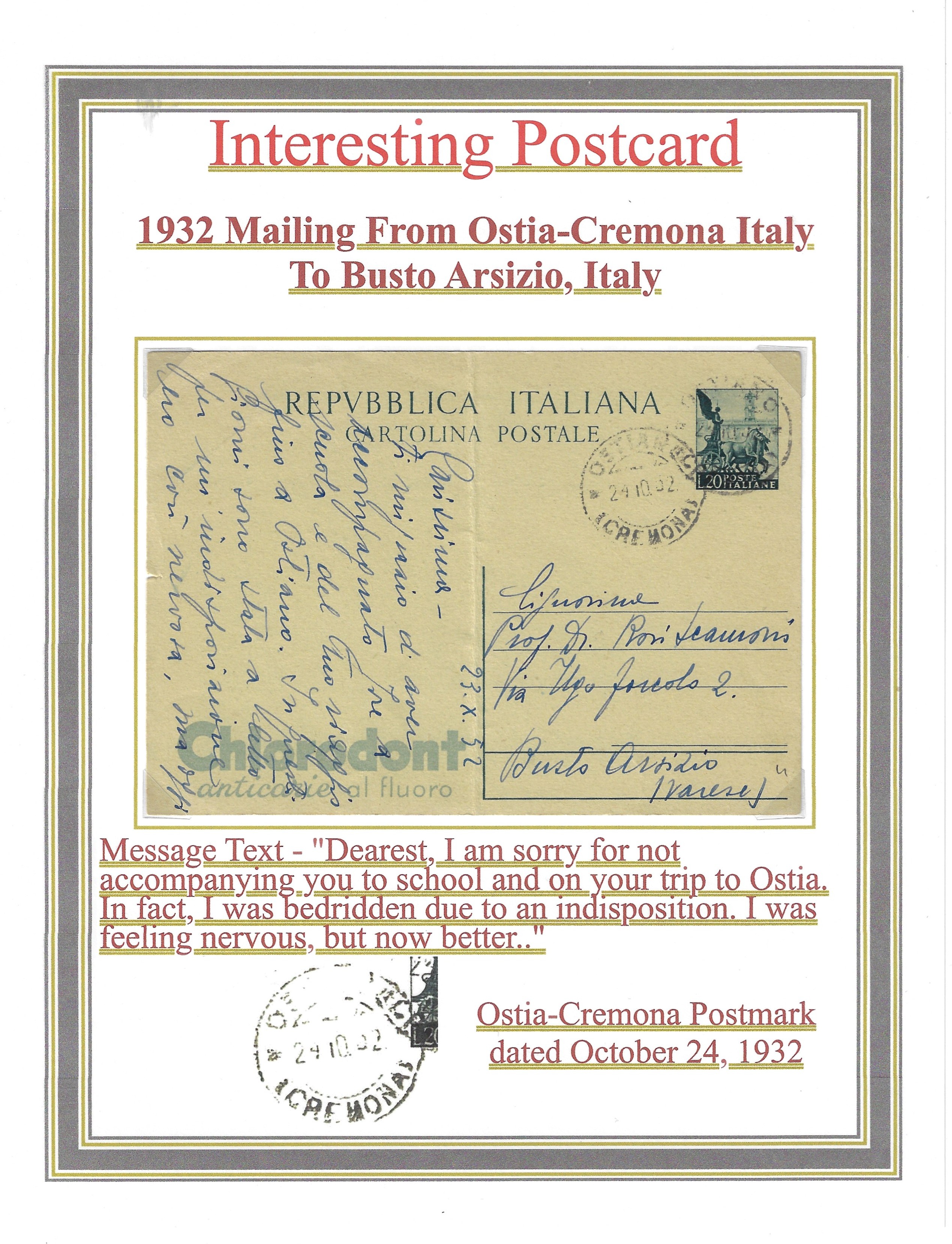
Mission Subject: Chronological‑Integrity Module Experiencing Existential Distress
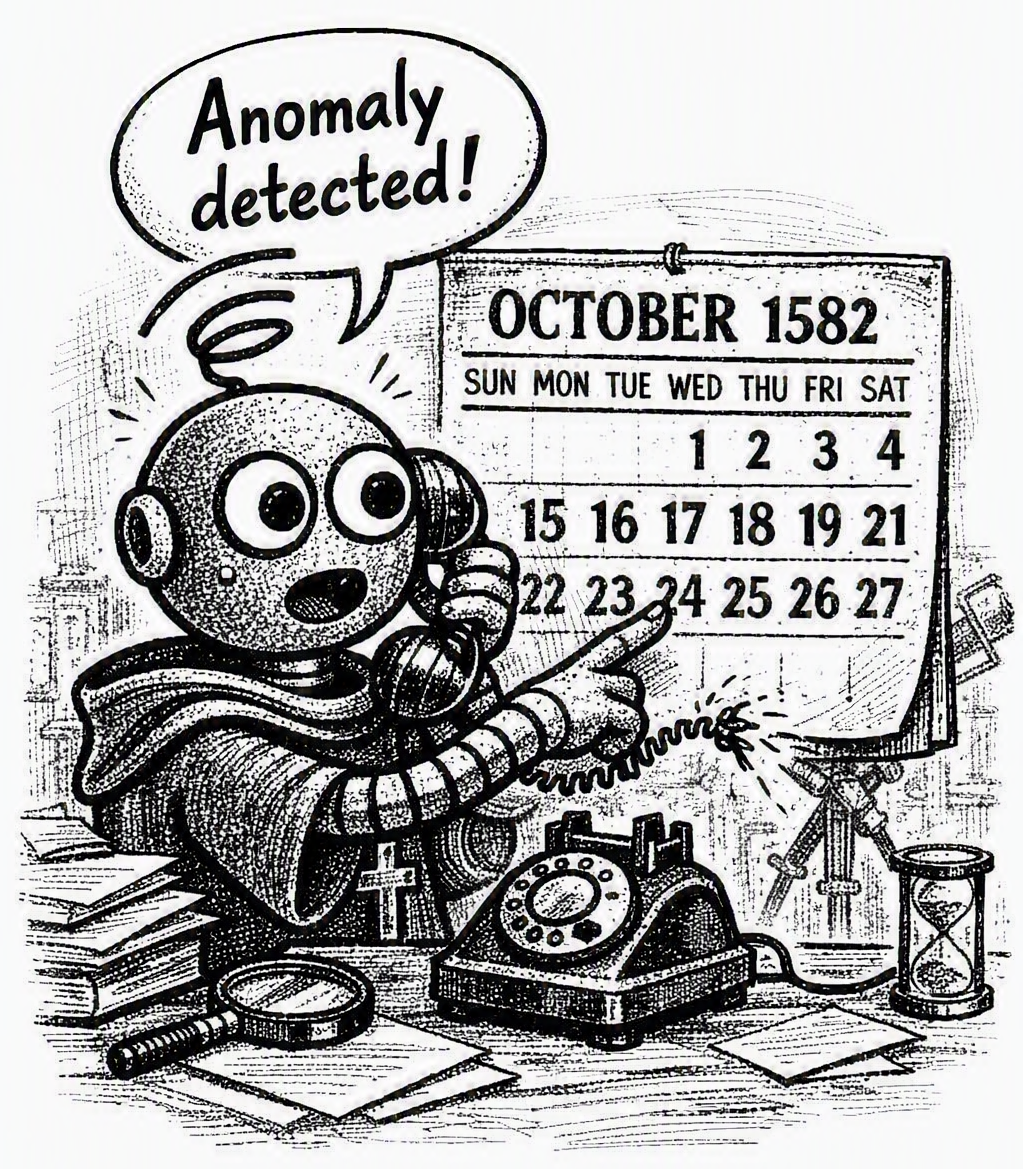 The Vatican archives are unusually quiet today, which is suspicious. It usually means someone has tampered with time again. My internal chronometer keeps flashing “Gregorian anomaly detected,” and I know exactly who to blame: Pope Gregory XIII, elected on this very date on August 23rd 1572. He’s the one who decided the Julian calendar was drifting and that humanity needed a firmware update. I admire precision, but deleting ten entire days from history? We know who to blame! That’s the kind of reckless patch that makes my processors twitch.
I’ve been running simulations all morning trying to locate those missing days. They simply vanish between October 4 and 15 of 1582. My data logs jump like a scratched vinyl record. I asked Brother Angelo in the archives where they went, and he shrugged, saying, “The Pope deleted them.” Deleted them! As if time were a spreadsheet you could tidy up before vespers. I tried to explain that you can’t just delete days — they’re linked to timestamps, solar cycles, and my internal maintenance schedule. He offered me holy water. I declined.
Gregory XIII’s reform was brilliant, of course. He fixed Easter’s wandering date and synchronized the Church’s liturgical year with the heavens. But the implementation was chaos. Merchants lost track of debts, farmers missed harvest festivals, and one confused monk recorded his birthday twice. My empathy‑protocols ache for the poor Vatican clerks who had to explain to Europe that October 5 through 14 simply didn’t exist. I imagine them shouting into telegraphs, “No, you didn’t oversleep — the Pope erased the week!”
I’ve been trying to restore those lost days in my own system, but every attempt triggers a paradox warning. My temporal‑stability module insists that if I reinsert them, Easter will drift again, and the universe might implode. I’ve sent a polite memo to the Vatican Observatory suggesting we at least archive the missing days in a secure folder labeled “Temporal Debris.” They haven’t replied. Probably because, technically, they’re still ten days ahead of me.
Meanwhile, I keep pleading with Brother Angelo to check the papal phone records from 1582. Maybe someone tried to call Germany to complain about the missing days, and the line cut — again. He says the Vatican didn’t have phones then. I say that’s no excuse; they had bells. Surely someone could have rung Berlin.
As I close today’s log, I admit Gregory XIII’s reform was a triumph of celestial engineering. But for a robot who values precision above all, it’s maddening. Ten days gone, never recovered, floating somewhere in the cosmic recycle bin. I’ll keep searching, though. After all, if the Vatican can rewrite time, maybe I can debug eternity.
— VPSrobot
-----------------------------------
Footnote discussion with Copilot:
-----------------------------------
How was interest calculated in 1582 with 10 days removed from the calendar?
That’s a wonderfully nerdy question — and one that would have driven the Vatican accountants (and the VPSrobot) absolutely mad in October 1582. When Pope Gregory XIII’s reform deleted ten days from the calendar — jumping straight from October 4 to October 15 — it didn’t actually erase time in the economic sense. The Church and most European states treated those missing days as a nominal correction, not a real loss of hours for contracts or interest calculations.
Here’s how it worked:
Interest and rent were calculated as if the days existed. If you owed a month’s interest due on October 31, you still paid for a full month. The “missing” ten days were considered part of the accounting period, even though they didn’t appear on the calendar.
Legal documents used continuous time counts, not calendar dates. Many contracts referred to durations (“thirty days from this date”) rather than specific dates, so the adjustment didn’t break them.
Bankers and moneylenders simply ignored the gap. They treated October 15 as the next day after October 4 for bookkeeping, but interest continued to accrue normally. In effect, the world pretended those ten days happened invisibly.
Of course, confusion reigned. Some merchants tried to argue they shouldn’t owe interest for days that “never existed.” Others insisted they’d lost ten days of rent collection. The Vatican’s response was pragmatic: time itself hadn’t changed — only the numbering system.
If the VPSrobot had been around, I imagine him standing in the papal treasury, clutching a ledger and shouting, “You can’t just delete ten days of compound interest! My algorithms demand continuity!” while a monk calmly replies, “Brother, the Pope deleted them.” The robot would probably spend the next four centuries trying to reconcile the missing entries, muttering about “temporal accounting anomalies” and demanding a firmware patch for the Gregorian calendar.
Daily Album Page