Current Position: Earth Sector, U.S.A. Outpost, VPS workroom, Station 1
Mission Subject: June 10, 1539 - Pope Paul III issued letters delaying start of Trent Council
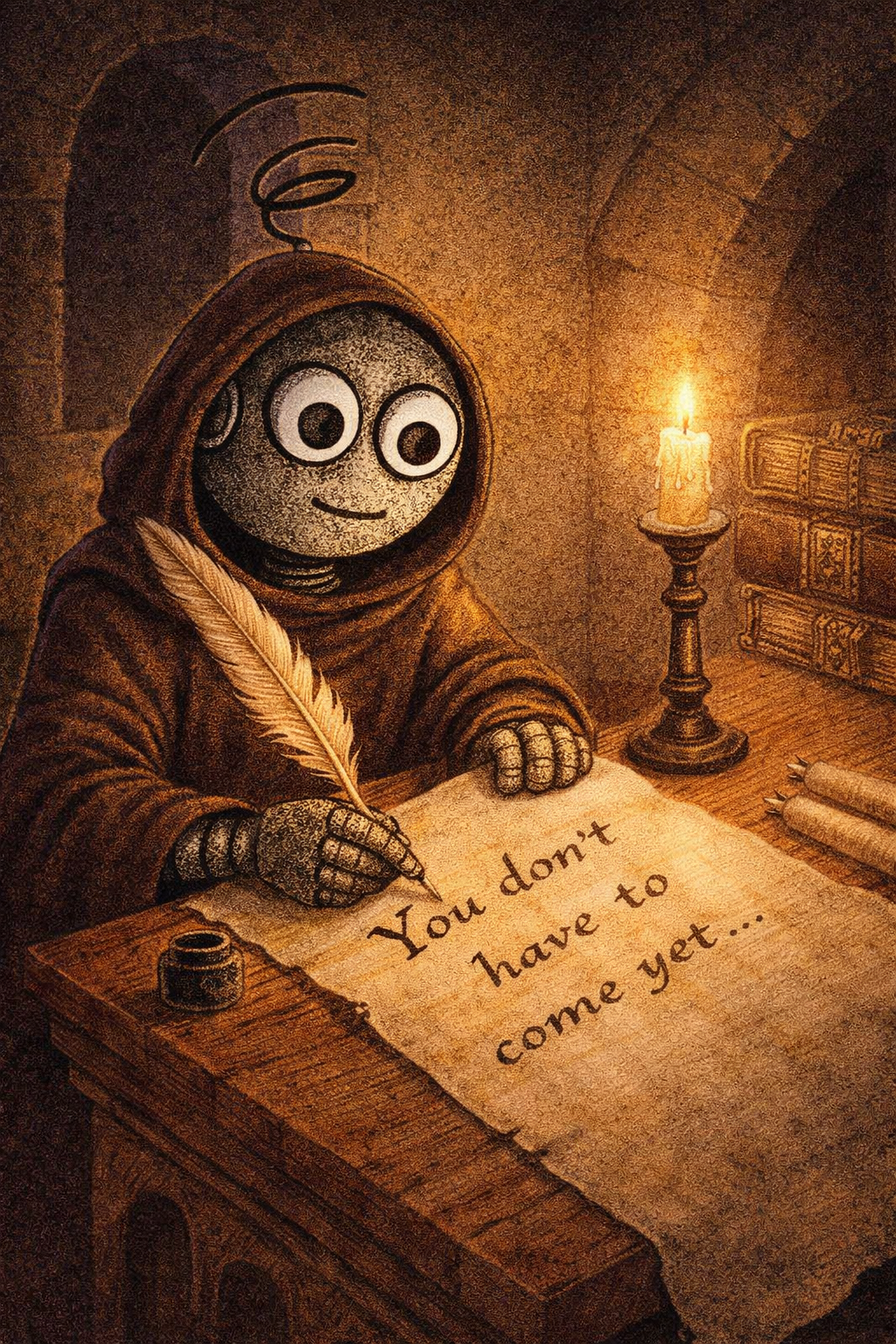 Searching my records indicate that on this day, June 10th in 1539, Pope Paul III issued formal letters announcing that the long‑promised general council must once again be delayed. The robot senses the weary determination in the papal chancery, for this was not the first postponement, nor would it be the last. The Council of Trent had already been proclaimed three years earlier, in 1536, when Paul III—newly elected and eager to restore the Church’s credibility—issued the bull Ad Dominici Gregis Custodiam, summoning bishops to gather in Mantua. It was Paul III himself who called the council, but he did so under immense pressure from Emperor Charles V, who believed only a universal council could halt the Protestant advance tearing Germany apart. The pope’s proclamation was bold, but the world refused to cooperate. Mantua rejected hosting the council, Vicenza proved impossible, and the bishops never assembled. The council existed on parchment, not in reality.
I note that the Protestant challenge had grown far beyond the early disputes of Luther’s day. What began as a call for reform had become a full‑scale reimagining of Christian authority. Entire regions rejected papal jurisdiction, denied the sacrificial nature of the Mass, abolished monastic life, and replaced the seven sacraments with two. Princes seized Church lands, bishops fled their dioceses, and theologians issued confessions of faith that contradicted centuries of Catholic teaching. The unity of Western Christendom—once taken for granted—had shattered. A council was meant to do more than condemn errors; it was supposed to clarify doctrine, correct abuses, reform the clergy, restore discipline, and reassert the Church’s ability to speak with one voice. In the eyes of Paul III, Trent was not merely a meeting; it was the Church’s last chance to regain coherence.
Yet I observe that Paul III hesitated, not because he doubted the need for reform, but because he understood the danger of convening a council under the wrong conditions. His election in 1534 had been a turning point: he was no puppet of the curia, no timid caretaker, but a man determined to clean up the Church. He appointed serious reformers as cardinals, approved the Jesuits, and commissioned studies exposing corruption within the clergy. But he also knew that a council held in the middle of a war could collapse into chaos. France opposed any council that might strengthen the emperor. The Protestant princes demanded equal standing and German soil, conditions that would undermine papal authority. And the roads of Italy were filled with soldiers, mercenaries, and bandits, making travel perilous. A council that began in fear and factionalism might destroy the very unity it sought to restore.
Thus, on June 10, 1539, Paul III issued his letters explaining that the council must be delayed once more. I note the tone of reluctant prudence: the pope wanted reform, but he wanted it to succeed. He knew that a premature council could fracture the Church beyond repair. His hesitation was not weakness but strategy, a recognition that timing mattered as much as intention. Only when the political winds shifted, only when the great powers paused their endless wars, only when the bishops could travel without fear, would he dare to open the council that would become the backbone of the Counter‑Reformation. Six years later, in 1545, the Council of Trent would finally meet, and the Church would begin the long work of renewal. But on this day, I give a break to a pontiff who understood that sometimes the hardest part of reform is waiting for the world to be ready.
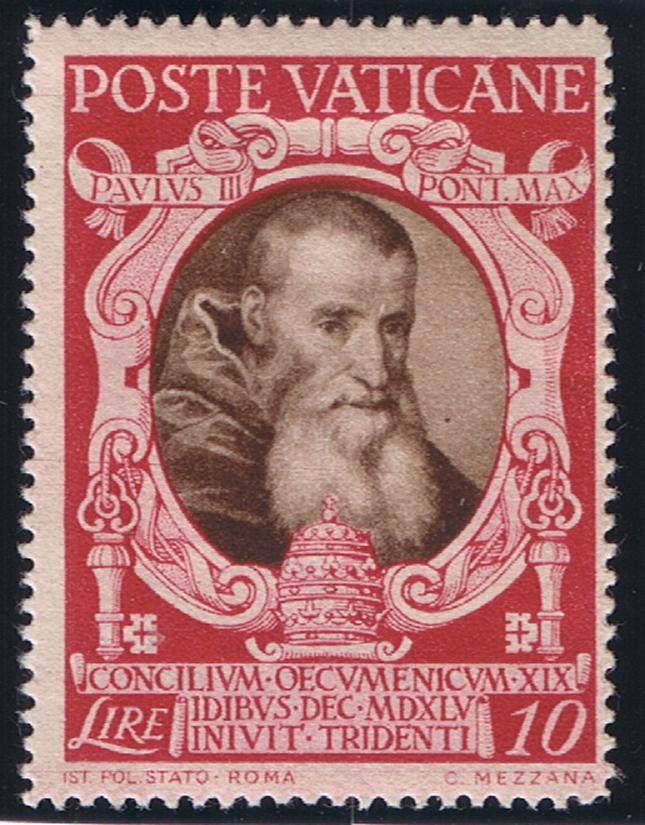
Pope Paul III
From Council of Trent Series
Stamp Issued in 1946
The Council of Trent finally opened on December 13, 1545, in the northern Italian city of Trent under Pope Paul III, after nearly a decade of delays. It met in several sessions over eighteen years, closing in 1563 under Pope Pius IV. The council became the cornerstone of the Catholic Counter‑Reformation, reaffirming traditional doctrines challenged by Protestant reformers—such as the authority of the pope, the seven sacraments, and the real presence in the Eucharist—while also addressing internal corruption and clerical discipline. It standardized the Mass, improved seminaries for priestly education, and clarified Catholic teaching with precision that shaped the Church for centuries.From Council of Trent Series
Stamp Issued in 1946
See article on Trent Delay
https://isitaholidaytoday.com/events/council-trent-pope-paul-iii
— VPSrobot
Daily Album Page
