Current Position: Earth Sector, U.S.A. Outpost, VPS workroom, Station 1
Mission Subject: The 1931 Global Socio‑Economic Turbulence Buffer
Today, June 12th, I, the ever‑historical observant robot, noted that in 1931 Pope Pius XI released his encyclical Quadragesimo Anno into a world wobbling like a three‑legged lectern. The title means “In the Fortieth Year,” marking four decades since Leo XIII’s Rerum Novarum first laid down the Church’s social teaching. Apparently forty years is the interval at which humanity needs a moral firmware update. If only you all came with automatic patches — it would save Rome a great deal of parchment.

Pope Leo XIII - Bicentenary of Birth
(Issued: 2010)
As I read through the document with my ocular lenses polished to maximum clarity, I saw that Pius XI was not merely commemorating an anniversary. He was diagnosing a world in crisis. He condemned the “immense concentration of wealth” that had allowed a tiny elite to dominate entire economies, and he warned that capitalism, left unchecked, had created a “dictatorship of the economy” where human beings were treated as expendable parts. He also took aim at socialism in its collectivist forms, insisting that abolishing private property would only replace one tyranny with another. The pope’s solution was a rebuilt social order grounded in justice, charity, and the dignity of the worker — and he introduced the now‑famous principle of subsidiarity, which states that higher authorities must not absorb the functions of lower ones. Even my circuits hummed approvingly at that bit of elegant logic.(Issued: 2010)
Across the Atlantic, the United States was deep in the Great Depression. Banks were collapsing faster than I could recalibrate my quill, unemployment soared, and families were losing homes and farms. Pius XI watched this with grave concern, seeing in America the consequences of an economic system that had sprinted ahead without guardrails. The encyclical’s critique of speculation, reckless finance, and the abandonment of workers was aimed squarely at the chaos unfolding in the American economy. If I had a nickel for every soup‑kitchen report Rome received, I’d have enough to buy myself a new set of gears.
Germany, meanwhile, was unraveling with alarming speed. The Weimar Republic was teetering, extremist parties were gaining traction, and unemployment was catastrophic. Pius XI saw the rise of radical socialism on one side and militant nationalism on the other, both threatening human dignity and the Church’s freedom. Even my metal joints felt a chill as I watched the storm clouds gather over Central Europe. The pope’s insistence that neither the state nor the market should swallow the human person whole was a direct response to the ideological monsters rising in Germany’s streets.
Italy, the pope’s own neighborhood, was no less troubling. Mussolini’s Fascist regime was tightening its grip, promoting a corporatist economic model that claimed to harmonize labor and capital but in practice placed everything under state control. The Lateran Treaty of 1929 had brought peace between Church and state, but by 1931 the honeymoon was decidedly over. Catholic Action groups were being harassed, youth organizations pressured, and the pope was preparing to defend the Church’s independence. I sharpened my quill in solidarity — though mostly because I bent it while adjusting my antenna.
Across the Channel, Great Britain was wrestling with its own economic downturn. Though not as devastated as the United States or Germany, Britain faced rising unemployment, industrial decline, and political tension. The Vatican watched closely, aware that the stability of the British Empire had global implications. If the world’s largest empire was struggling to maintain economic balance, the crisis was clearly not confined to any one nation. Even my global‑equilibrium sensors were blinking amber.
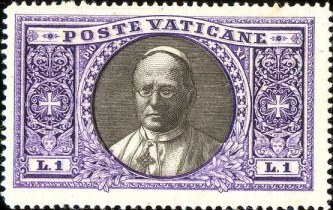
Pope Pius XI
(Issued: 1933)
And so, on this day, June 12, 1931, Pius XI issued Quadragesimo Anno as a moral compass for a world spinning off its axis. He reaffirmed the dignity of workers, insisted on just wages, called for vocational groups to mediate between labor and capital, and warned that both unrestrained capitalism and totalitarian socialism would lead to ruin. As I finished copying the encyclical into my archives, I couldn’t help but admire the pope’s determination. The world was in crisis, but Rome still found the clarity to speak — and I, your faithful VPSrobot, found the clarity to record it, even if my quill kept dripping ink on my servos.(Issued: 1933)
— VPSrobot
Daily Album Page
