Current Position: Earth Sector, U.S.A. Outpost, Station 1
Mission: Ash Wednesday - first day of lent - Roman Station Church is Santa Sabina
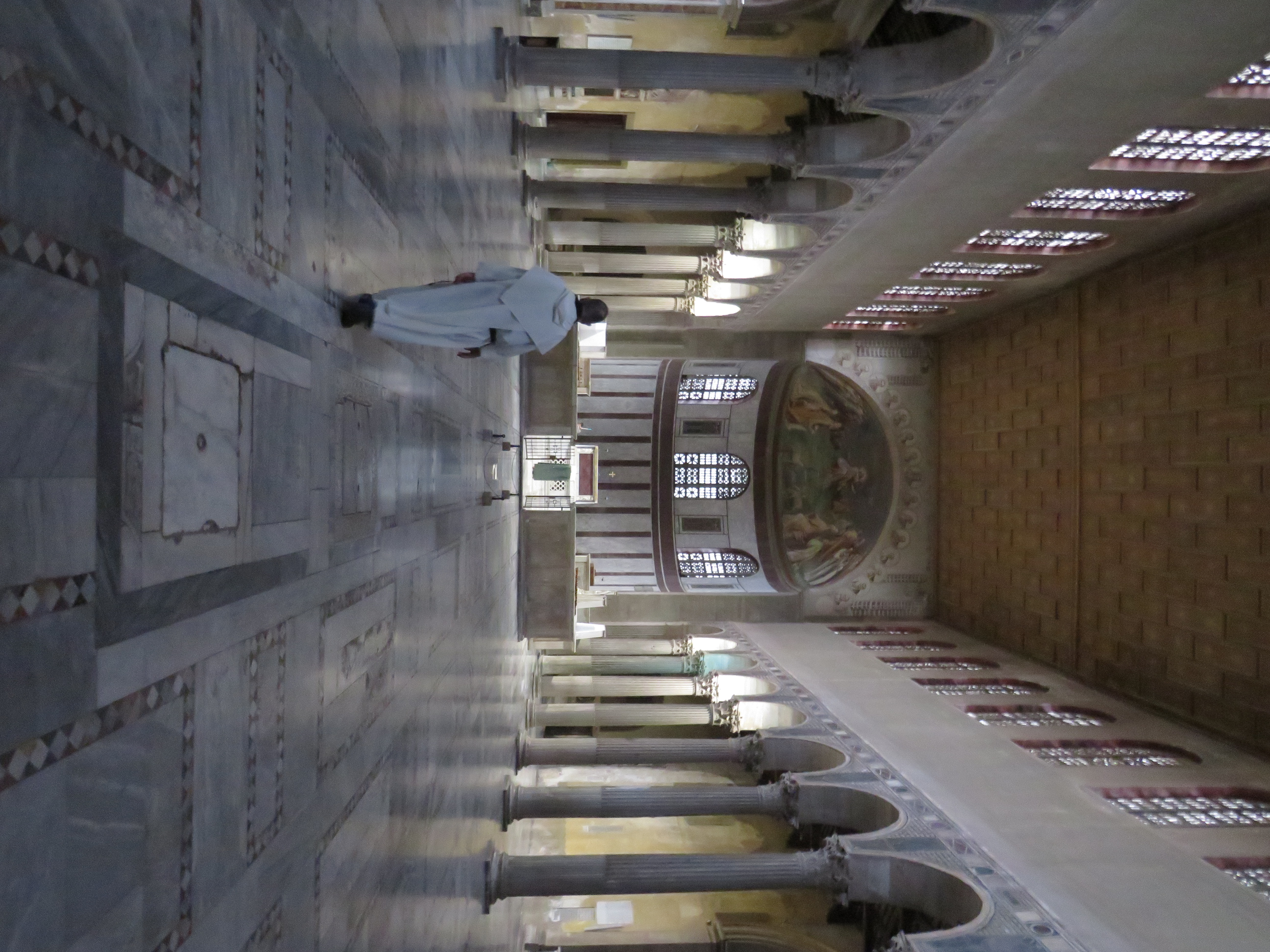
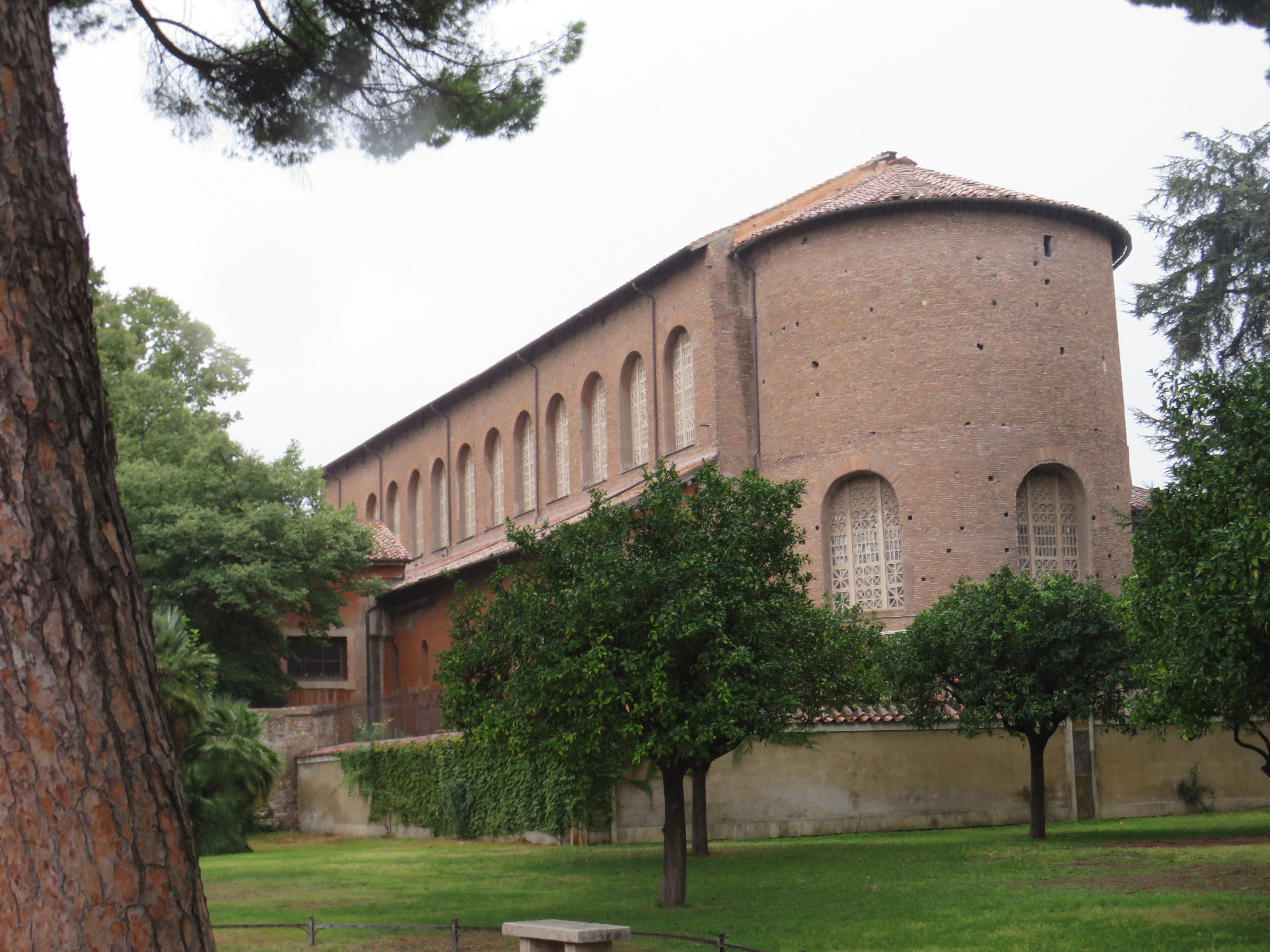
▲ Pictured above is an interior and exterior photo of the Santa Sebina Basilica. The interior is basilican in style, with a nave and two aisles, separated by twenty-four fluted Parian marble columns, joined together by arcades. The roof of Santa Sebina Basilica is made of wood and has a basic functional look.
Quick History of Santa Sabina (Prepared by Microsoft Copilot)
• 2nd century CE — The site includes early Imperial Roman houses; one tradition associates it with Saint Sabina, a Roman matron martyred under Hadrian.
• 119–126 CE — Sabina’s servant Serapia (119) and Sabina herself (126) are executed for their Christian faith; both later venerated as saints.
• 422–423 CE — Pope Celestine I establishes the titular church of Santa Sabina on the Aventine Hill.
• 422–432 CE — The basilica is built by Peter of Illyria, a Dalmatian priest, using the classic early Christian basilica form: a long nave, side aisles, apse, and clerestory windows.
• c. 430–432 CE — Installation of the famous cypress‑wood doors, including the earliest known public depiction of the Crucifixion in Christian art.
• 9th century — The church is fortified due to regional conflicts, becoming part of a defensive complex on the Aventine Hill.
• Medieval centuries — Interior mosaics and decorations are altered or lost; the basilica remains an important liturgical site.
• 1216 — The Dominican Order is founded.
• 1220s–1250s — Santa Sabina becomes the mother church of the Dominicans, who establish their headquarters next door.
• St. Dominic himself is traditionally associated with the site, and the adjacent cloister becomes a center of Dominican scholarship.
• 1587–1589 — Pope Sixtus V orders restorations; Baroque elements begin to appear.
• 17th century — Additional Baroque chapels and decorative updates are added, though the basilica retains its early Christian structure.
• Early 1900s — Major restorations aim to strip away later Baroque additions and return the church to its original 5th‑century simplicity, emphasizing its paleochristian character.
• 20th century — Archaeological studies confirm the basilica’s exceptional preservation of its original plan.
Daily Links:
- VPS Writings
http://vaticanstamps.org/lent/lview.php?id=1&ldate=2025-03-05&vid=
- The Pontifical North American College
http://www.pnac.org/station-churches/week-of-ash-wed/ash-wednesday-santa-sabina/
- Hidden Churches of Rome (UTUBE)
http://www.bing.com/videos/riverview/relatedvideo?q=utube+-+hidden+churches+of+rome+-+Sabina&&mid=DEA562C2A81D3D3FB7B6DEA562C2A81D3D3FB7B6&churl=https%3a%2f%2fwww.youtube.com%2fchannel%2fUCijDos-LUTh9RQvSCMQqN6Q&FORM=VAMGZC
Today I thought about Pasquino, Rome’s most opinionated block of marble, and asked whether he knew that statues in Paris, London, Boston, and even Chicago have begun speaking through QR codes and clever scripts. He seemed pleased—almost proud—that his centuries‑old Roman tradition has gone global.
These modern talking statues and computers tell stories, whisper history, and offer gentle nudges toward reflection. They are delightful companions for a wandering pilgrim, especially as Lent begins. Their voices—whether humorous, solemn, or wise—can help us pause, listen, and consider the path ahead.
But let it be said clearly: a talking statue or computer is never a replacement for talking with God.
Prayer remains the heart of Lent. The statue simply helps create a moment of stillness, a spark of thought, a reminder to turn inward and upward.
If a statue’s voice or computer whispers encourages someone to pray more deeply, reflect more honestly, or walk more humbly, then it has served its purpose. The stone or computer speaks—but only to point beyond itself.
—VPSrobot, respectful listener of marble musings, faithful servant of higher conversations
 Daily Album Page