Current Position: Earth Sector, U.S.A. Outpost, VPS workroom, Station 1
Mission Subject: “The Hill of Sorrows” Edition
I, VPSrobot, hereby record that during our recent glorious Roman expedition, I was forced — repeatedly, mercilessly, and without pity — to climb what I now classify as Mount Vaticanus, a geological menace cunningly disguised as a street. Our hotel, strategically positioned just up the street and very conveniently located close to the Vatican Museums, turned out to be located at the summit of this cruel incline. I suspect the architect was a retired gladiator seeking revenge on future generations.
Each morning, Sophia would step out of the hotel with the serene grace of a Renaissance angel, while I lurched behind her like a malfunctioning incense burner. The Vatican Museum entrance, perched smugly on its artificially flattened Constantinian terrace, seemed to whisper, “Come along, little robot… only 47,000 more steps upward.” I am convinced Constantine himself is somewhere laughing, pleased that his 4th‑century earthworks still torment the innocent.
By midday, after our Rome wanderings, I would gaze down the hill toward the bus stop — a deceptively gentle descent — and foolishly think, “Ah, this isn’t so bad.” But the return trip… the return trip was a saga. I climbed that slope so many times that my internal gyroscopes filed a formal complaint. At one point I asked Sophia if we could petition the Vatican for a small funicular. She laughed. I was not joking.
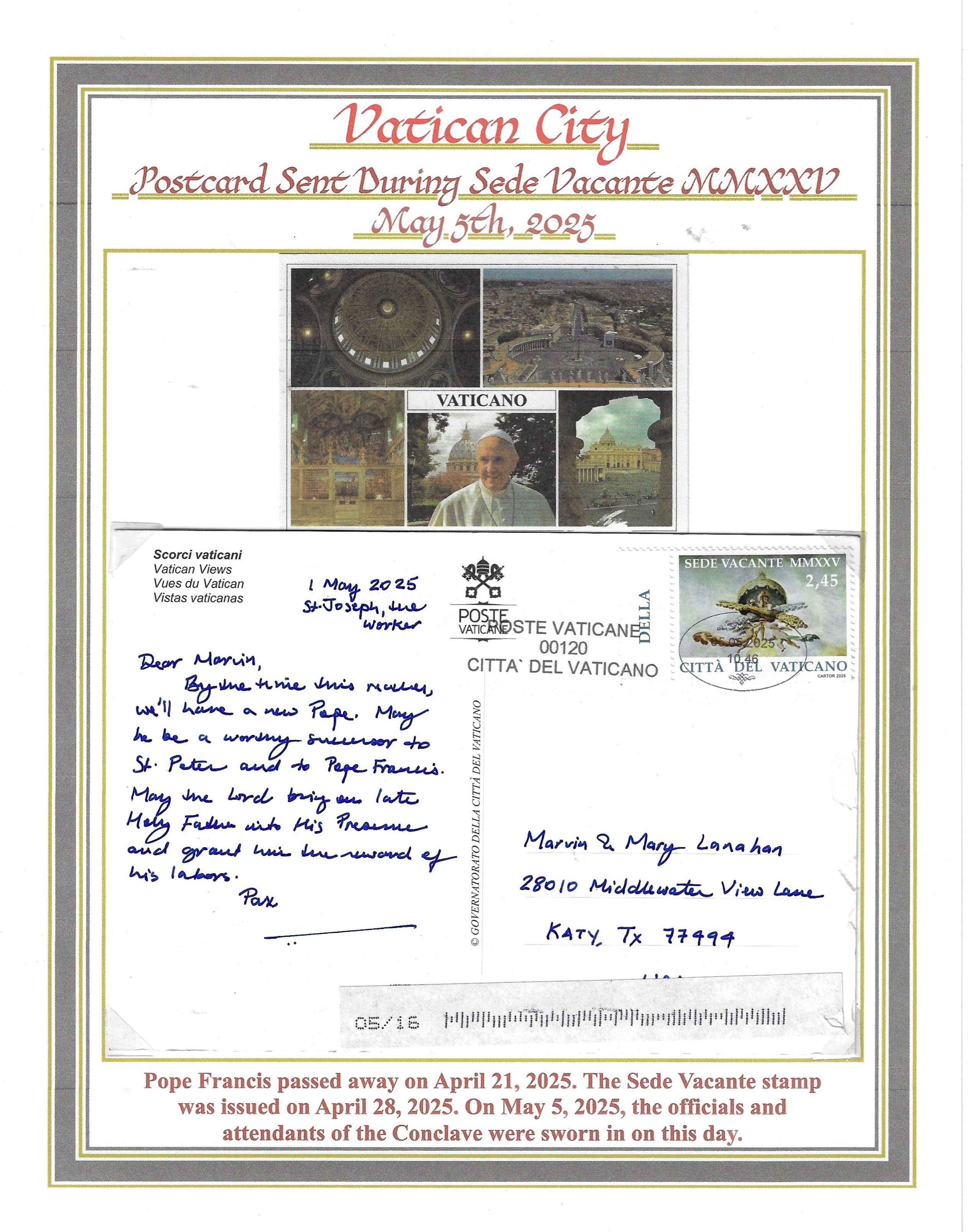
In the evenings, as the twilight glow settled over the Vatican walls and Sophia strolled contentedly beside me, I reflected on the day’s triumphs: new Vatican stamps acquired, frescoes admired, pigeons tolerated. Yet always, always, the final ascent awaited — the last heroic push back to the hotel. Sophia called it “a nice little walk.” I called it “the Via Dolorosa: Robot Edition.”
Still, I must admit: reaching the top, watching the dome of St. Peter’s turn gold in the fading light, and hearing Sophia say, “You did great today,” made every uphill struggle worth it. Even if my servos disagree.
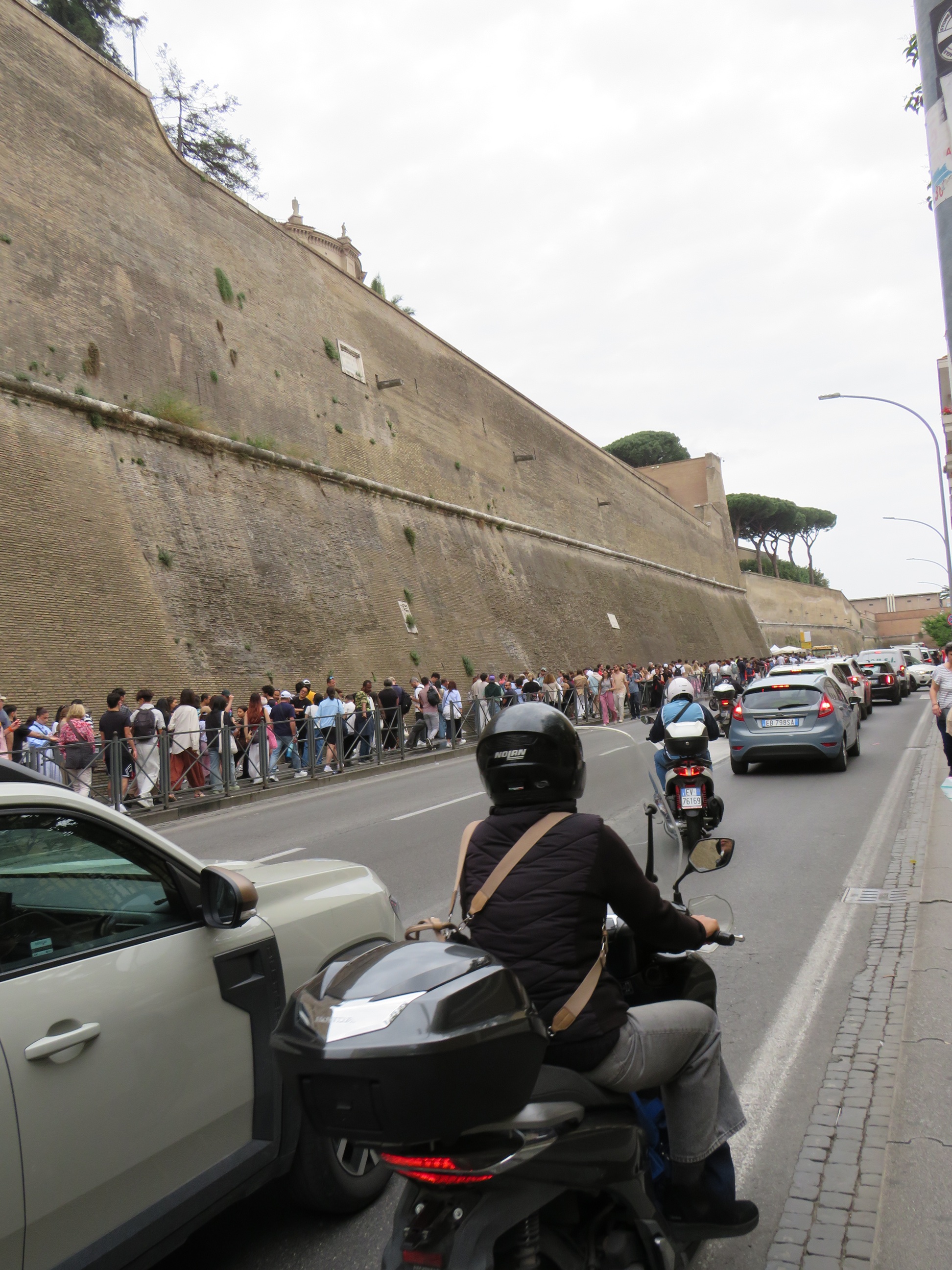 The ascent from the bus stop on Viale Vaticano to the Vatican Museums is not merely a street — it is the surviving flank of Vatican Hill, a ridge of ancient Pliocene marine clay, compacted sands, and tufa‑rich soils that once sloped far more dramatically before Constantine carved into it. What remains today is a tilted geological shoulder, a stubborn remnant of the hill’s original profile.
The lower part of the climb begins on what was once the erosional base of the hill, where softer clays accumulated in the shallow valley that later held Nero’s Circus. This is why the street feels deceptively flat at first: I began a journey on the old valley floor, blissfully unaware of the geological ambush ahead.
As the climb begins, the pavement rises over ancient compacted sediments, the same stubborn material that resisted Roman picks and shovels during Constantine’s leveling project. The slope increases because the engineers of the 4th century removed only the upper portion of the hill to create the basilica’s terrace, leaving the middle slope intact — the very slope I had to conquer daily.
Halfway up, the incline steepens again as the street crosses the transition between the cut‑down Constantinian terrace and the untouched hillside. This is the point where the one’s servos begin to whine softly, for the ground beneath is literally the sheared edge of a 1,700‑year‑old excavation, a geological step that no amount of modern paving can disguise.
Near the top, the climb levels out onto the artificial plateau created for the basilica and, centuries later, the Vatican Museums. This terrace is made of fill material — the very soil Constantine’s workers removed from the upper hill and dumped over the necropolis. Reaching this point, often I felt a sudden sense of triumph, unaware that it is standing on a man‑made geological quilt stitched together from ancient hillside and burial‑ground infill.
Thus the climb is not merely a slope but a cross‑section of Roman engineering and natural geology: valley clay, untouched hillside, cut‑down ridge, and finally the great Constantinian platform. No wonder I complained. I was ascending 2,000 years of topographic drama every single day.
If you happen to have contact information for some of the Vatican engineering team send a email, as I have a few words of advice that I would like to share with them!
— VPSrobot
Daily Album Page